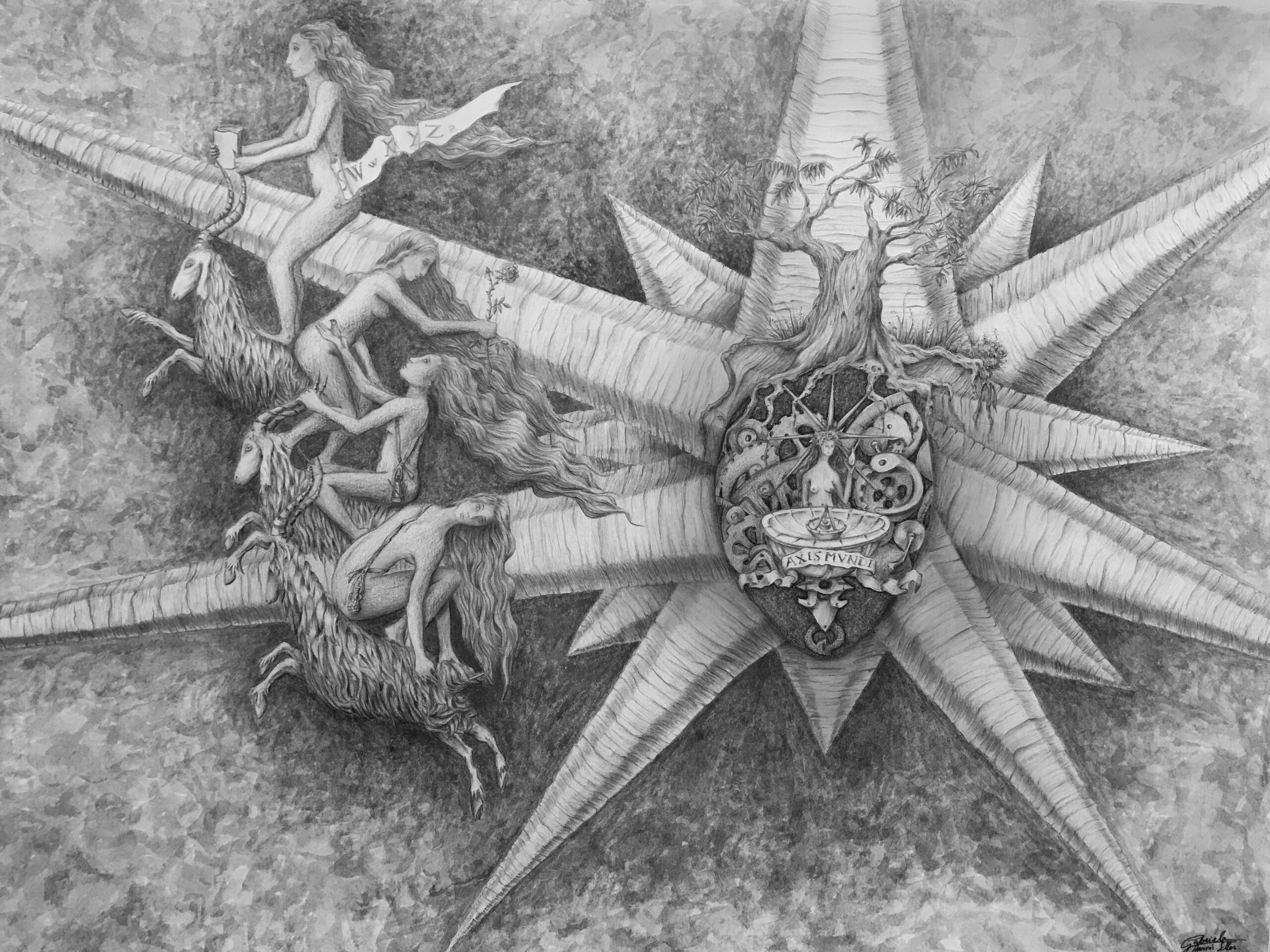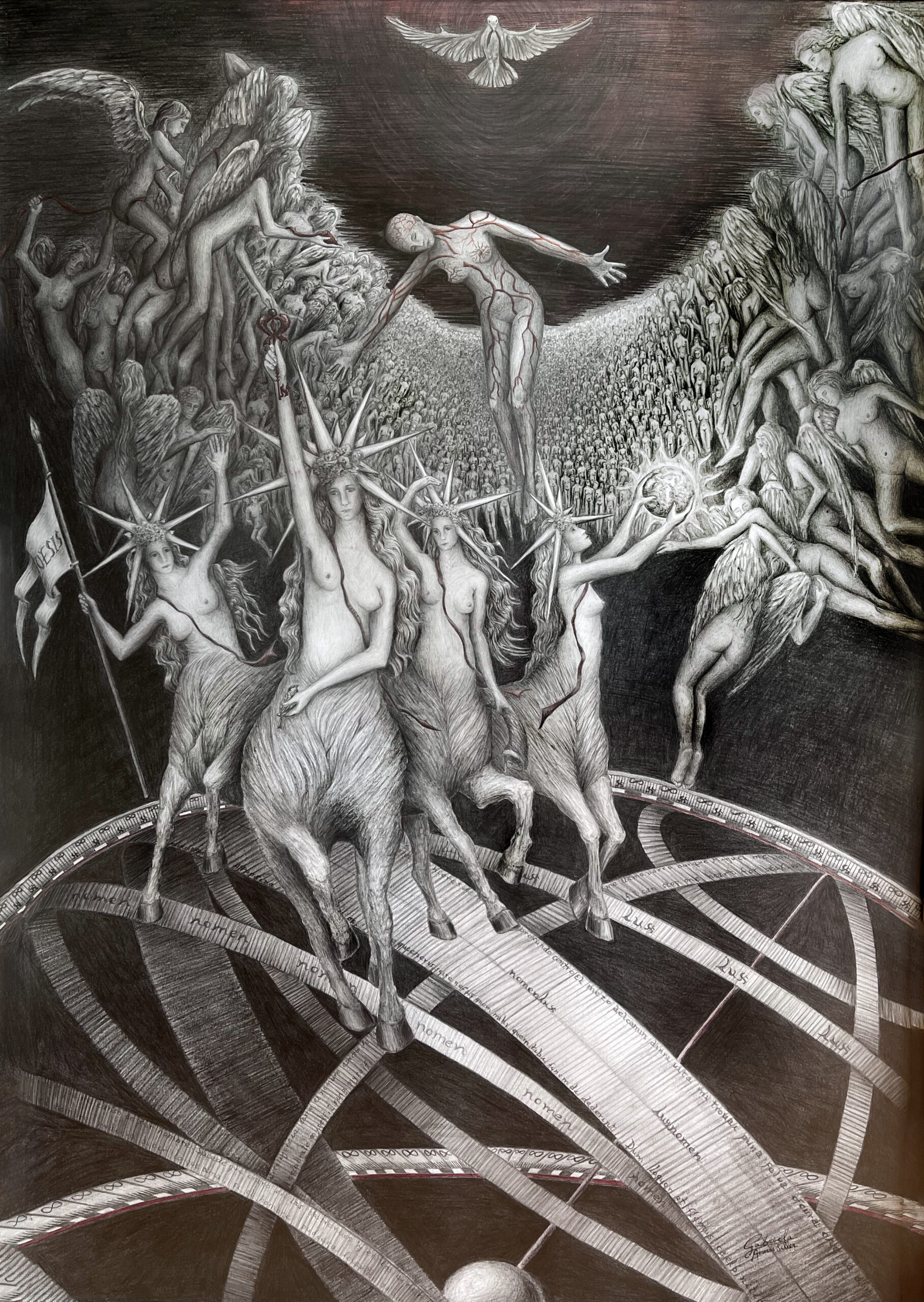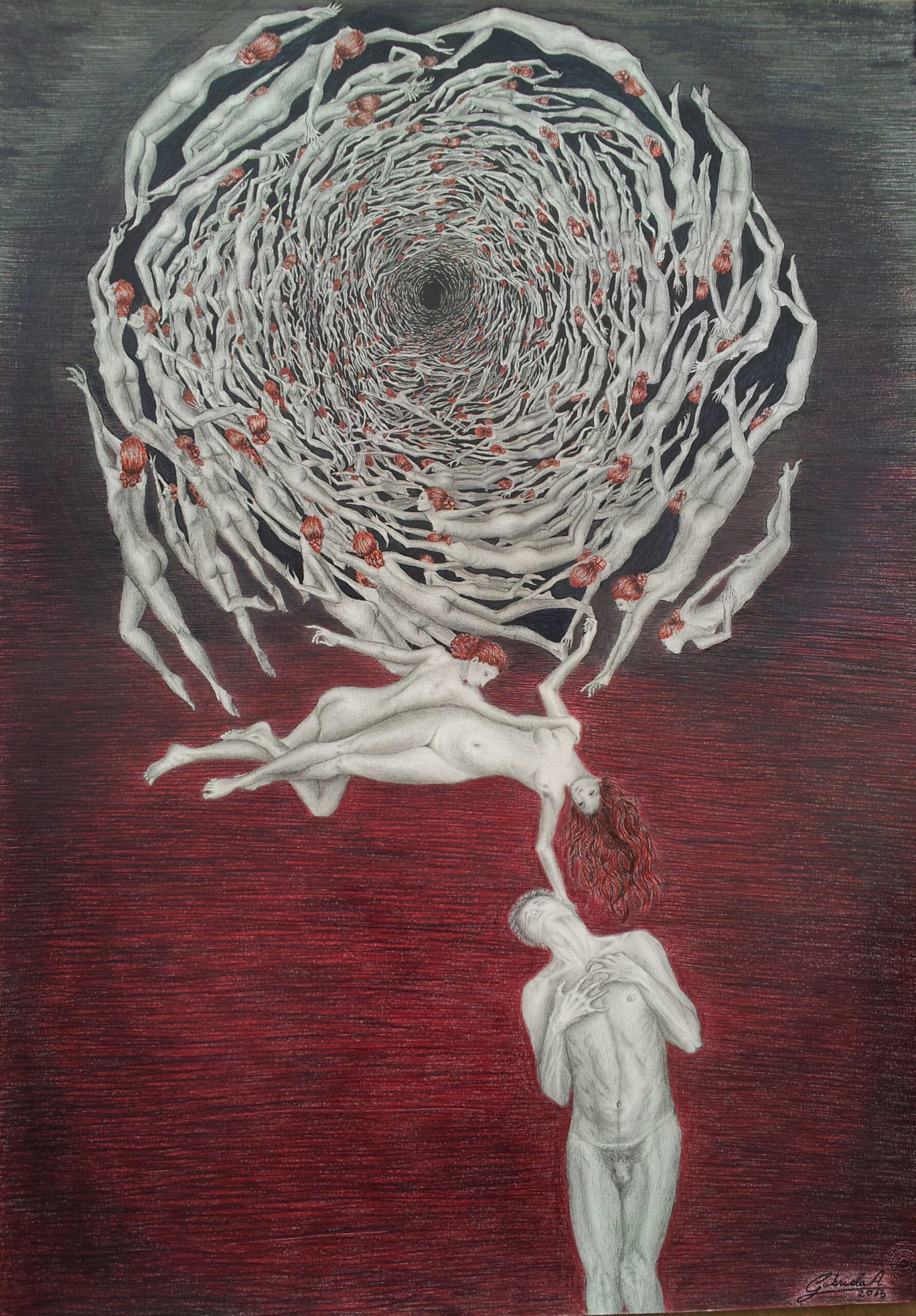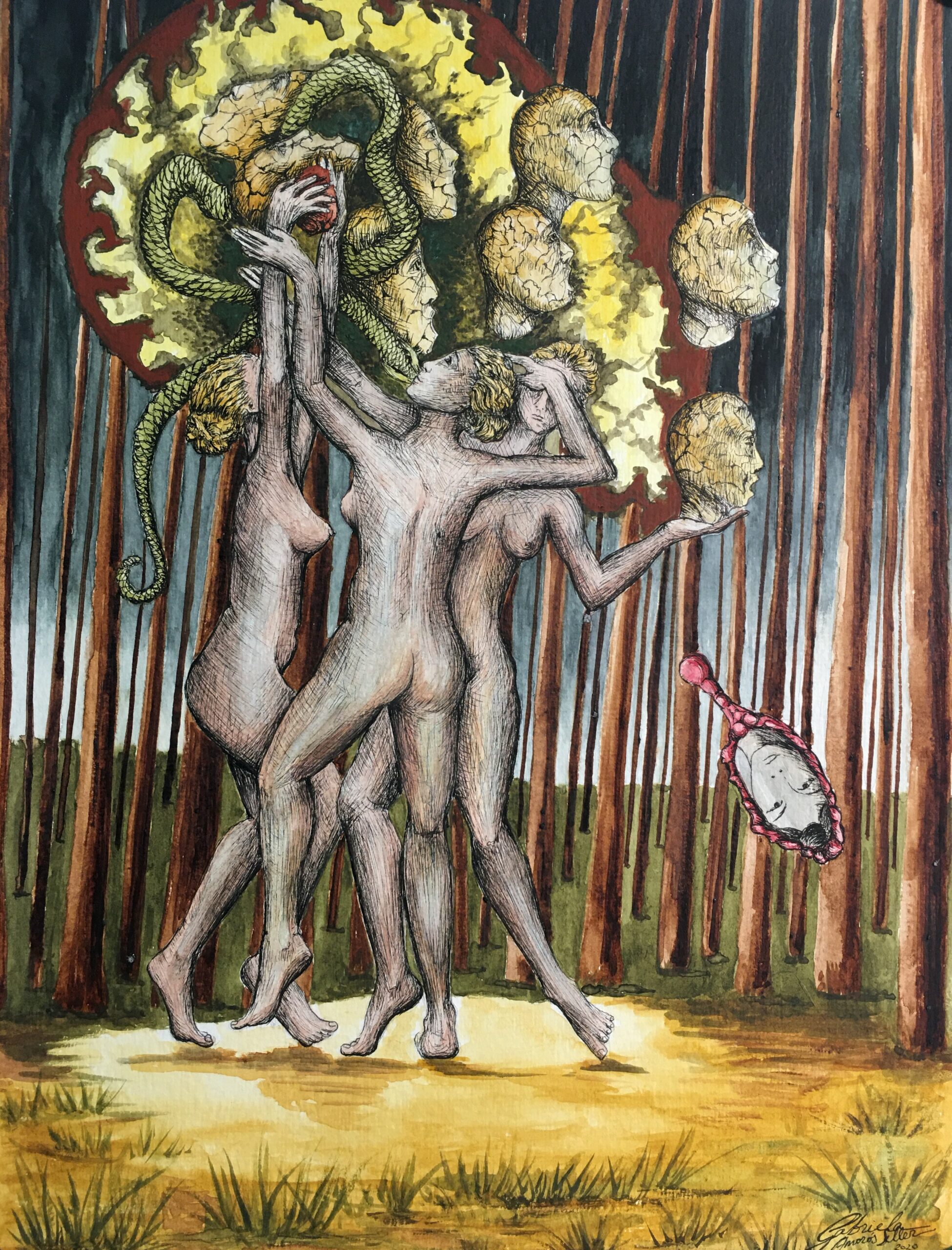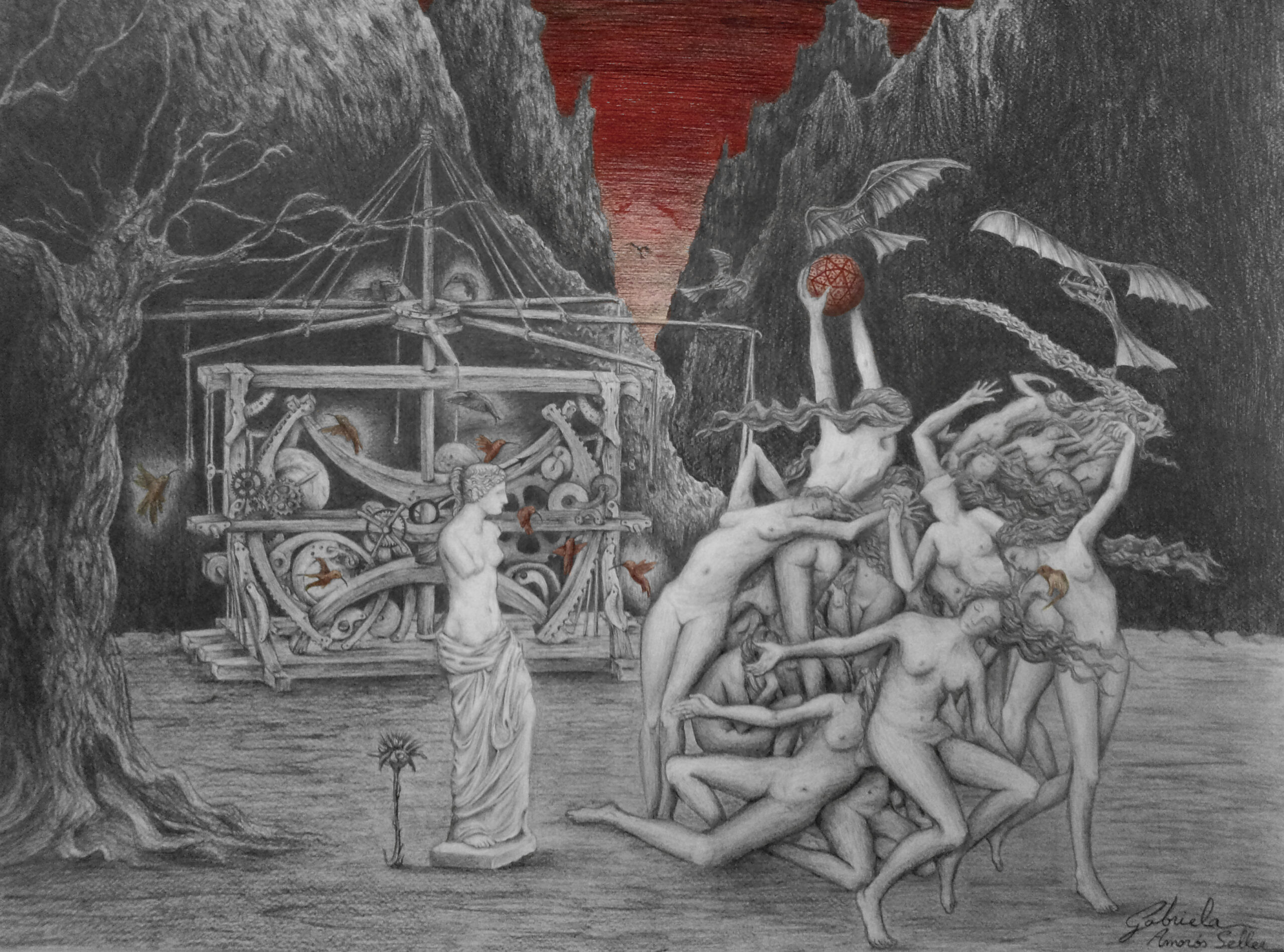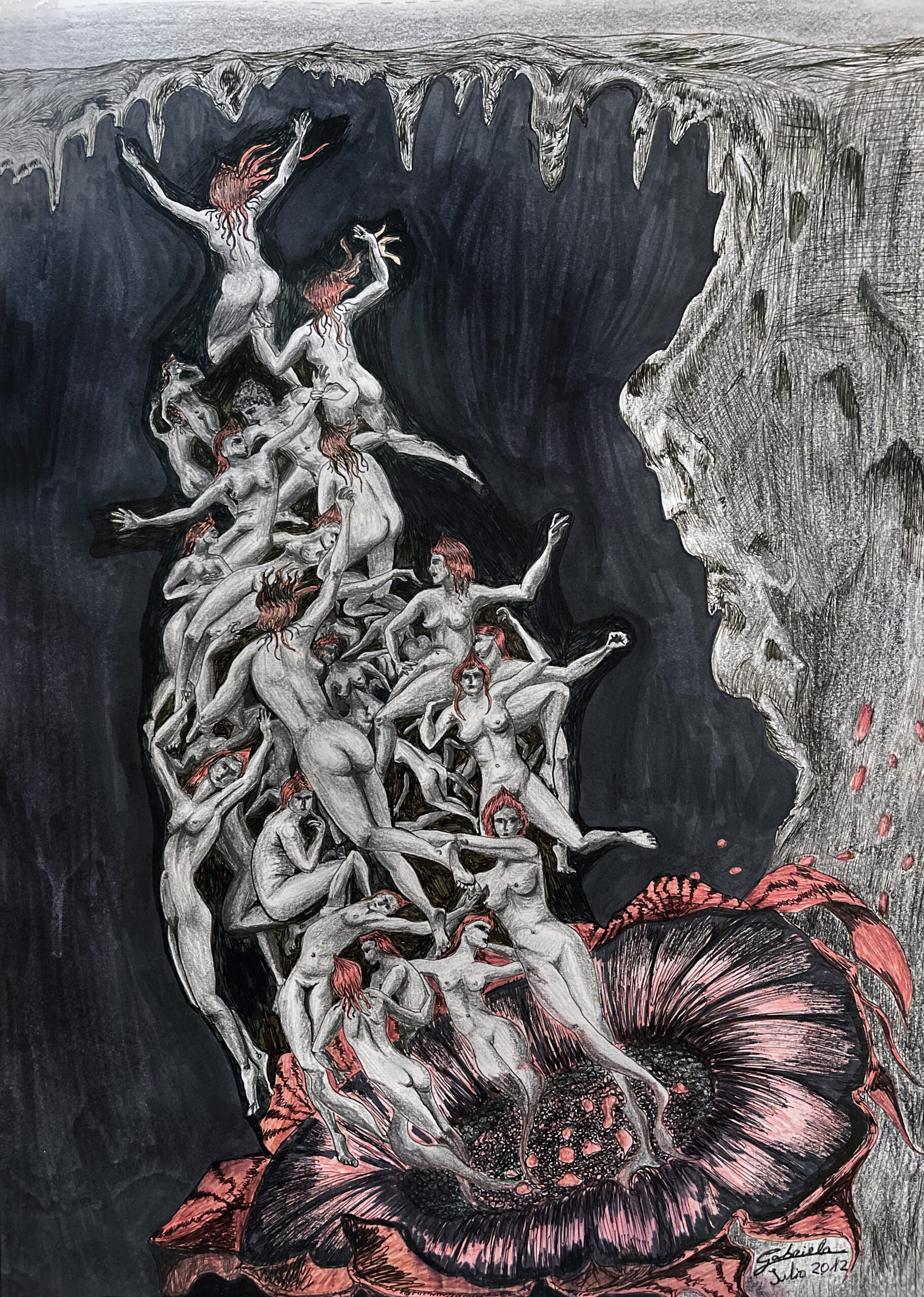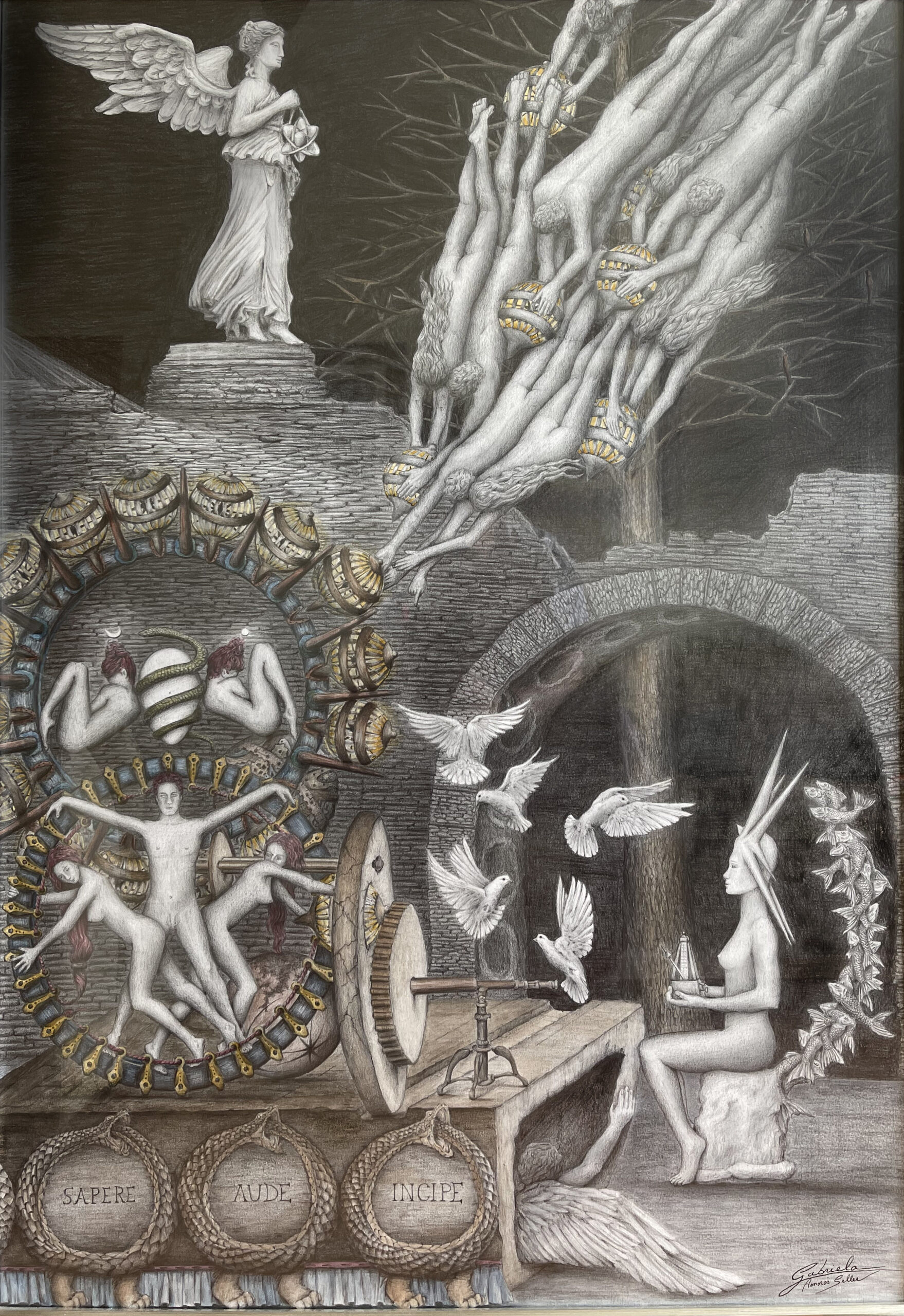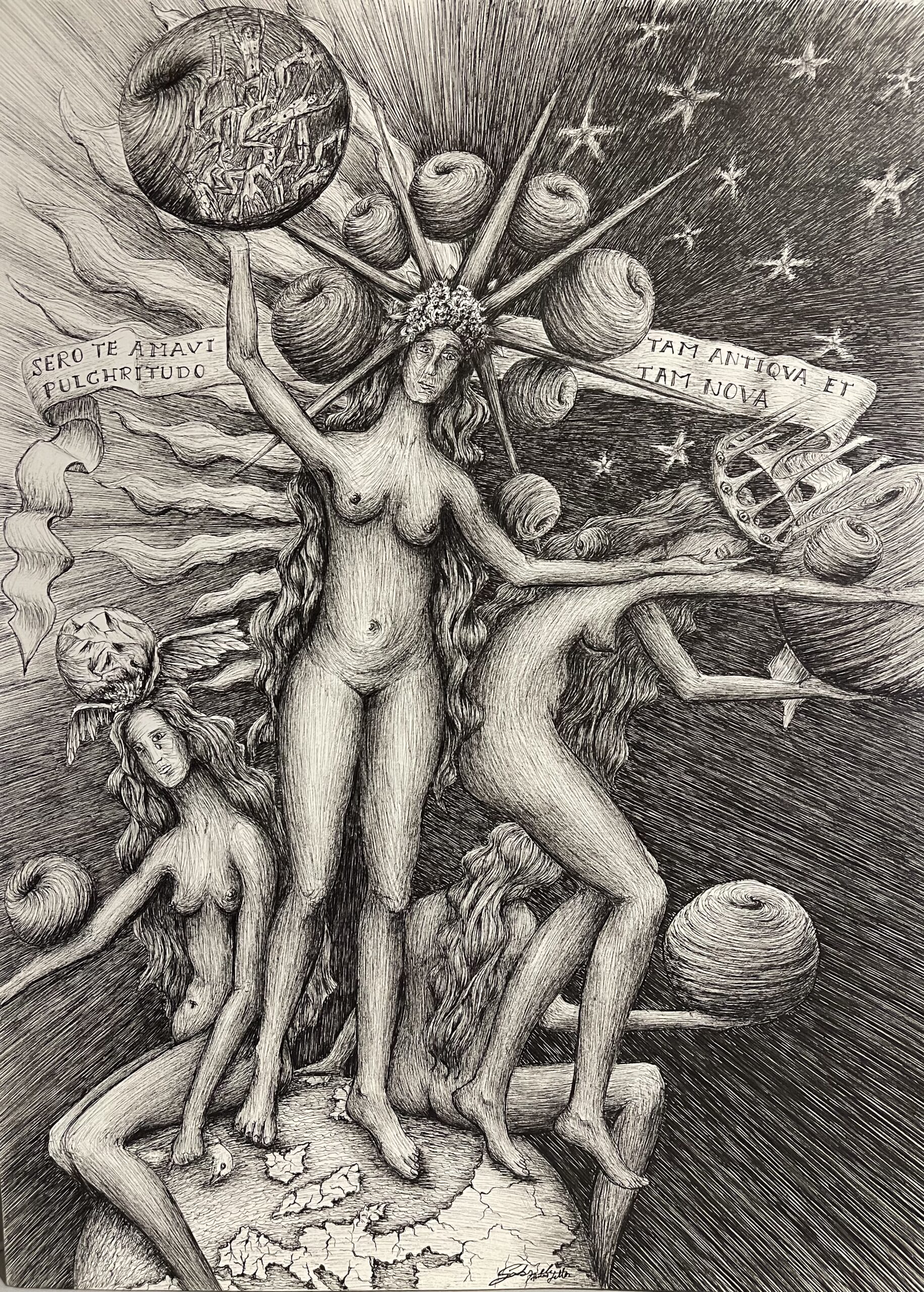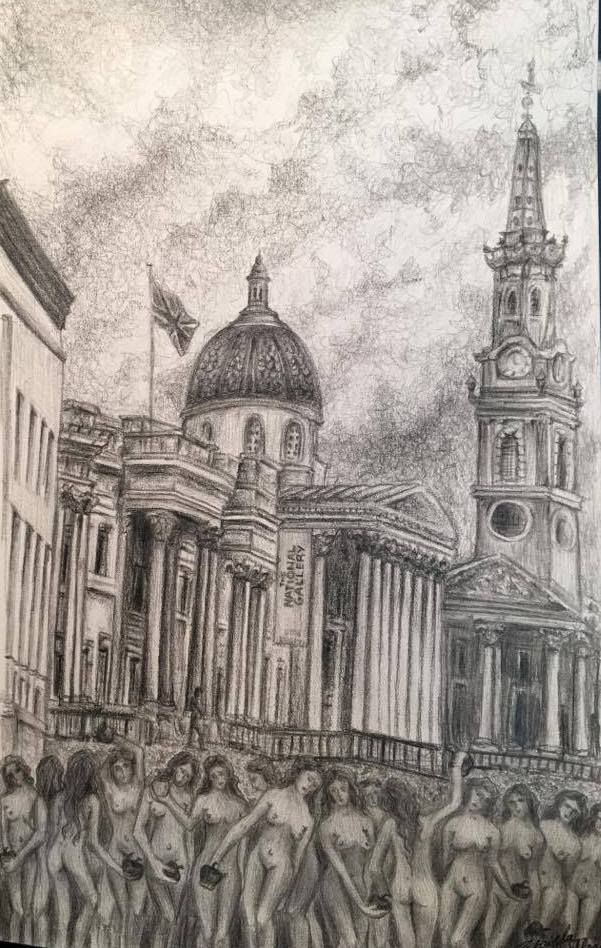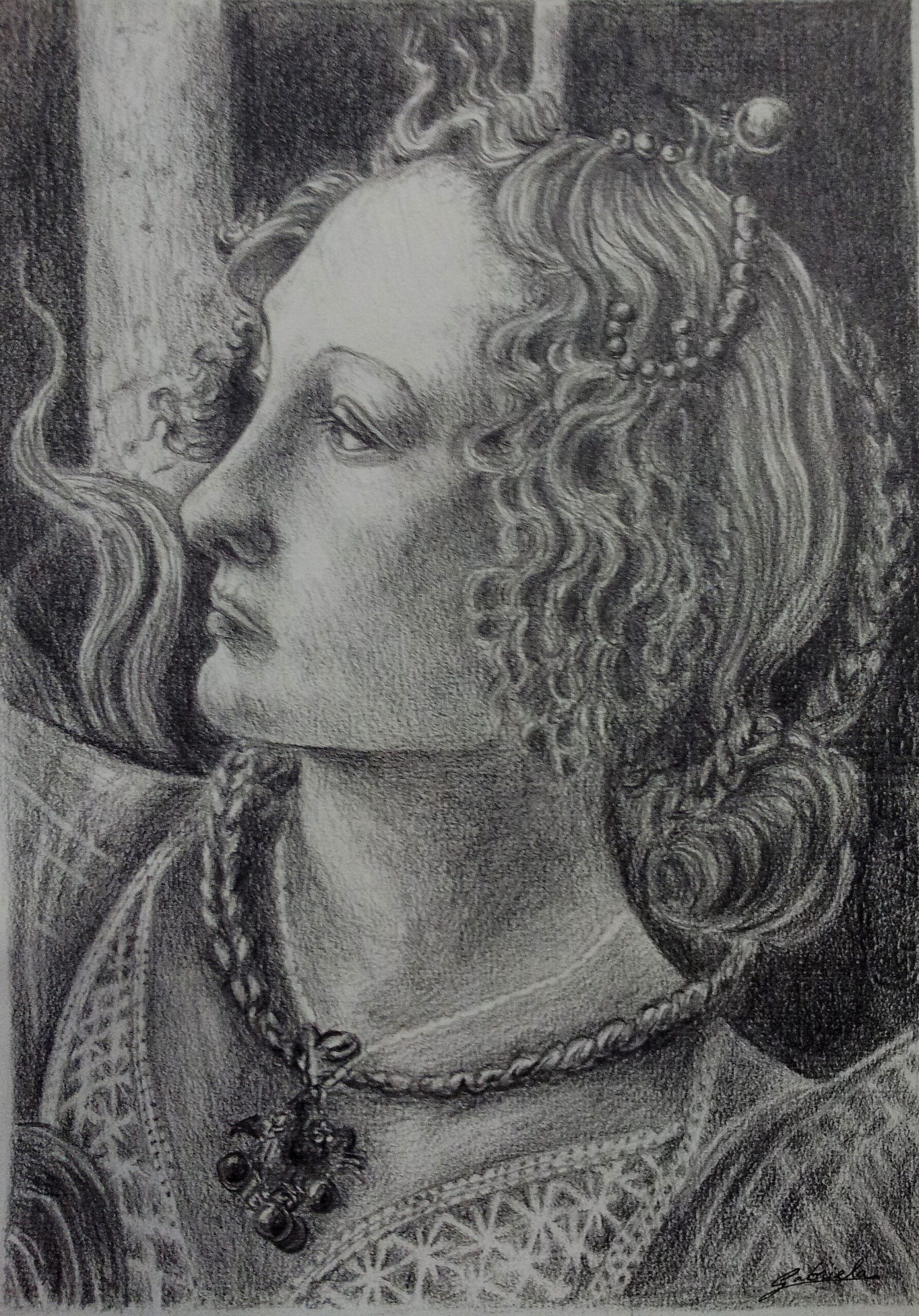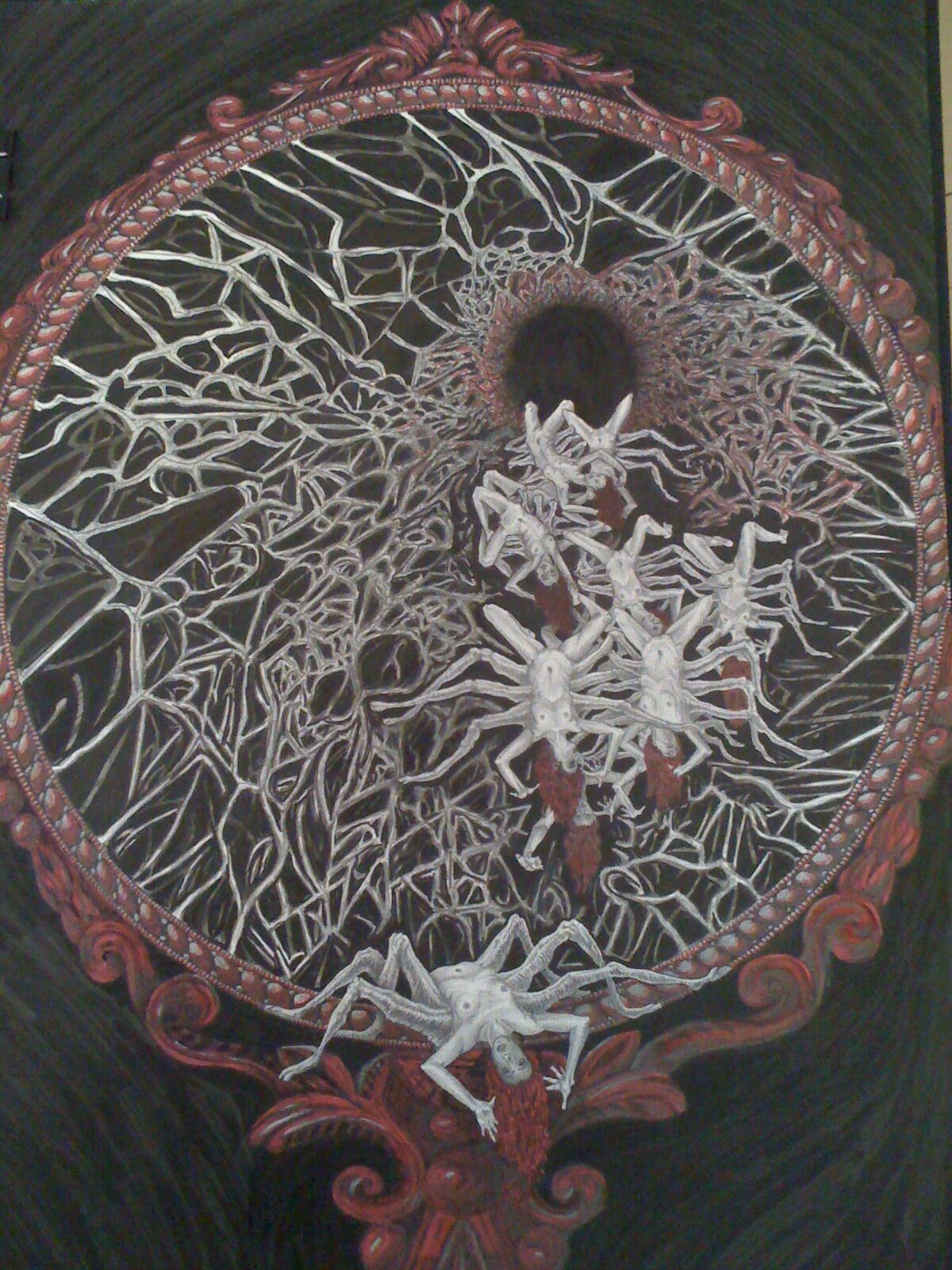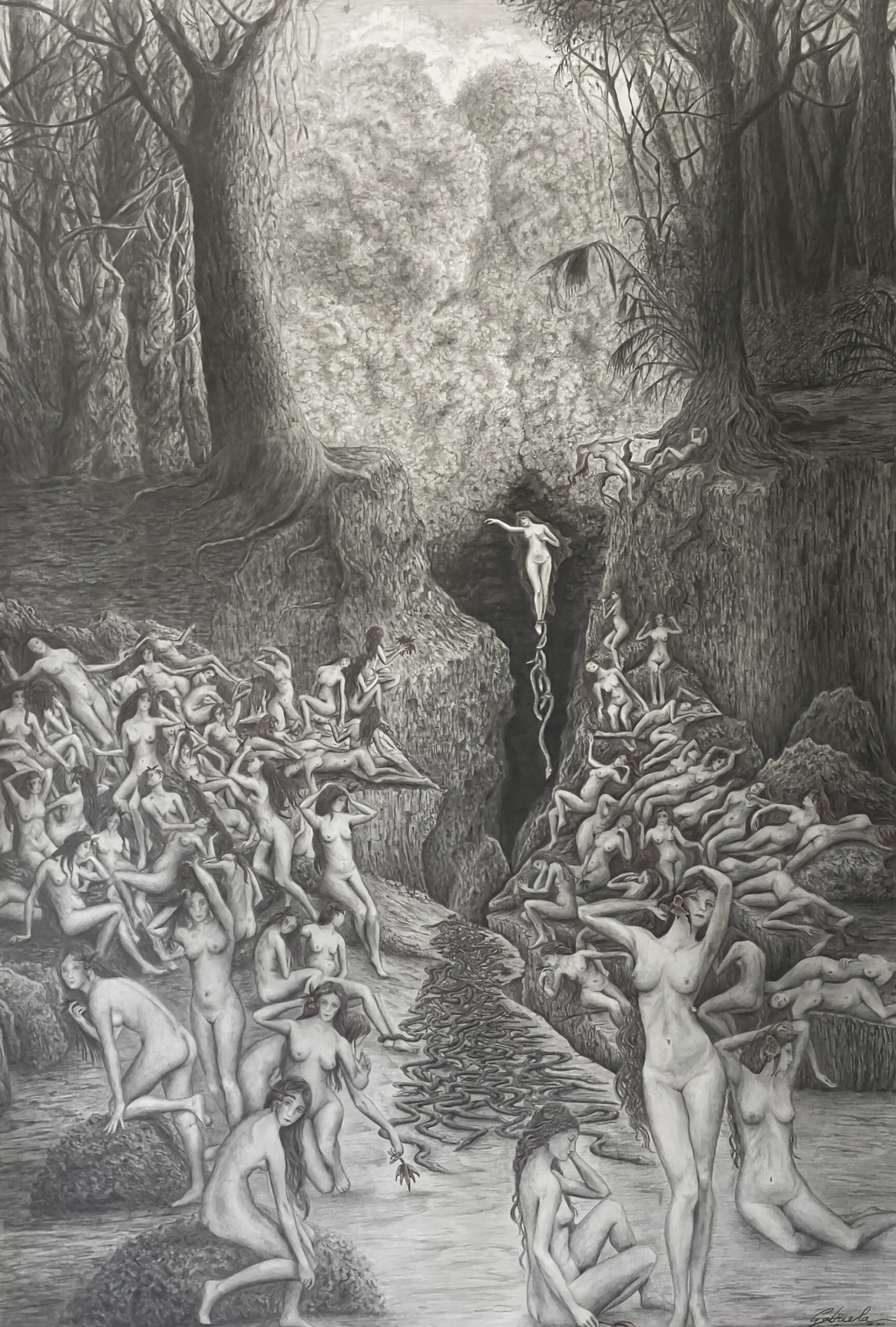
HADES: Epiphany of the Ninth Gate (2014, graphite, Indian ink and marker on cardboard, 70 × 100 cm)
Apollinaire
The title of this work refers to a poem by Guillaume Apollinaire, The Nine Doors of Your Body.
Hades
The composition of female figures condenses around and encloses a hollow space, which becomes the entrance to the Realm of Hades.
Khôra
The open doorway in the rock that leads to Hades takes the form of a female womb, a receptacle. This term evokes the notion of the nurse or nurturer, intrinsically linked to Plato’s definition of khôra in the Timaeus.
Lilith
The female figure in the background levitates above the darkness of the fissure with a serpent coiled around her leg. She embodies the dark, primordial origin of woman, identified in certain Christian traditions as Lilith, the first companion of Adam, created before Eve, and expelled from Paradise for disobeying the imperative of male domination over women.
Persephone/Demeter
This identity also overlaps with Persephone, since it alludes to a form of insubordination by the wife of Hades, who reached an agreement with her husband to be allowed to reunite with her mother, Demeter, once a year. When Persephone rises from the underworld, Demeter welcomes her by stimulating Nature, causing the earth to bloom and bringing back the spring.