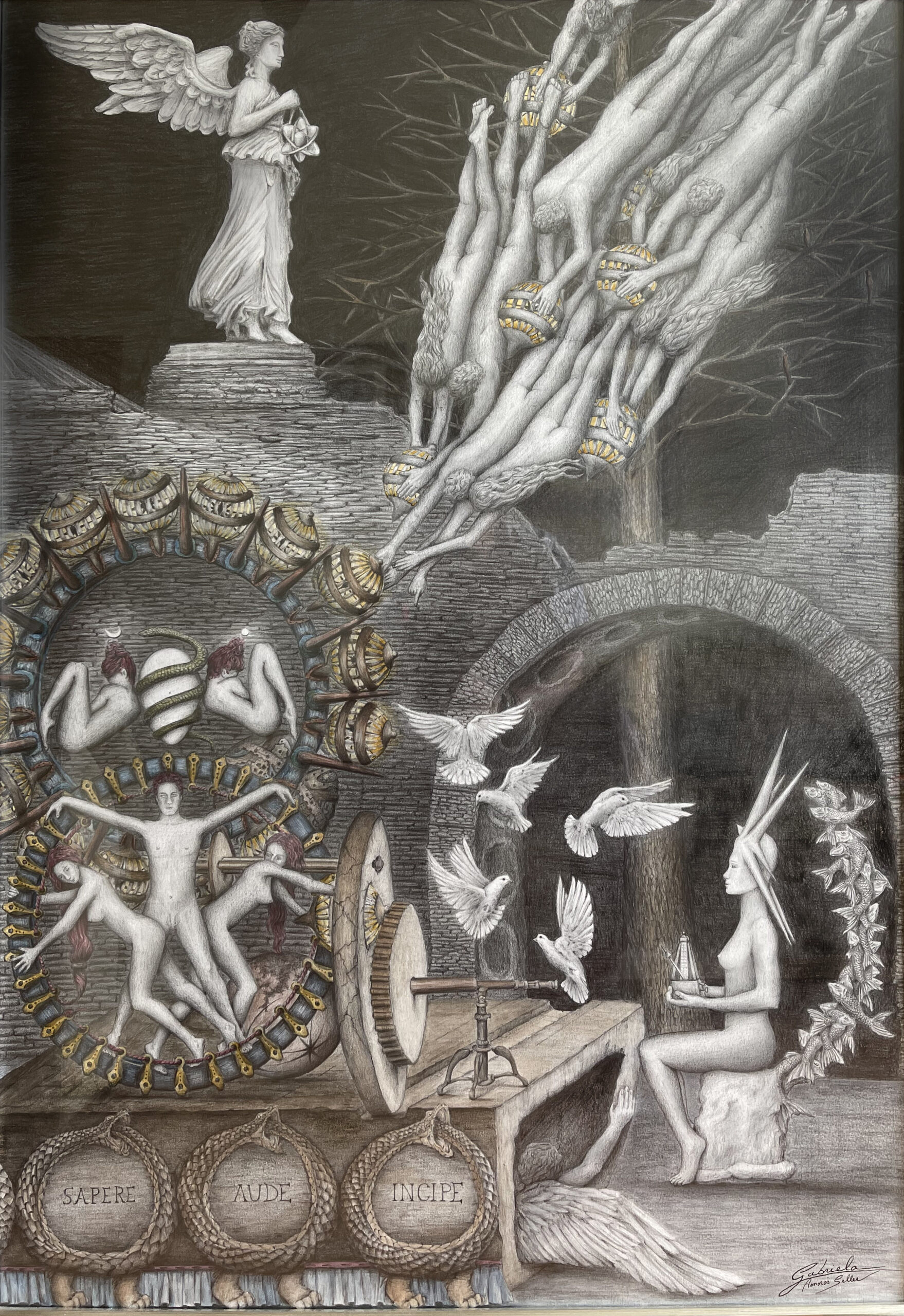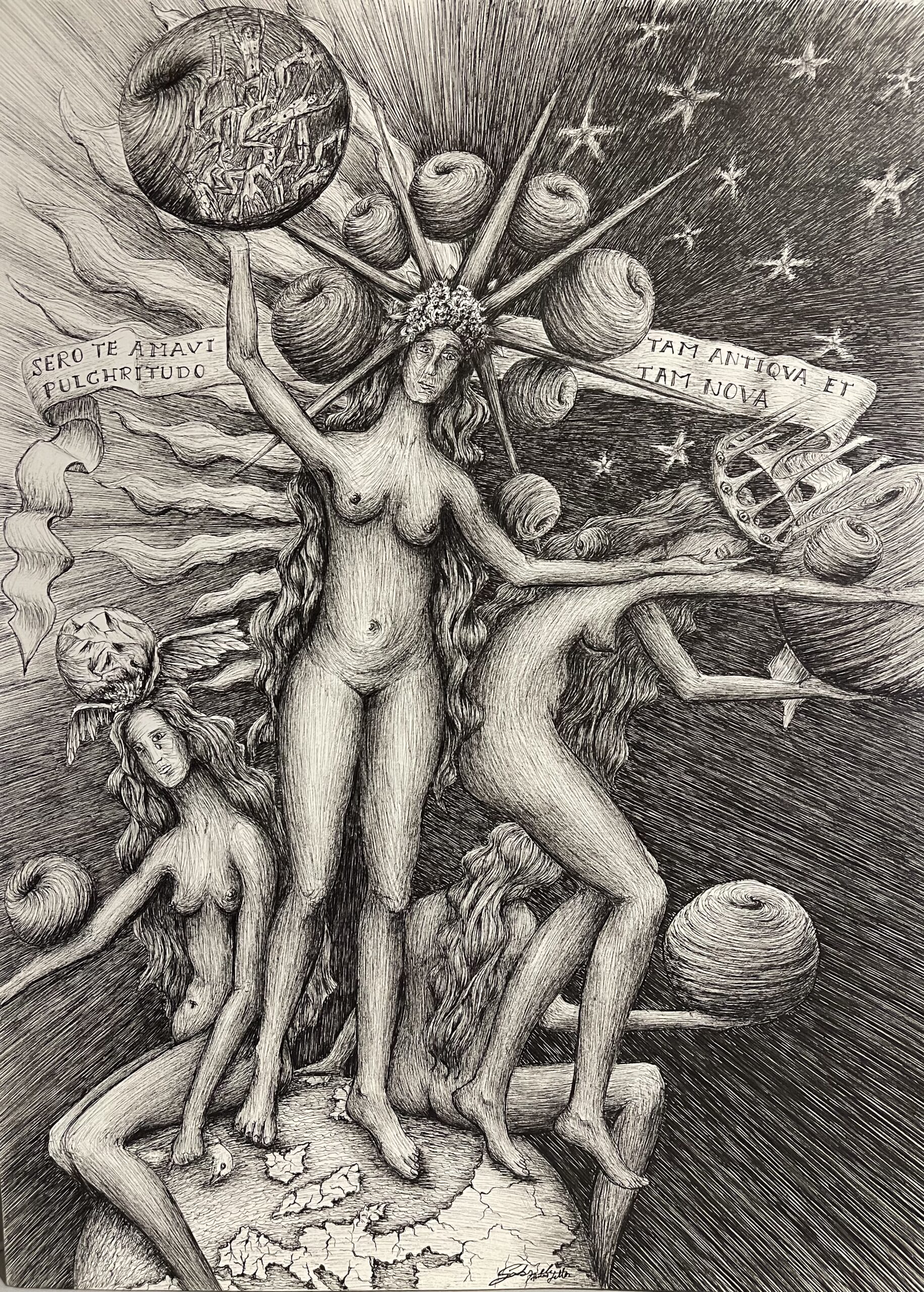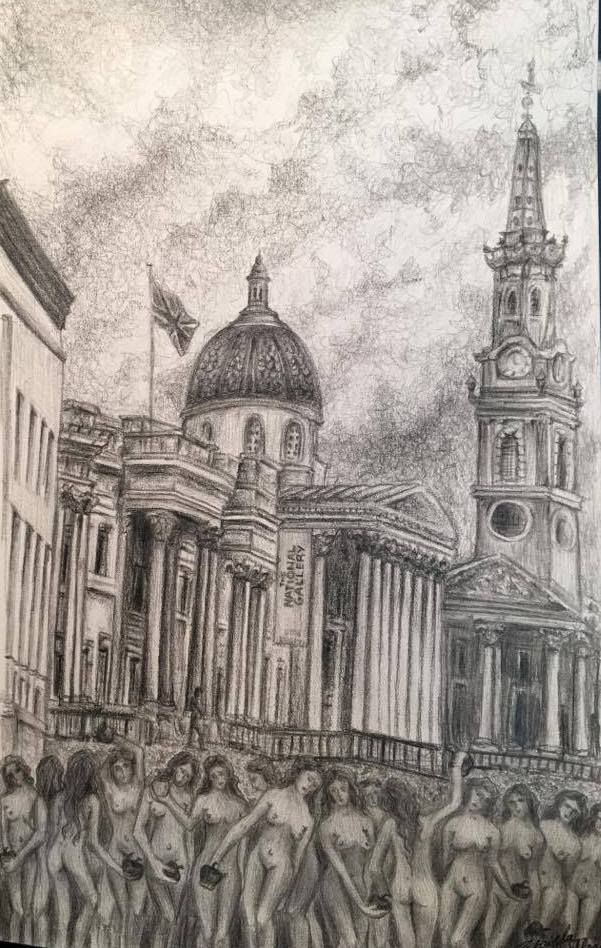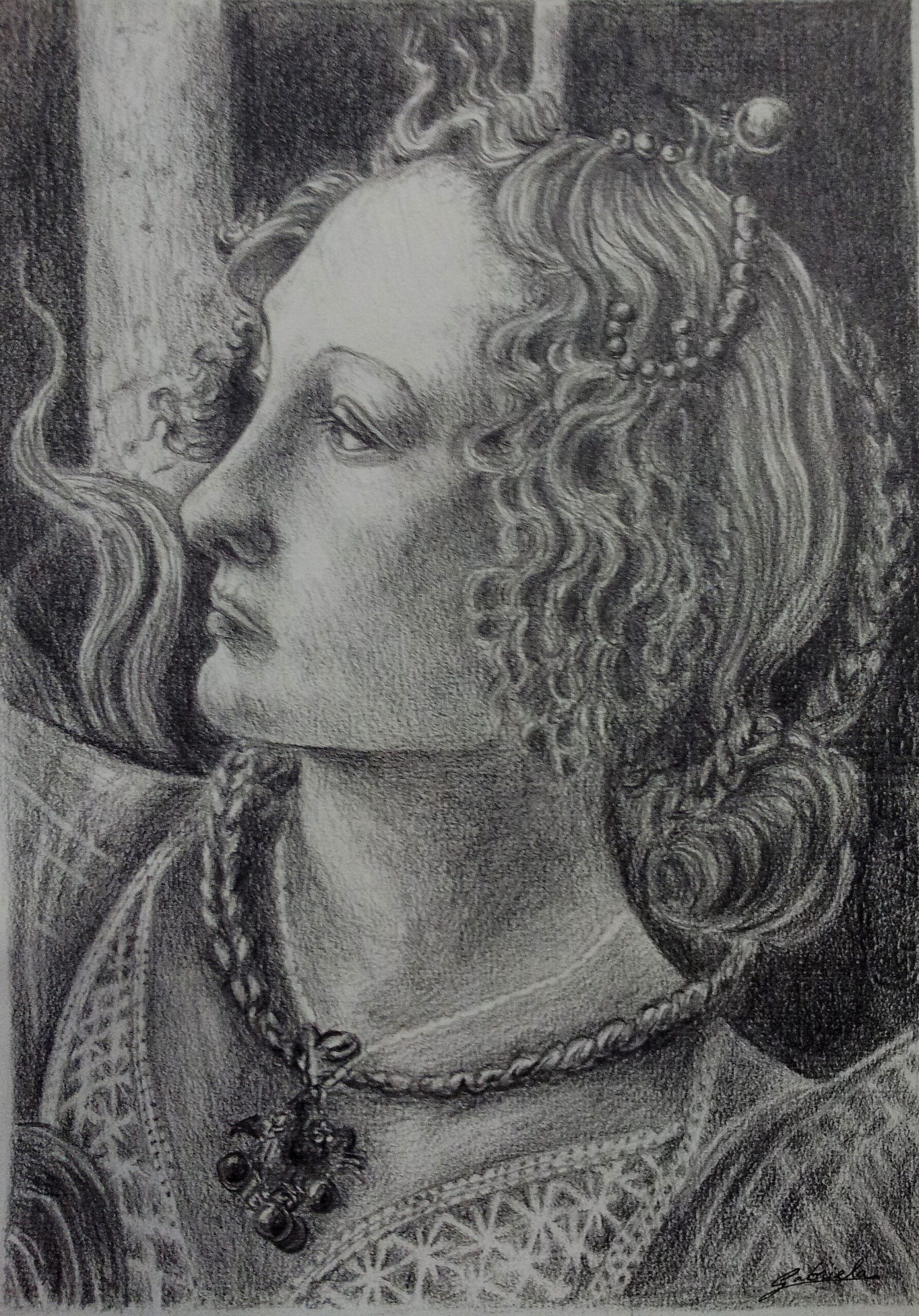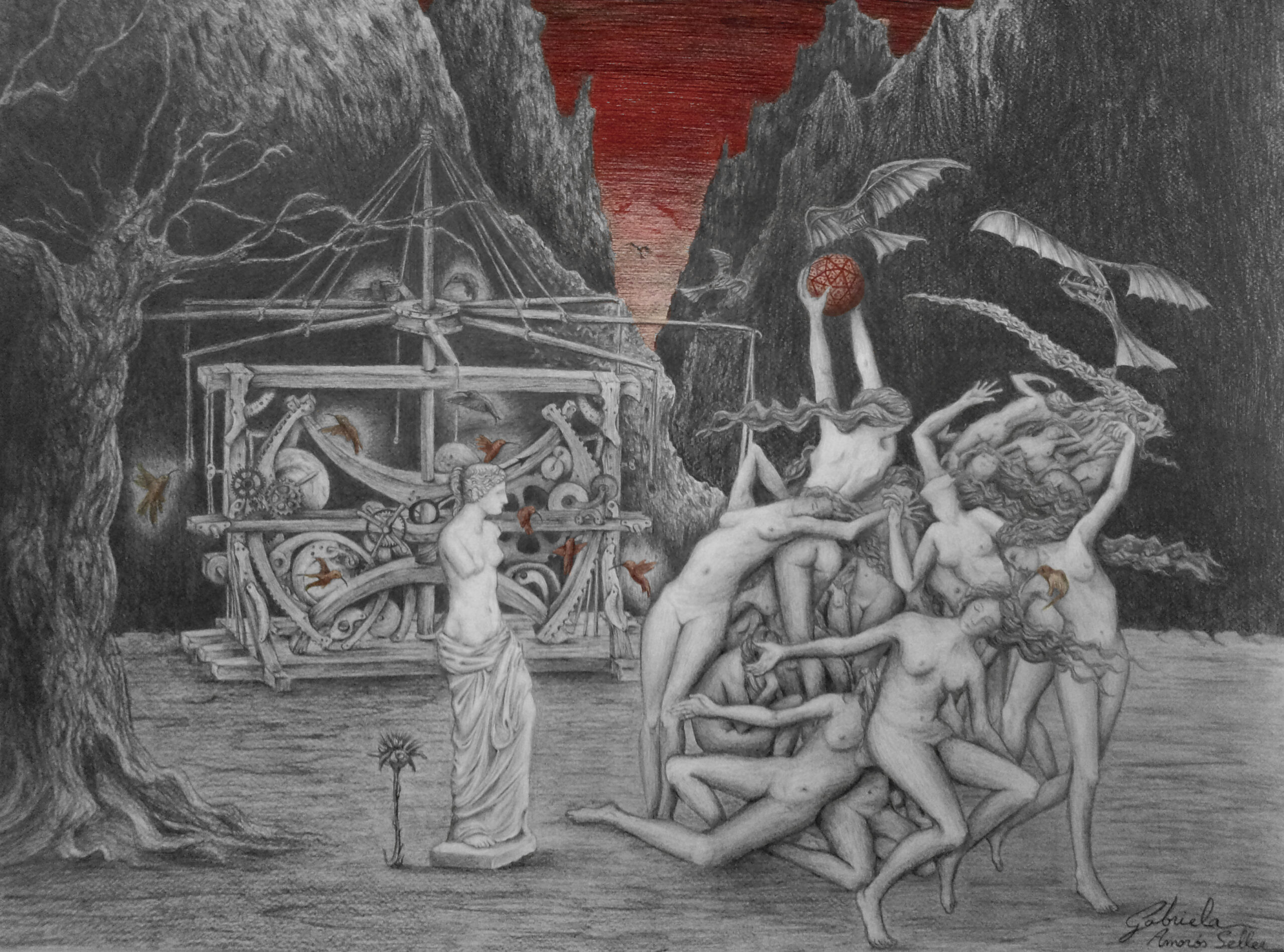
THE MECHANISM OF VENUS (2014, graphite, Indian ink and marker on paper, 65 × 50 cm)
Trial of opposites
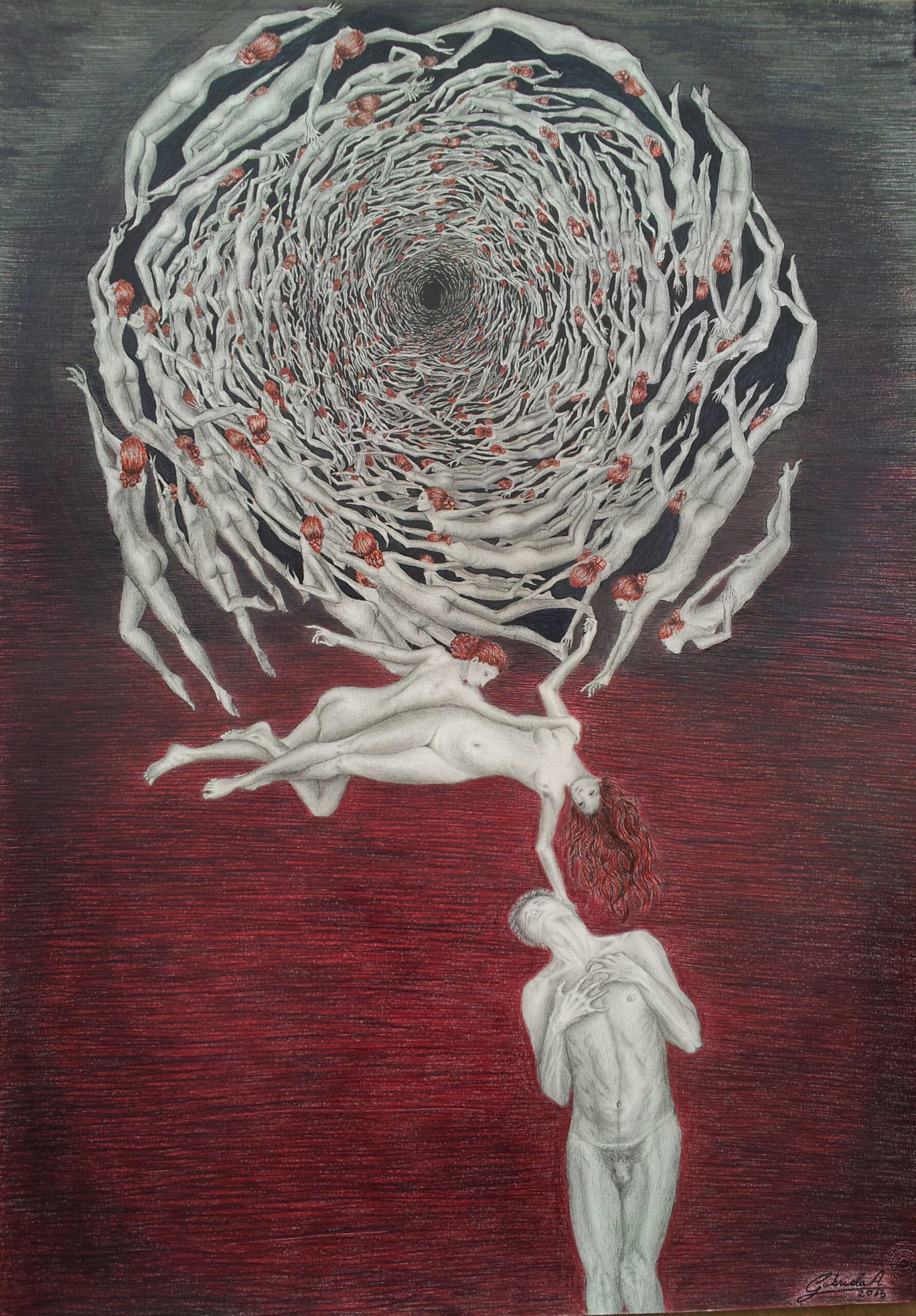
According to Plato in the Phaedrus, everything arises from its opposites. In this work, two natural forces long perceived in classical culture as both opposing and complementary —the masculine and the feminine— are depicted. Their union is believed to generate the visible world. Here, they operate mechanically under the attentive supervision of Venus. Through hummingbirds, nude figures, and two inventions by Leonardo da Vinci —the contraption on the left and the flying machines suspended in the air— an association emerges between the living and the inert. These contraries are expressed as the elements of earth and air.
Space and time
The hummingbirds, which normally feed on flower pollen, are shown here feeding on Leonardo’s machine as if it had stamens, that is, masculine organs, for the device symbolizes the masculine principle. Meanwhile, the column of female nudes receding into the depth of the landscape symbolizes the feminine spectrum. This column of women traverses space, while the immobile male-machine, which contains a clock mechanism, embodies time. The feminine is identified with space; the masculine with time.
Carbon atoms
The sphere contains on its surface a diagram of the arrangement of carbon atoms, like an algorithm of the chemical composition of the surrounding environment: the stone, the geological landscape, and even the graphite used to produce the work.
Heraclitus
The mutilated, static sculpture of the Venus de Milo presides invisibly over the entire movement of the scene. She embodies the physis of things, the natural becoming that unfolds through hidden play. This alludes to the famous saying of Heraclitus: physis kryptesthai philei — “Nature loves to hide.”