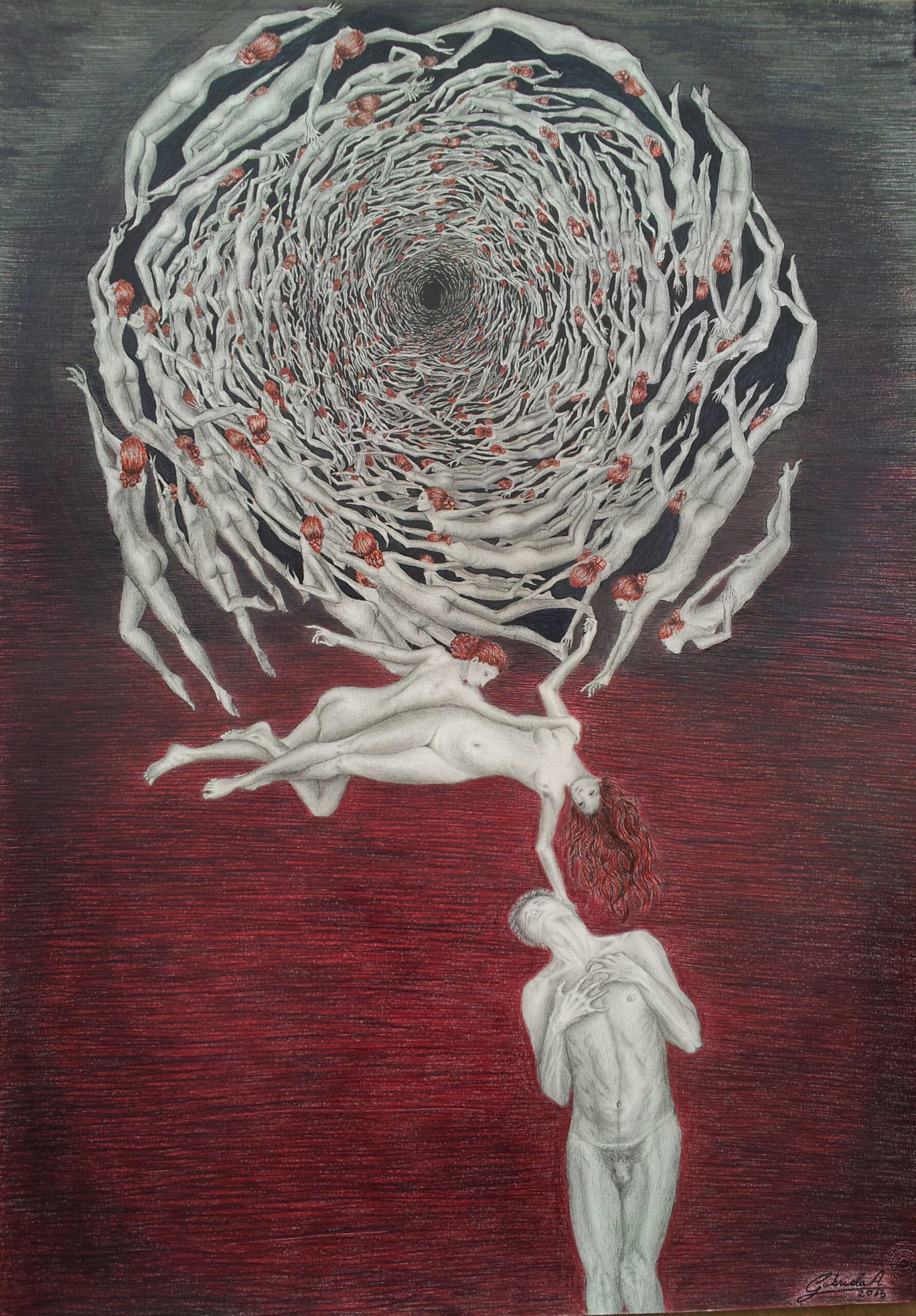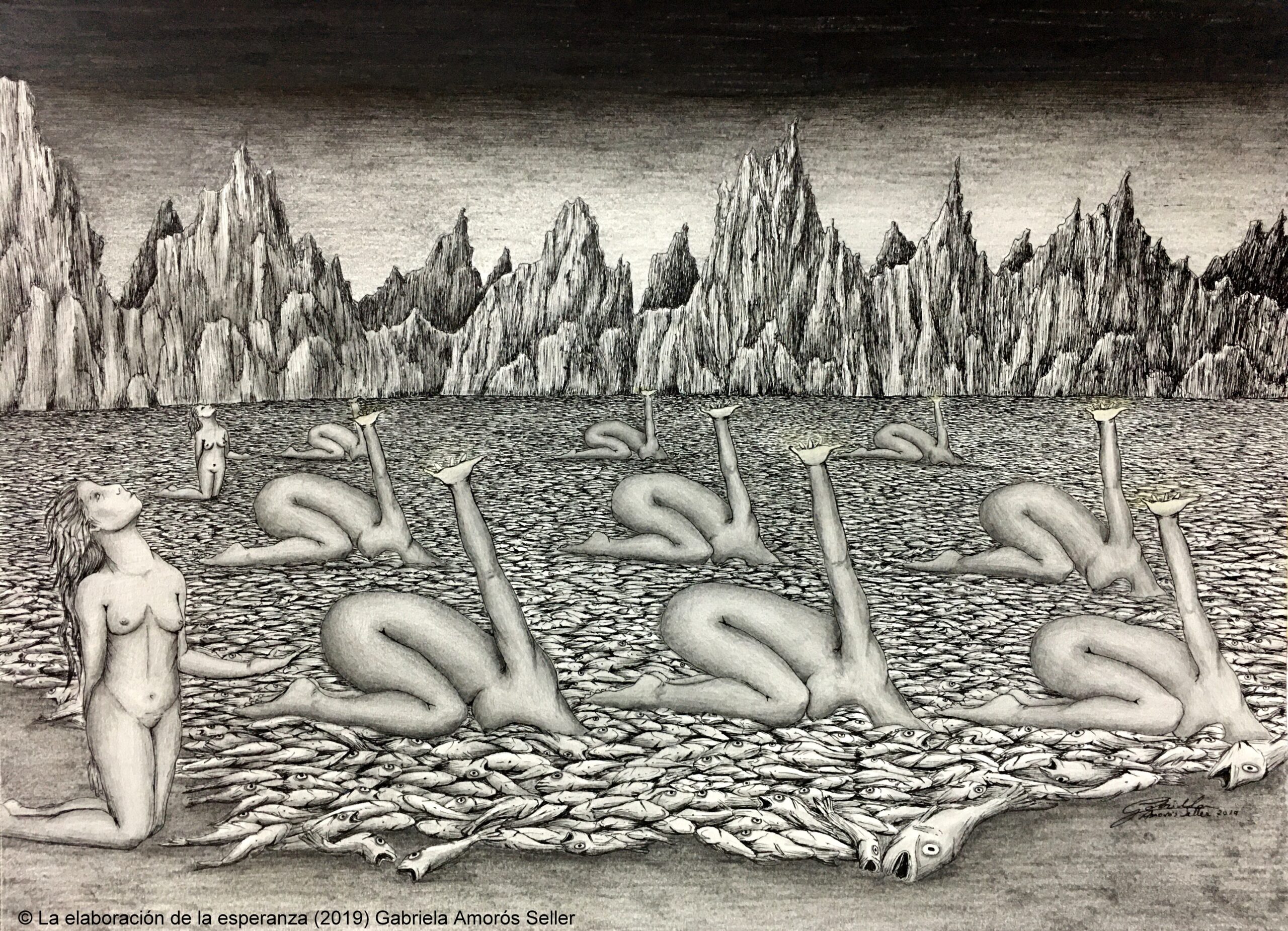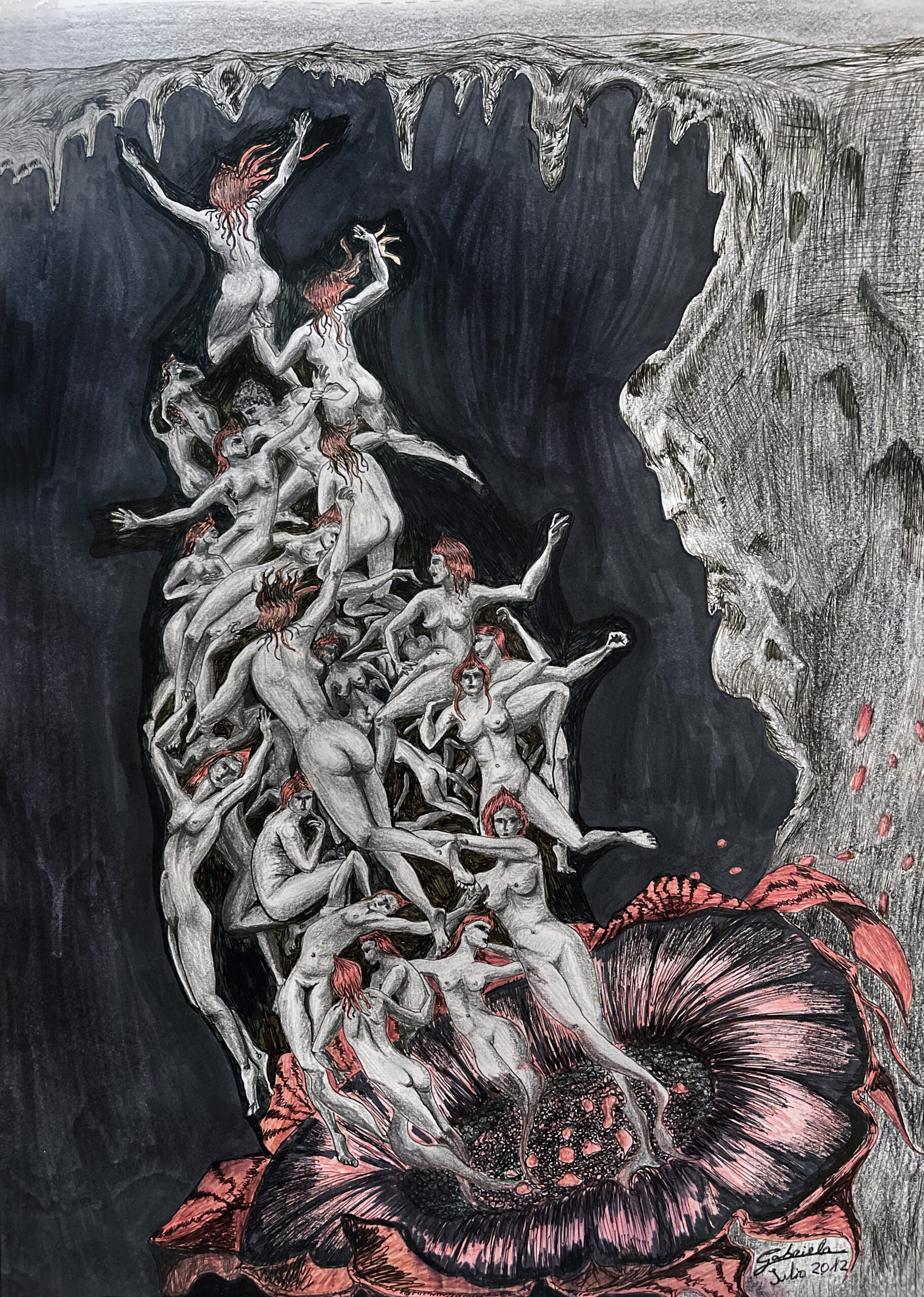
THE FLOWER OF A THOUSAND NAMES (2012, graphite, Indian ink and marker on paper, 32.5 × 46 cm)
Tongue as organ
The Flower of a Thousand Names projects a living tongue made up of female bodies that rise upwards from the reddish petals of a Flower. At its base lies a deep, circular hollow from which these bodies emerge.
Tongue as system of signs
Each body represents a sign or a name, while the flower itself symbolizes language and speech. Just as the Flower continually produces new names reaching toward the surface to bring light back to the Flower so that it will not die, language constantly renews itself through the changing, everyday use of words. Language is alive and dynamic.
Mother tongue
The protagonists of this interplay between nature and language are women. The work alludes to a recurring cultural expression: the “mother tongue.” This expression, now deeply embedded in our common vocabulary, refers to the language a person first learns. It was originally called the “mother tongue” —and not the “father tongue”— because in most cultures it was mothers who took charge of raising their children, thus becoming transmitters of language throughout human history.
Saussure
“Language is multiform and heterogeneous, straddling different domains. At once physical, physiological and psychological, it belongs both to the individual and to society.” — Ferdinand de Saussure.