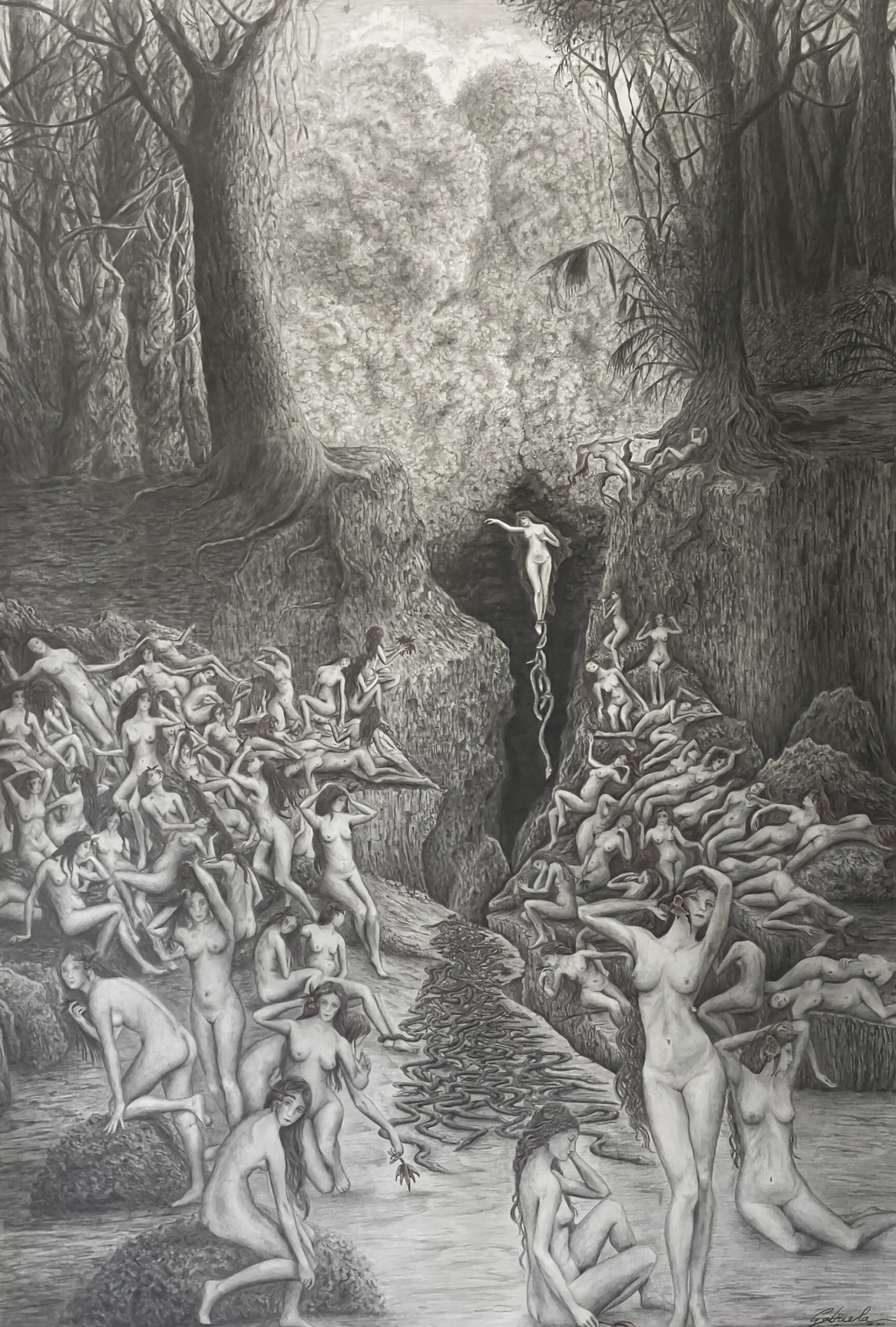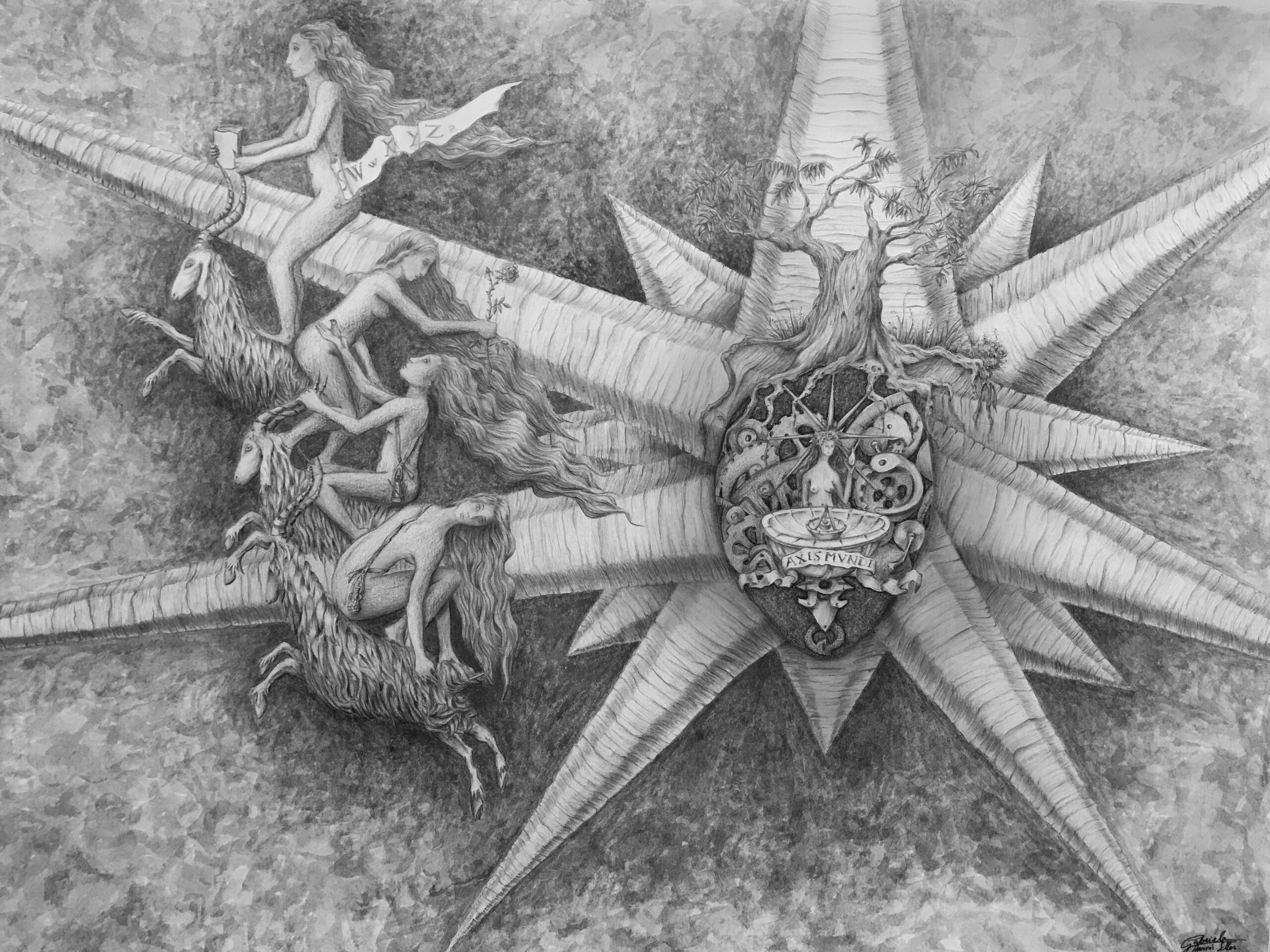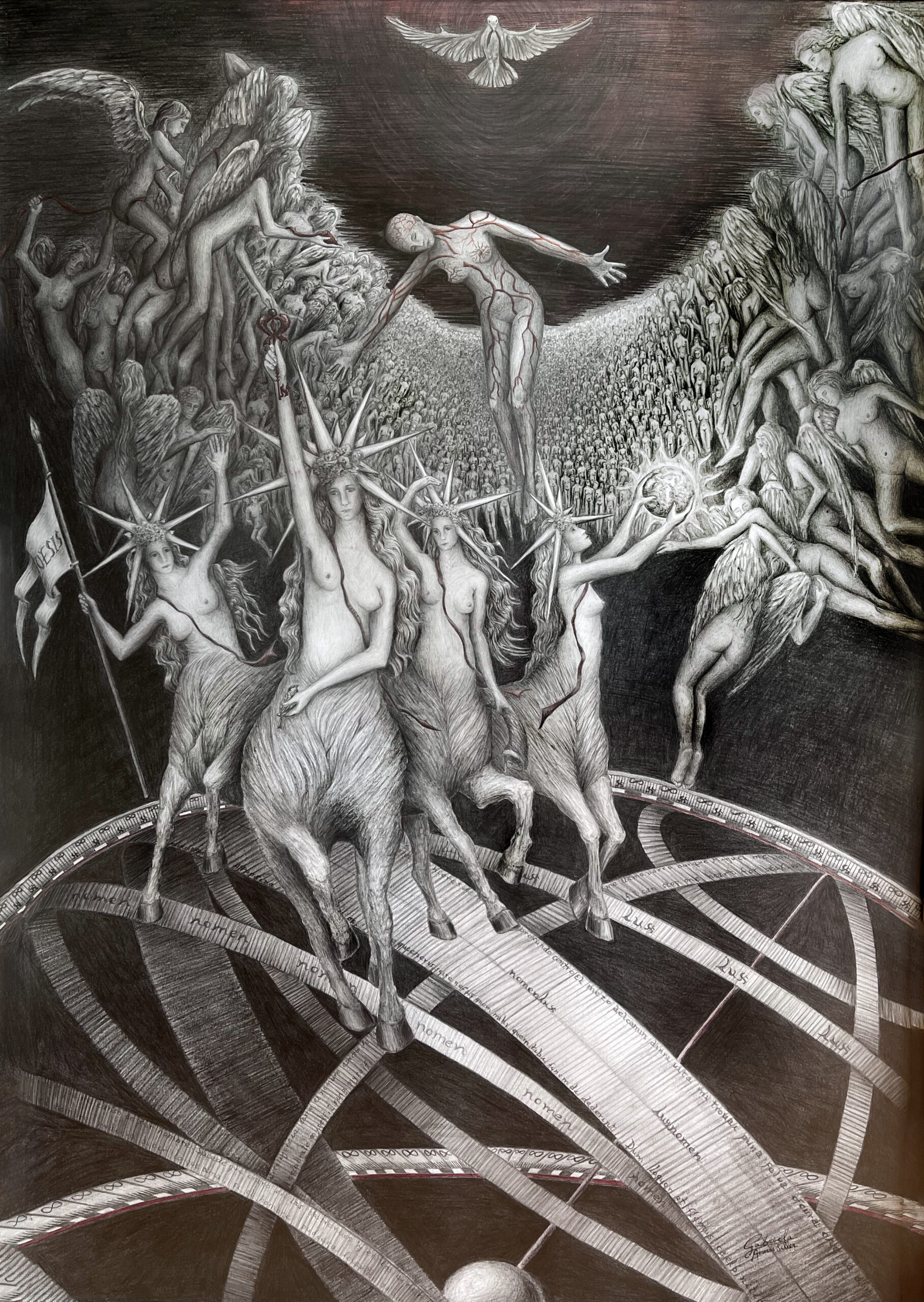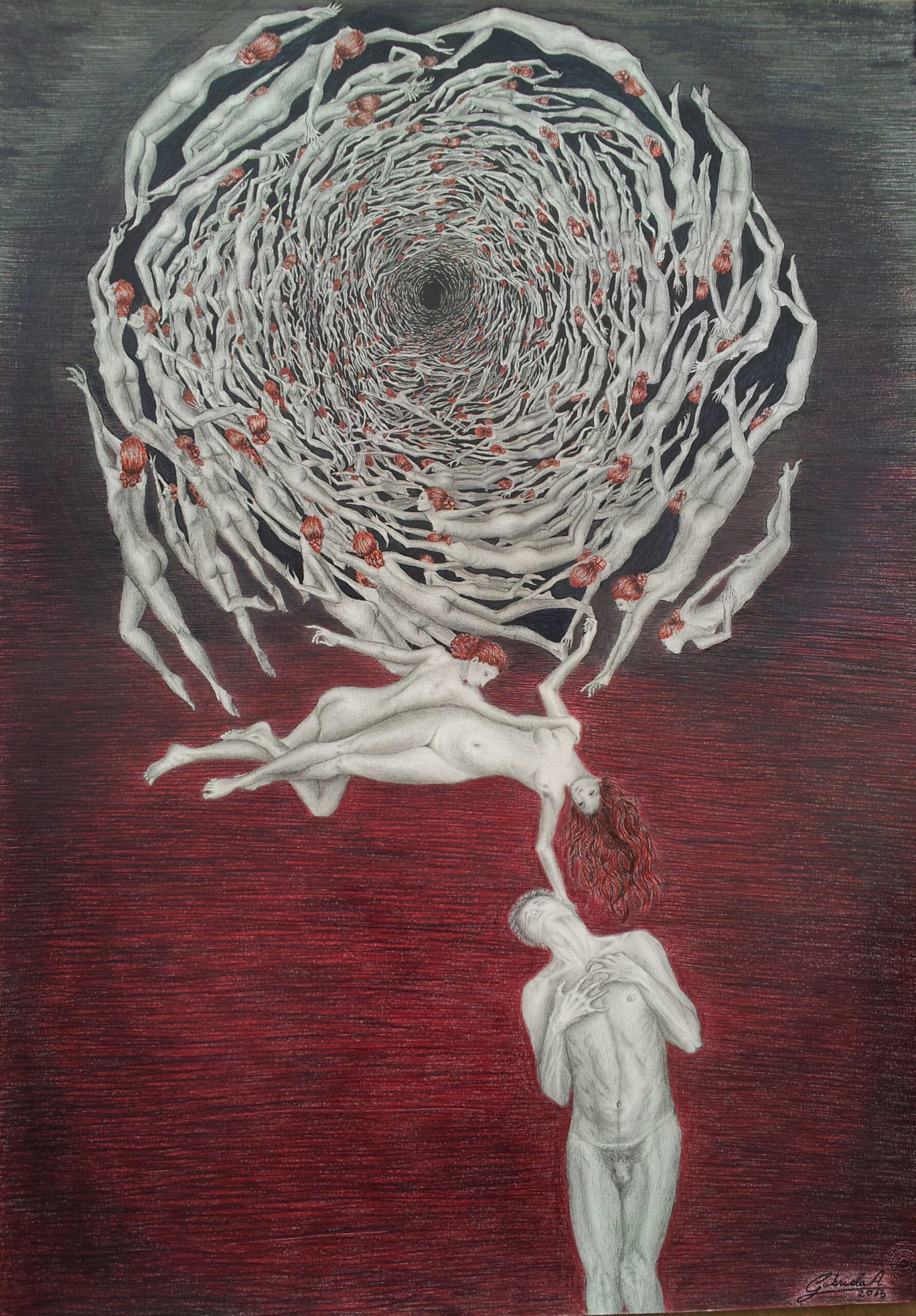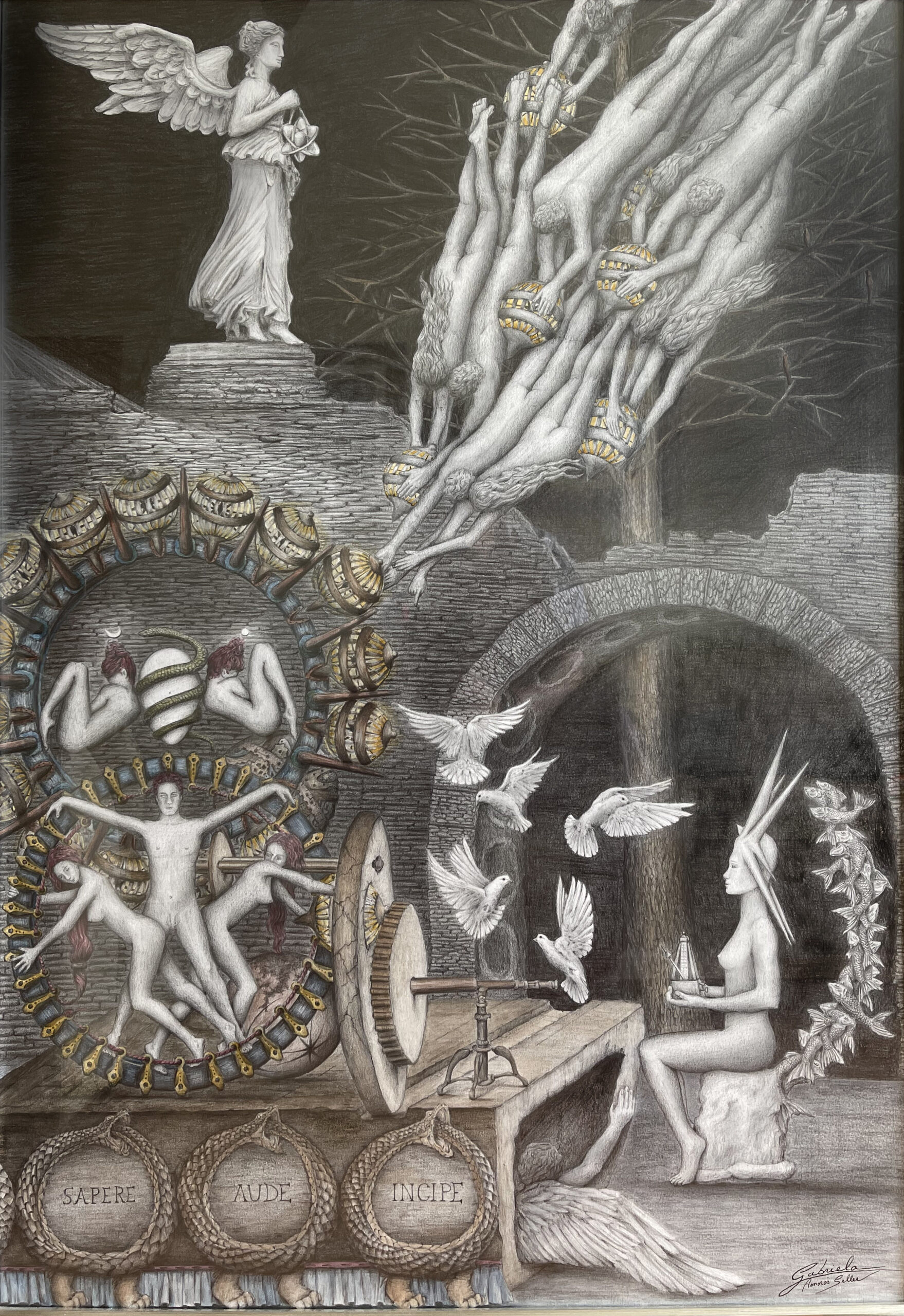
THE CIRCUS OF ETERNITY (2017, graphite and watercolor, 100 × 70 cm)
Horace
At the bottom of the work appears part of a line by the poet Horace: sapere aude, incipe. The phrase was coined in the 1st century BC in an epistle to his friend Lollius. The complete verse reads: Dimidium facti, qui coepit, habet: sapere aude, / incipe (“He who has begun has half done: dare to know, begin”).
Borges
A winged male figure attempts to rise from his tomb, above which unfolds the game of eternity. The immortal here alludes to the Borgesian notion of the abominable repetition of time described in one of the tales from El Aleph by Jorge Luis Borges, entitled The Immortal.
Khôra
Seated on a throne backed by fish is a goddess with a head shaped like a seven-pointed star, symbolizing the seven days of Creation. She marks the rhythm of eternity with a metronome. She is the choratic mother, the primordial feminine nature which, as linguist Julia Kristeva describes, “tolerates no analogy except with vocal or kinetic rhythm.”
Symbol of the Great Mother
Male and female figures carry into the artifact that generates eternity spheres containing the symbol of the Great Mother: the eight-pointed star, Venus or Spica, known both as the “Venusian star” and as the compass rose.
Vesica piscis
The sculpture on the left above represents the Annunciation of matter (bearer of the atom). The machine of Eternity forms a vesica piscis, projecting overlapping circles of time: day and night in the first circle; present, past and future in the second.