Cueva Negra ESR
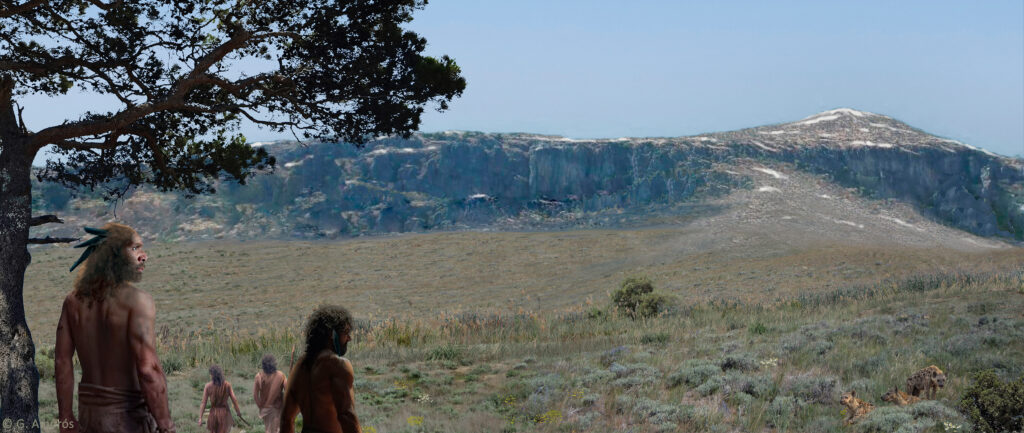
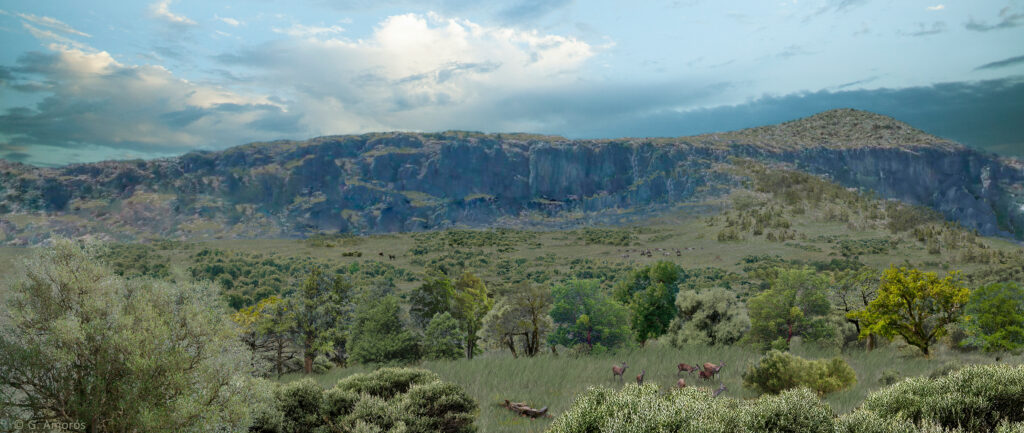
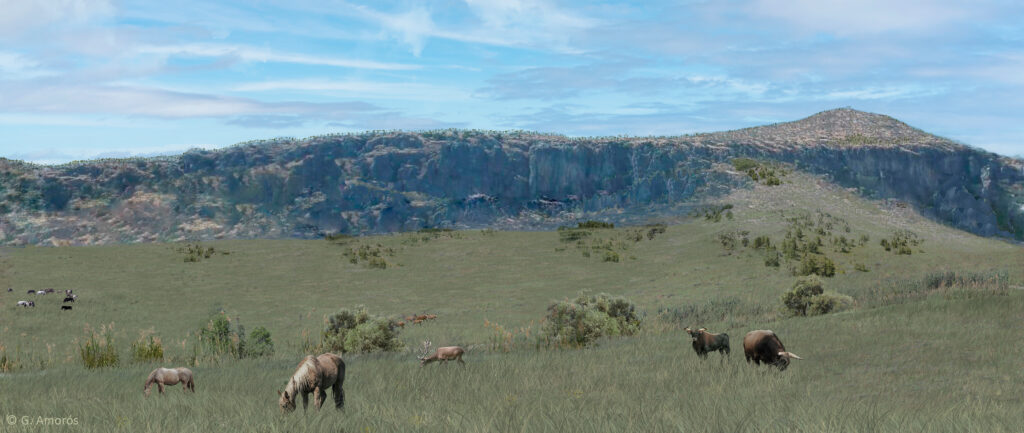
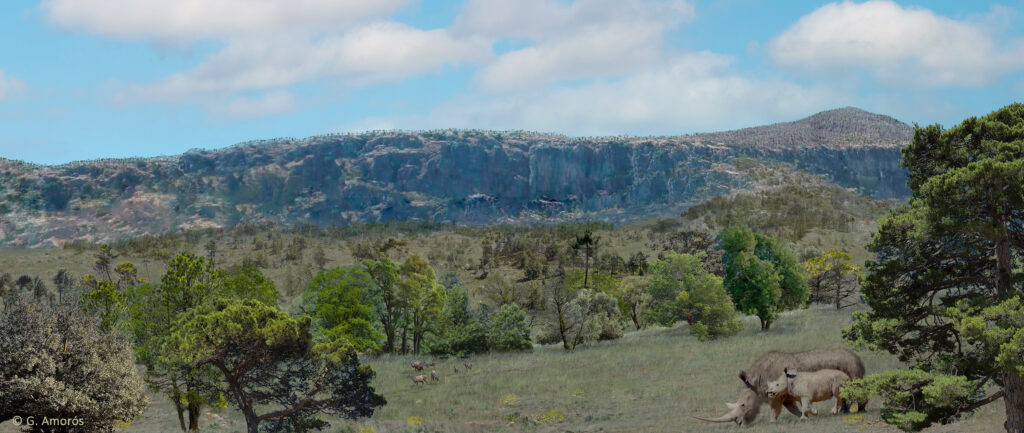
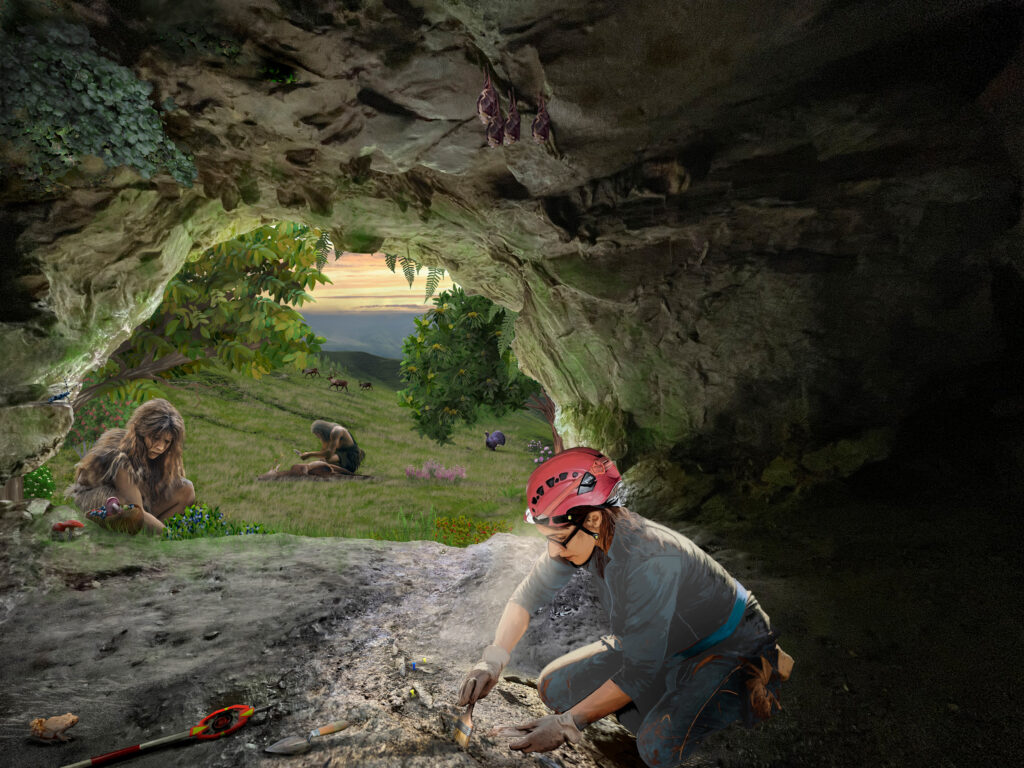
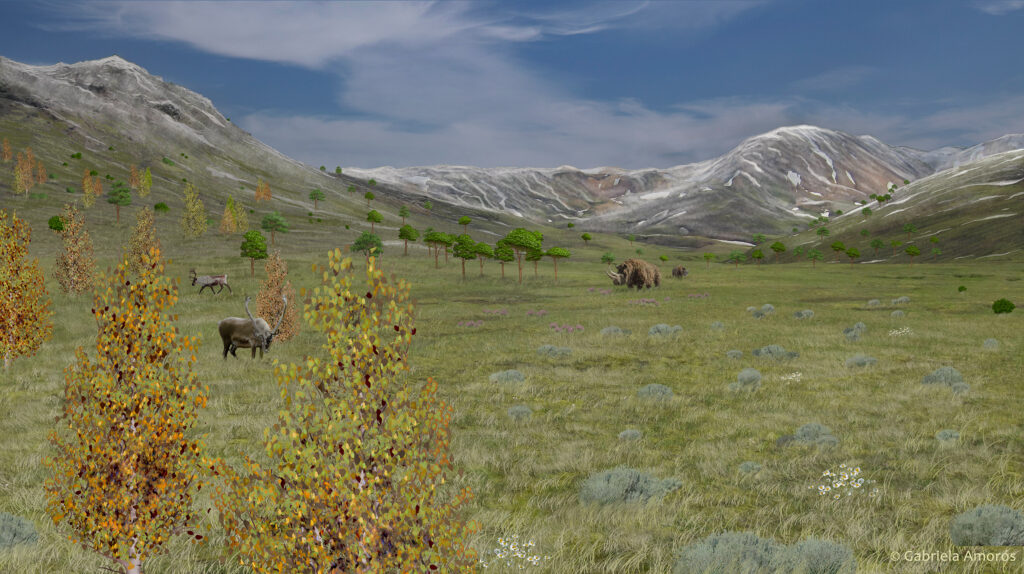
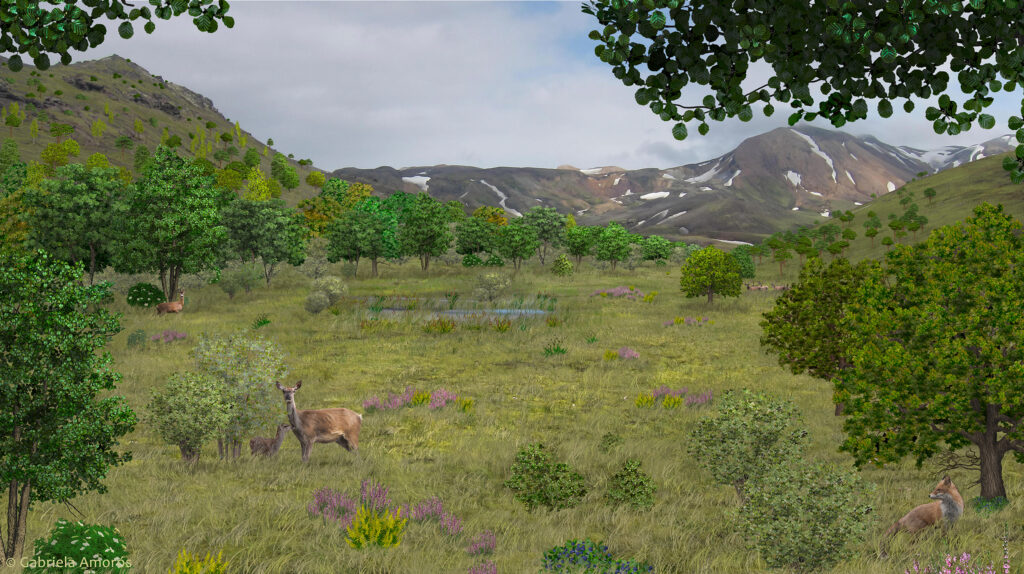
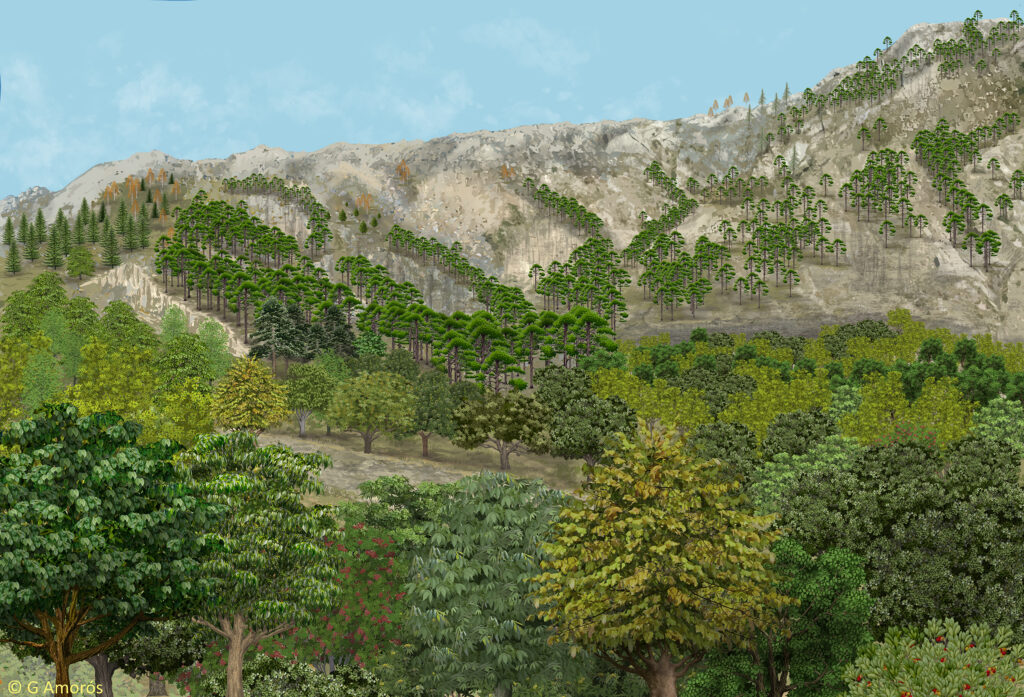
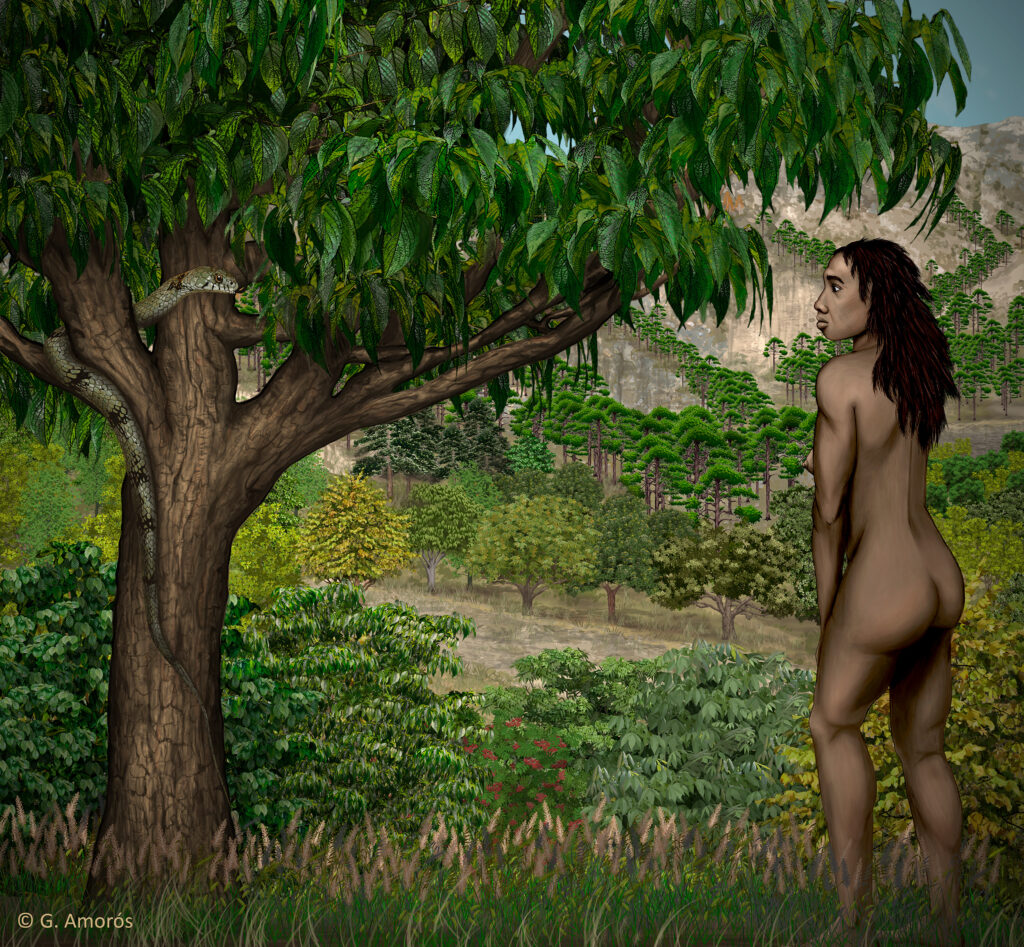
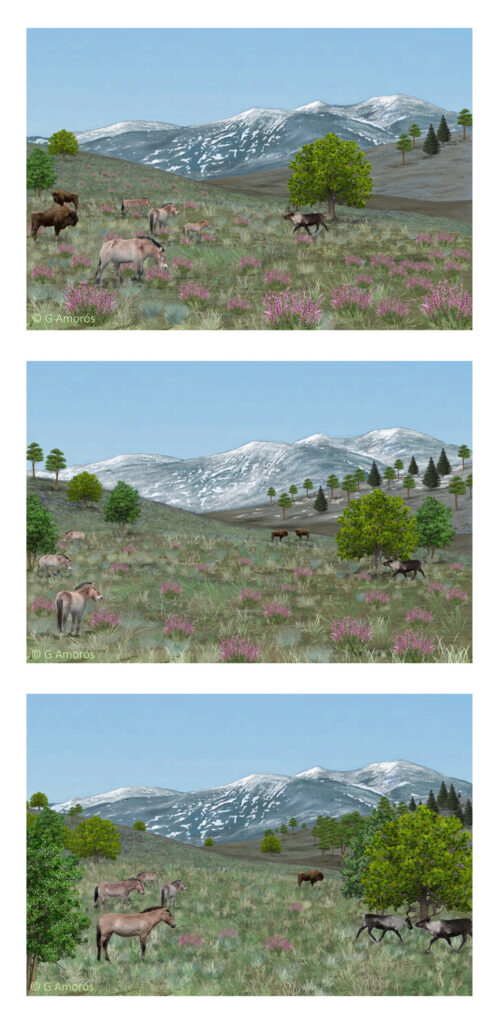
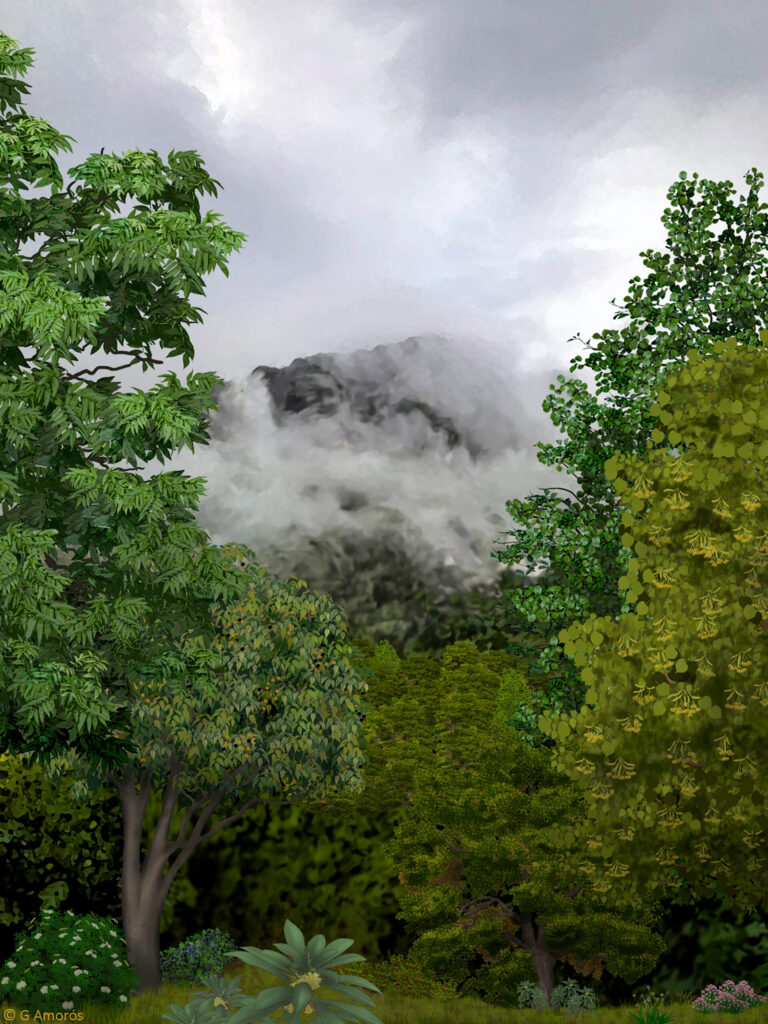
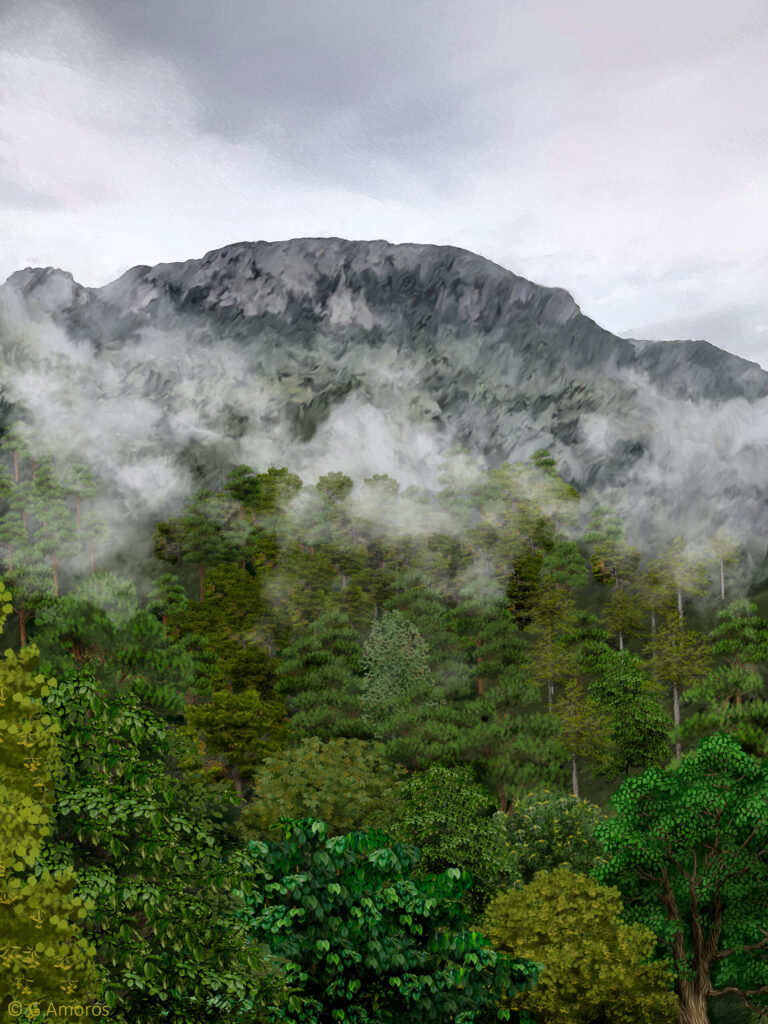
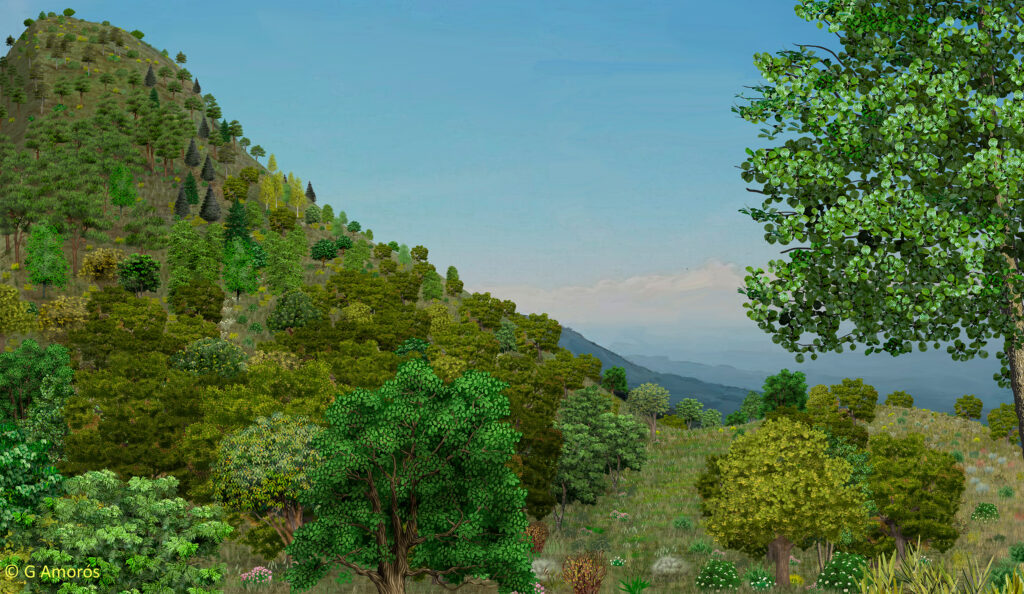
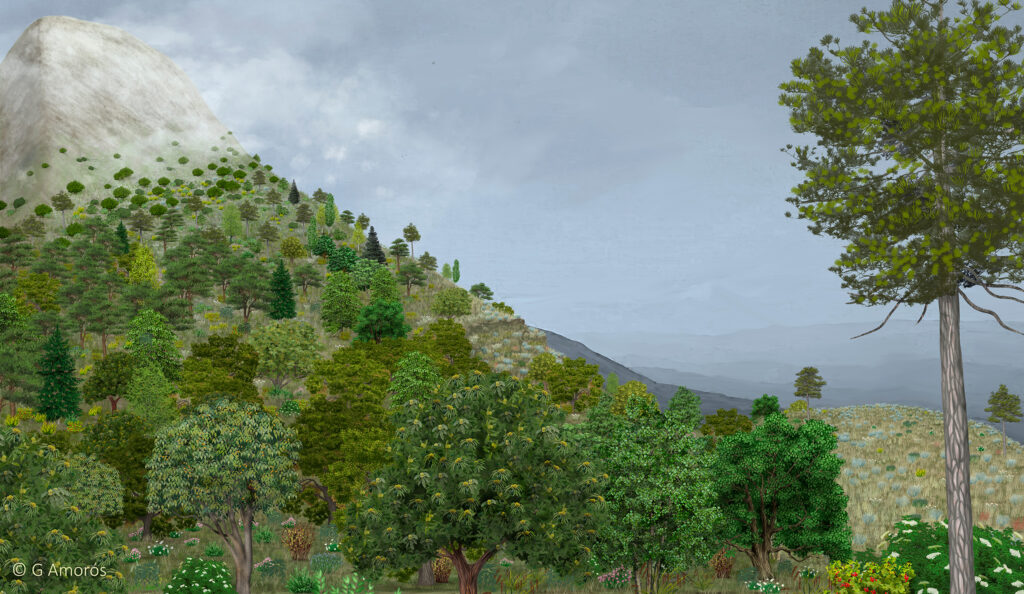
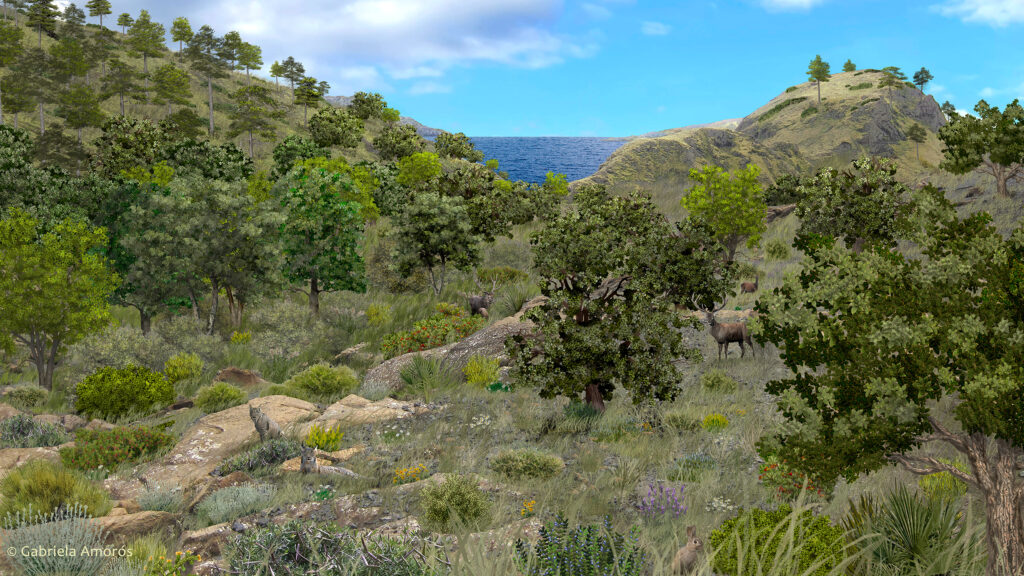
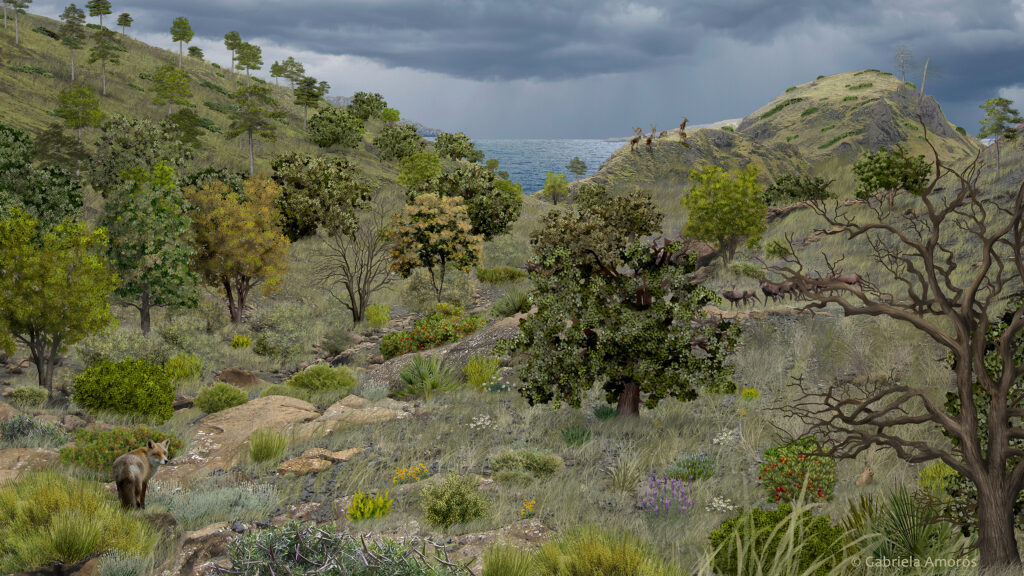
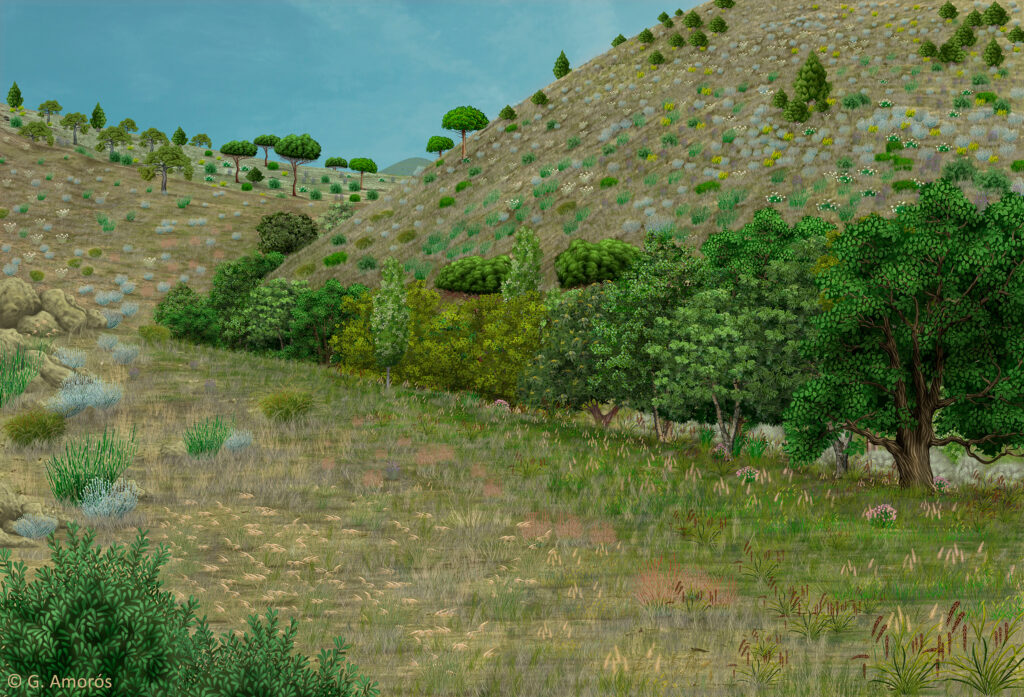
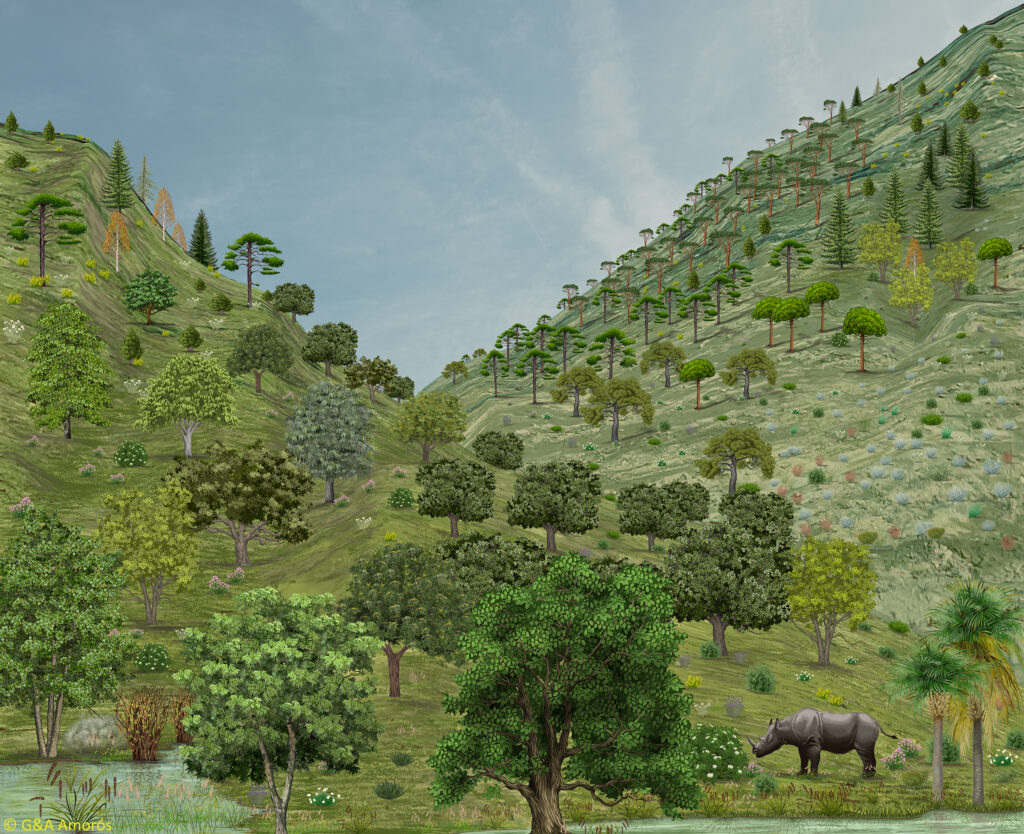
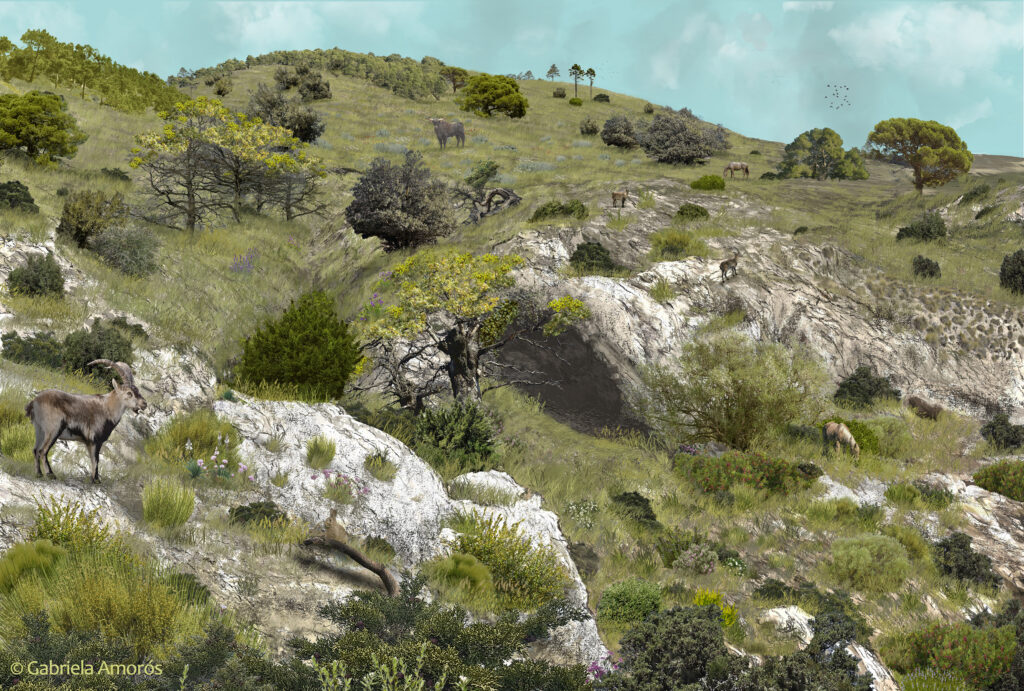
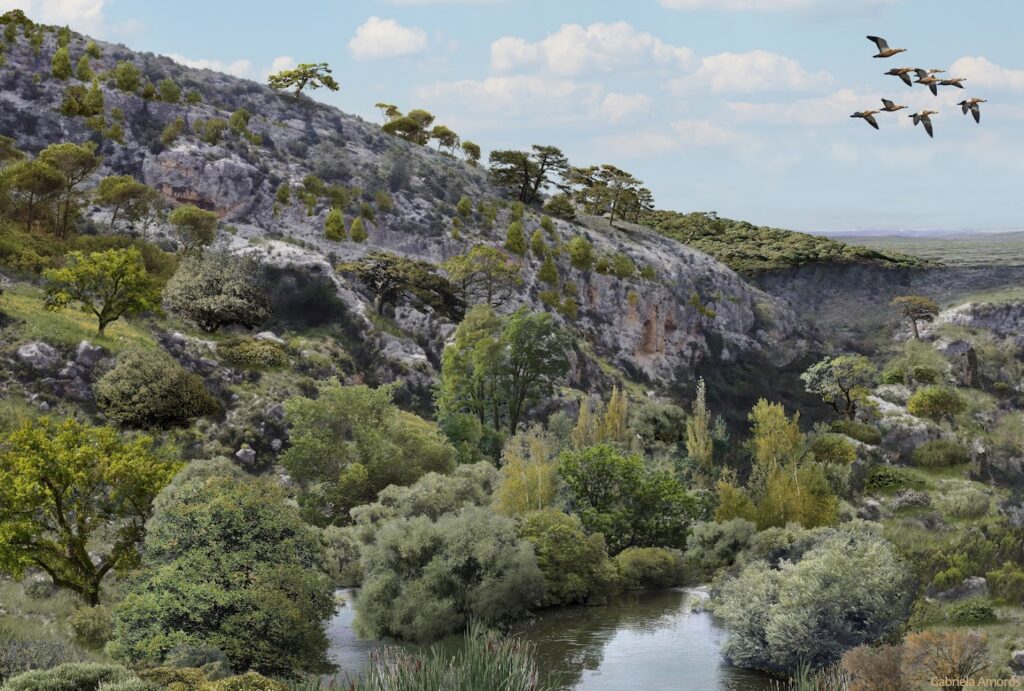
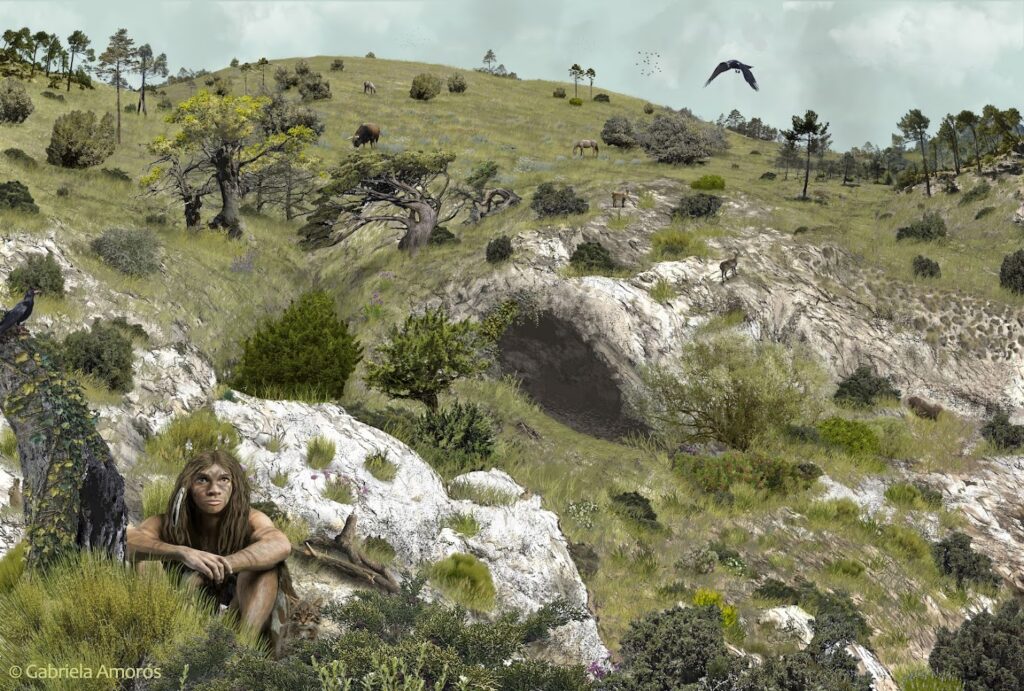
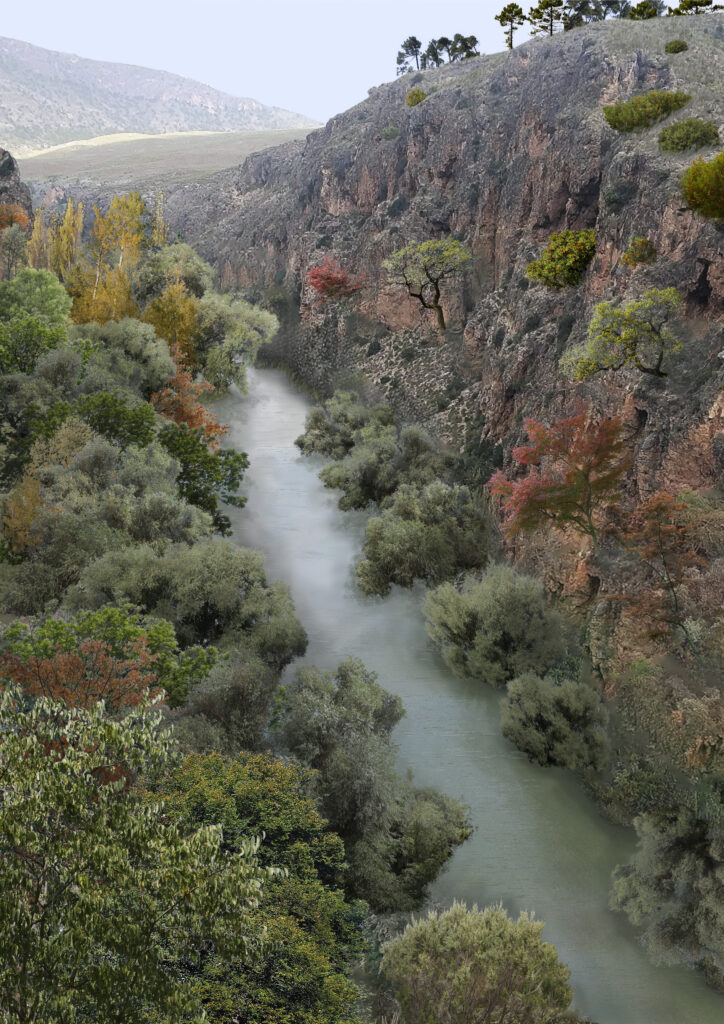
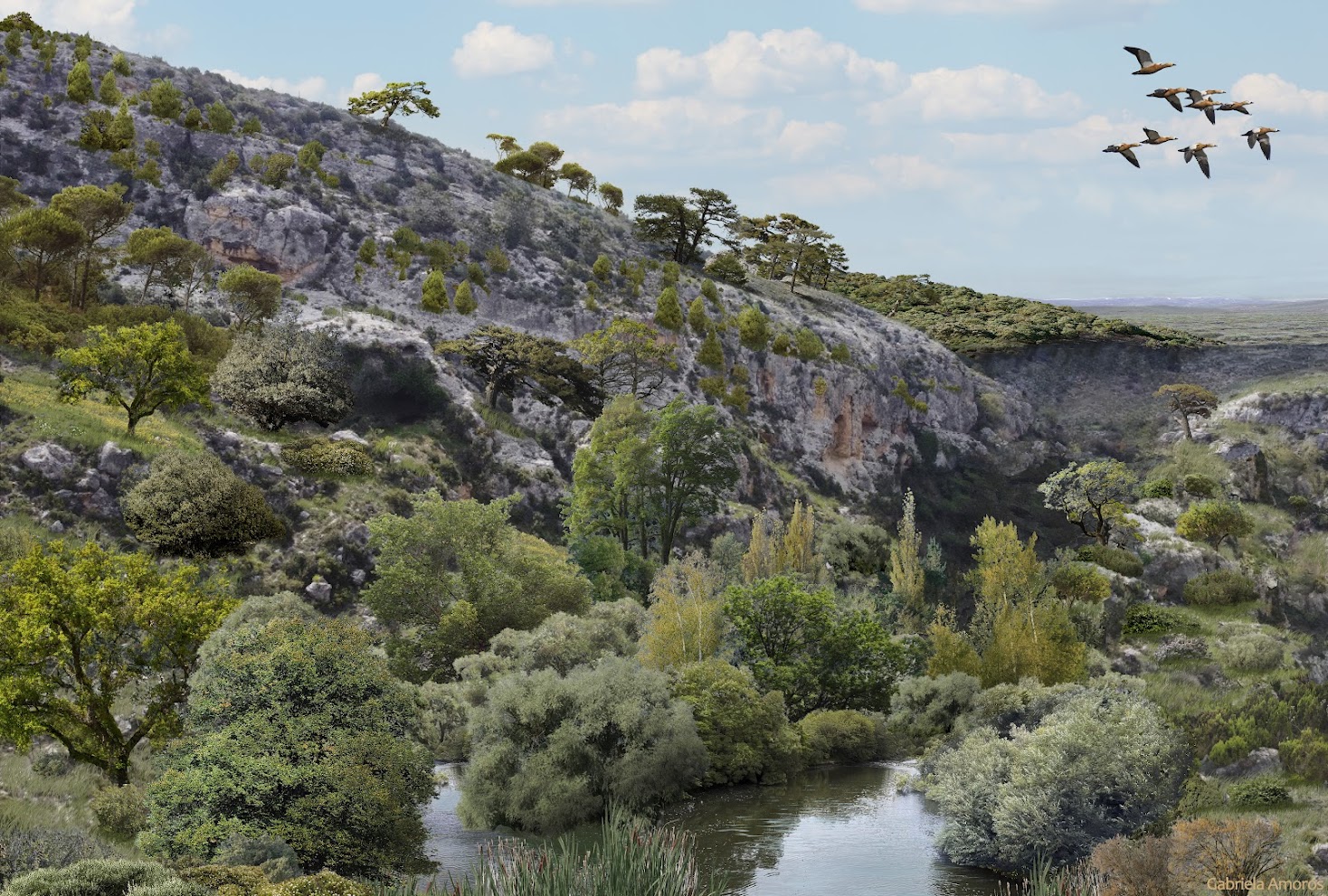
Paleovegetation reconstruction of the late Early Pleistocene archaeological site of Cueva Negra, based on palynological data from Carrión et al. (2003). The reconstruction highlights the local abundance of trees with different ecological requirements, including pines, junipers, oaks, and other broadleaved taxa, as well as shrubs and Mediterranean vegetation in general. Groundwater and local microclimate likely conditioned the surrounding vegetation, while xerophytic steppes extended across the adjacent plateaus. The river corridor is depicted in simplified form, with widened stretches and riparian vegetation, acknowledging that subsequent canyon incision has significantly altered the local geomorphology. The image thus conveys the fluviolacustrine setting inferred for the Pleistocene without attempting a literal reproduction of present-day topography. See Supplementary Figs. 19–22, for taxonomic details. Artwork by Gabriela Amorós.
Carrión JS, Amorós G, Amorós A, Gandolfo MA, Evelyn Kustatscher E. Plants in the Shadows: Bridging the Gap in Paleoecology and Paleoart. Earth Sciences Reviews. Volume 274, March 2026, 105371.