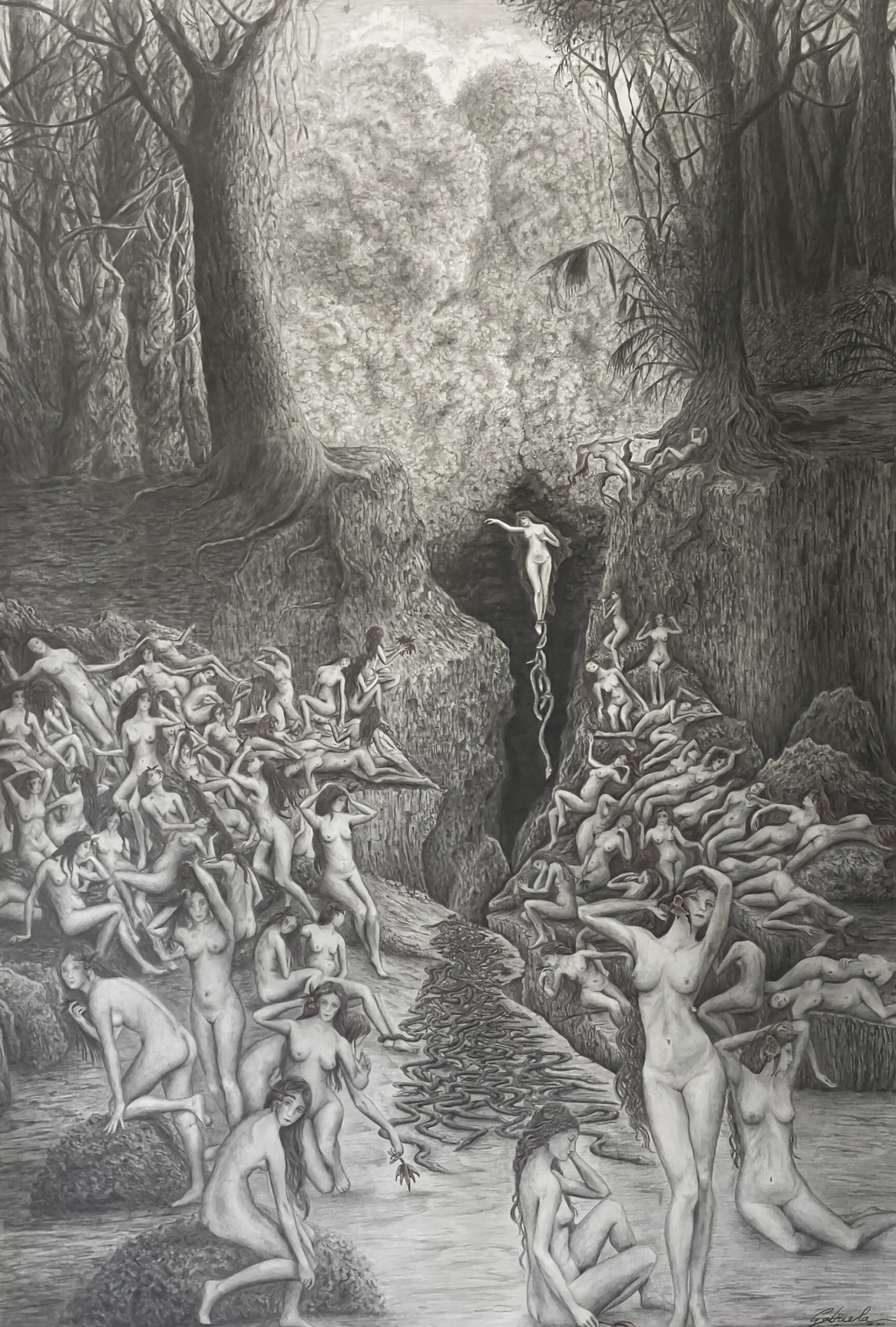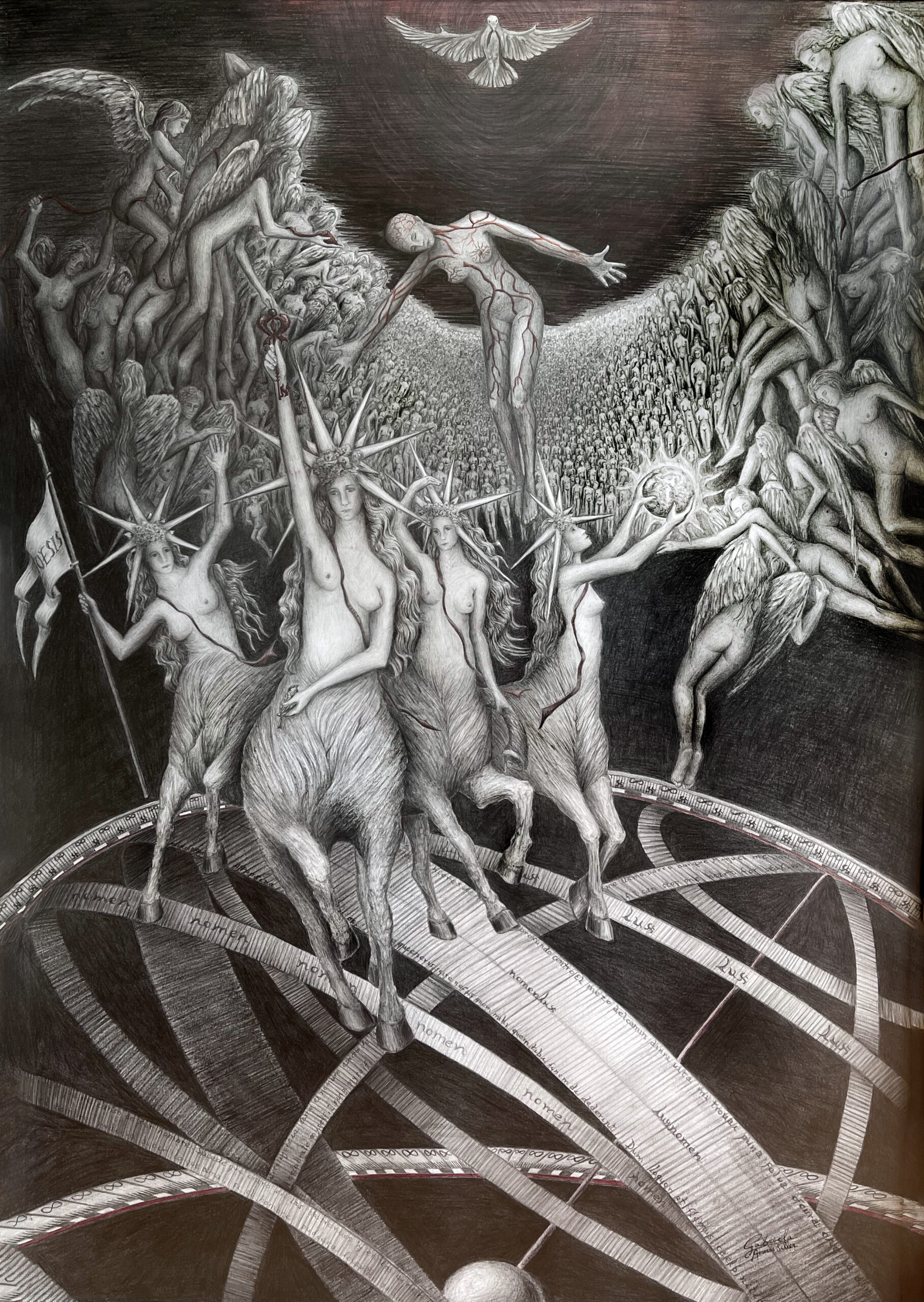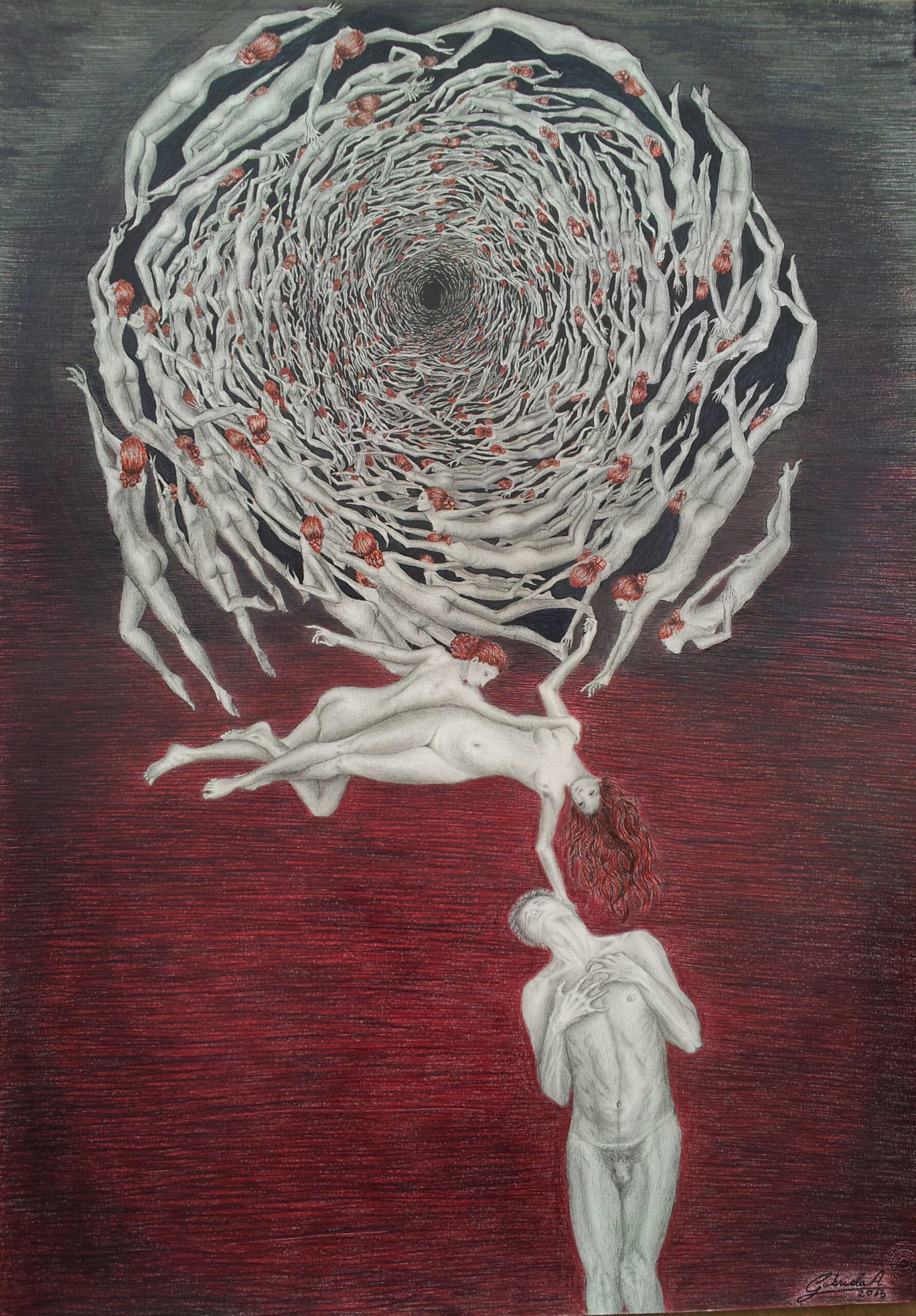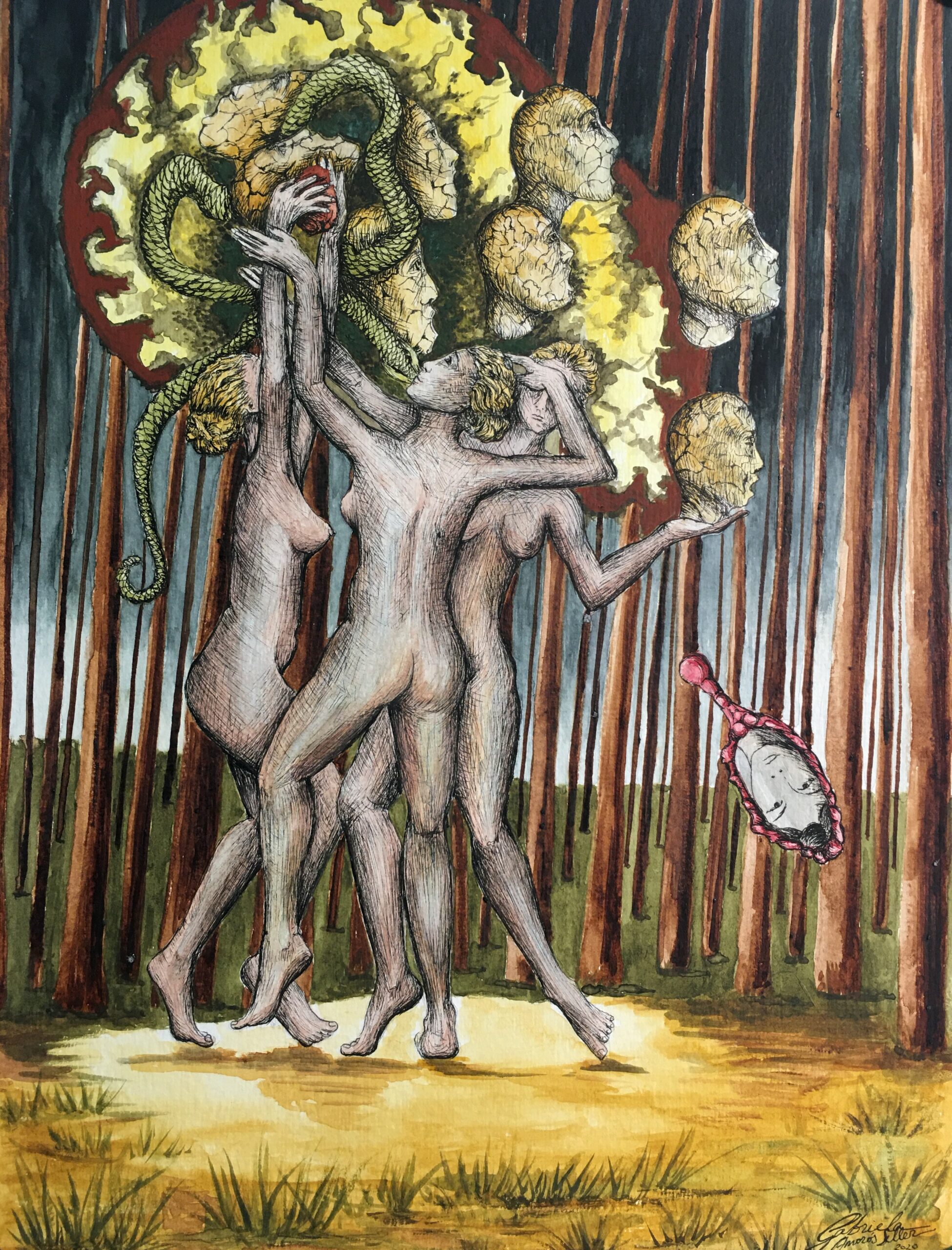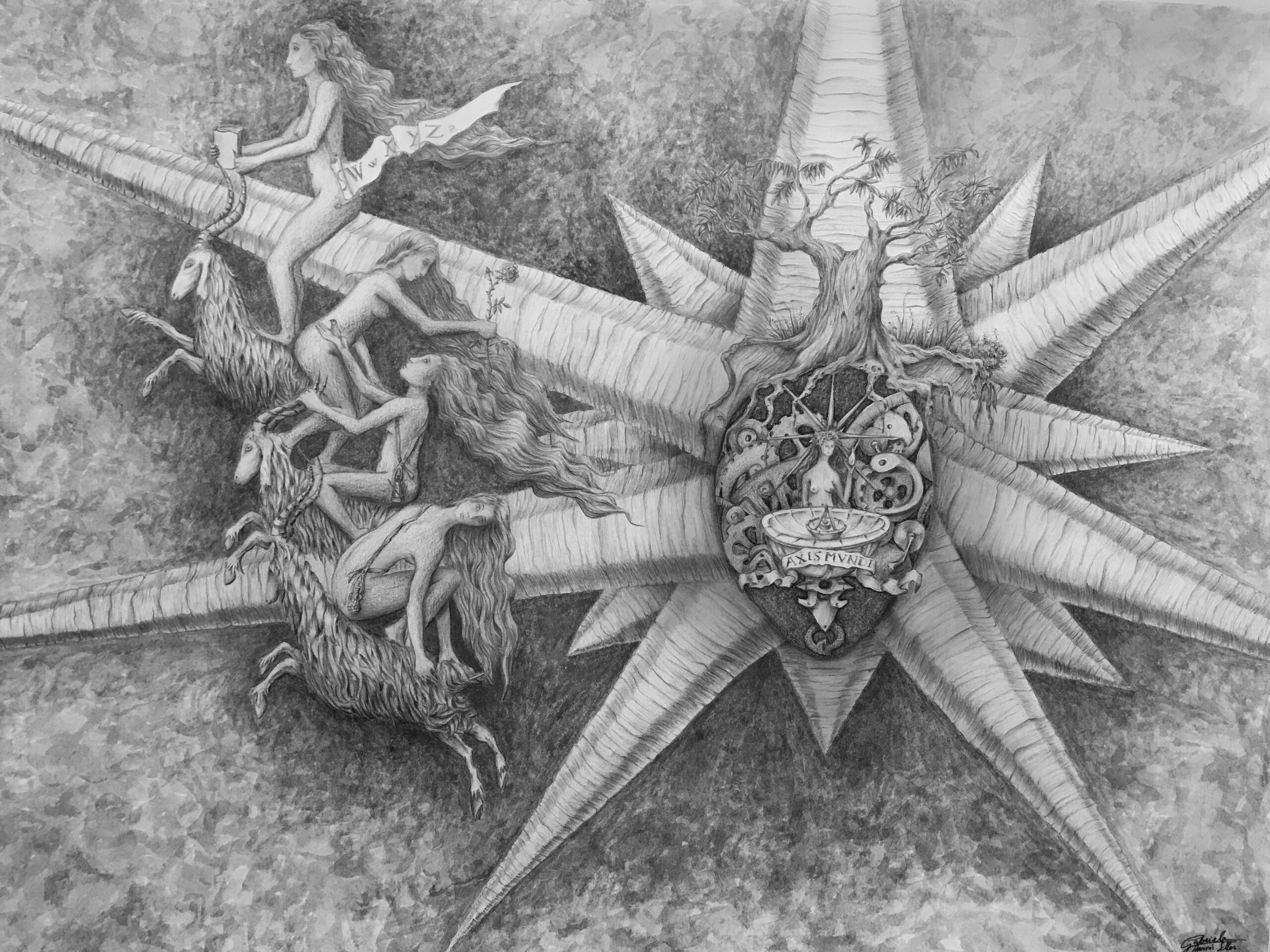
AXIS MUNDI (2020, graphite and watercolor on cardboard, 50 × 70 cm)
Axis mundi
This term refers to a concept present in many ancient civilizations: a place where heaven and earth converge —the “navel of the world” or the omphalos, a sacred stone believed to mark the origin of the world. The Greek historian and geographer Pausanias (2nd century AD) described it as the center that connected humans, the world of the dead, and the realm of the gods.
Mircea Eliade
The philosopher and historian Mircea Eliade wrote extensively on this, affirming that “every microcosm, every inhabited region, has a center; that is to say, a place that is sacred above all.”
The Tree of Knowledge
The Tree of Knowledge was used as a metaphor by philosopher René Descartes to explain the structure of philosophy. The symbol of the tree has recurred throughout human history, such as in the concept of the World Tree, which in many cultures upheld the heavens while its roots reached into the underworld, connecting both realms. In Genesis, it appears as the tree of the knowledge of good and evil, one of the trees of Eden, whose fruits symbolized the human choice between good and evil.
Witches
In recent times, the concept of the witch has been closely linked to feminism. Witches were often rural women, many of whom possessed deep knowledge of the effects of plants on the human body. They mastered their natural environment and practiced phytotherapy.
Givers of life
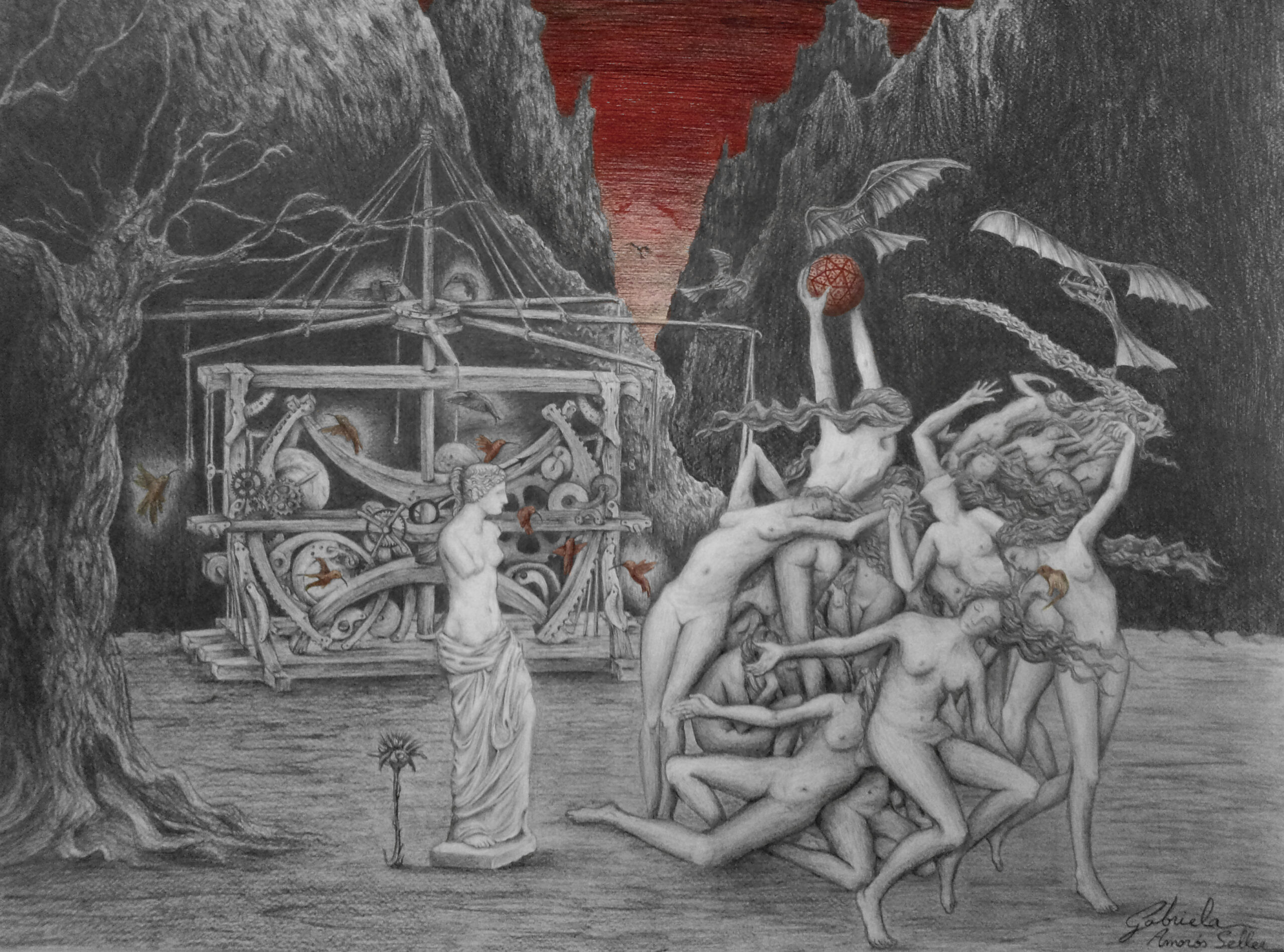
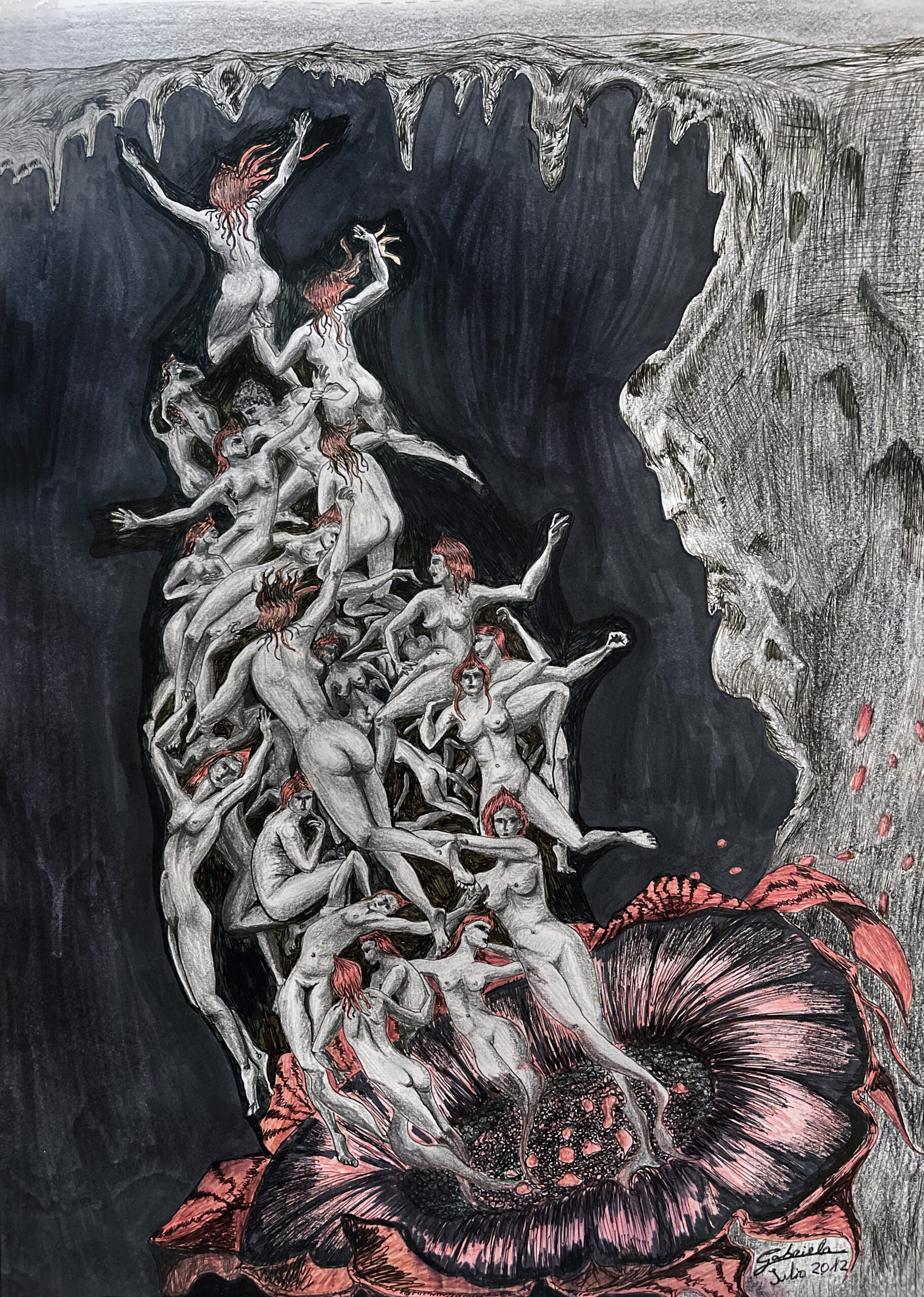
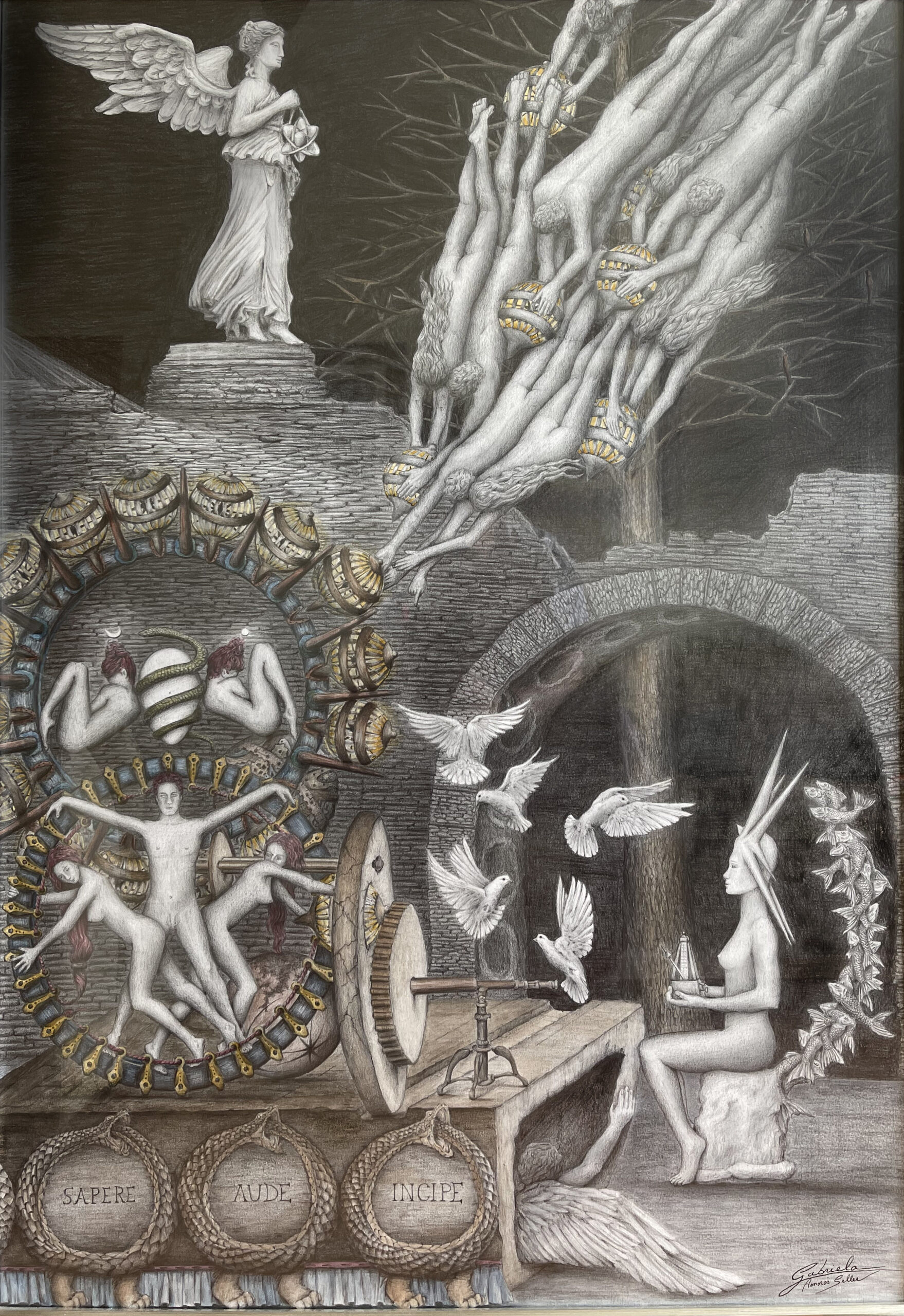
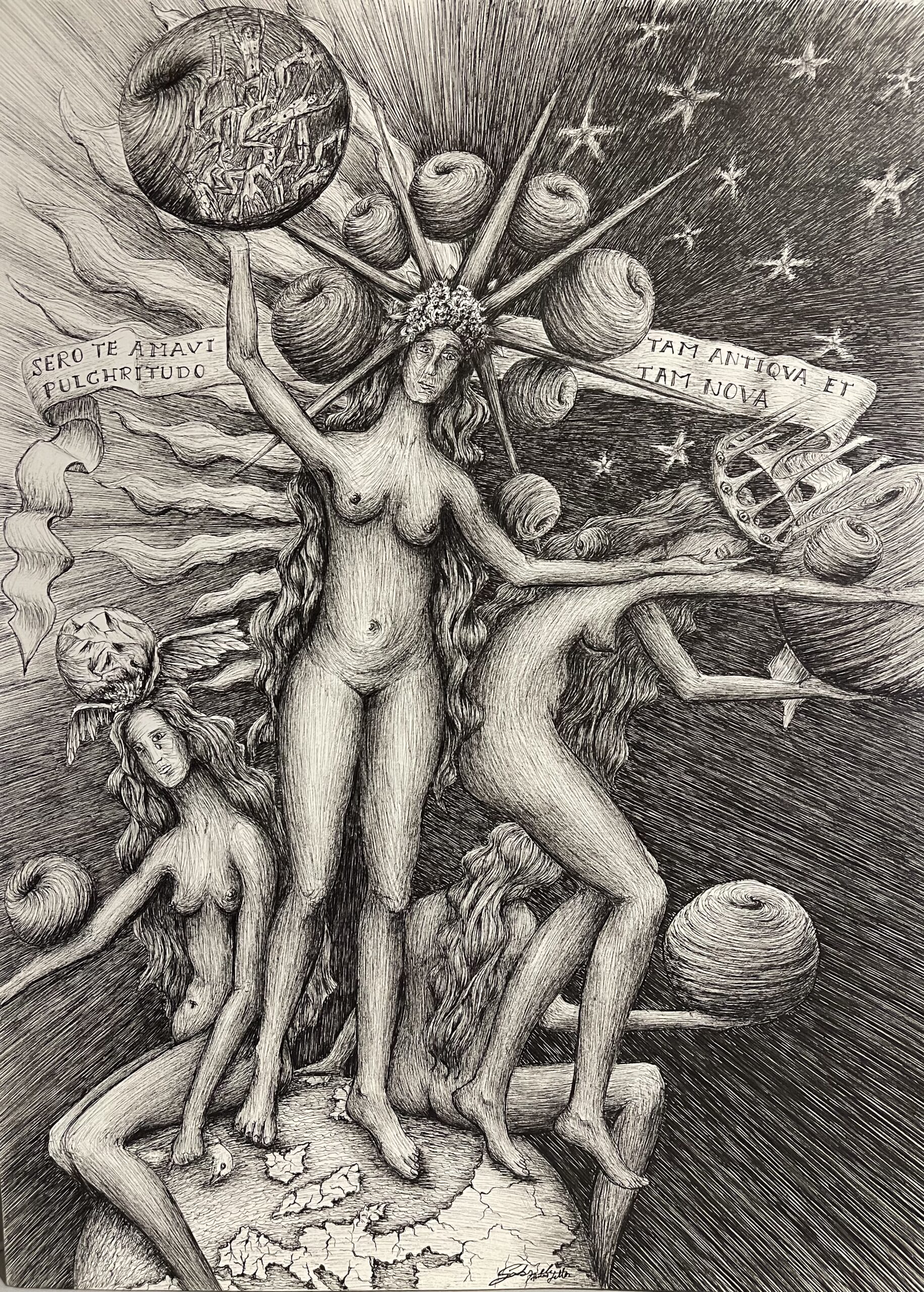
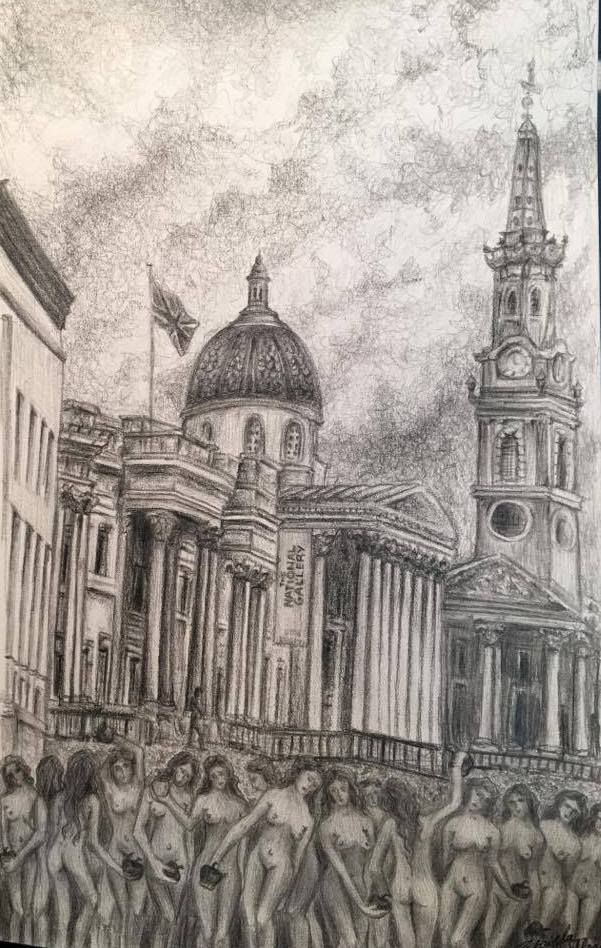
In this work, the axis mundi is embodied by the Mother Goddess, who, through a mechanism resembling a clockwork system, drives a celestial body from which the Tree of Knowledge springs. From this tree emerge a group of women-witches, bringing to Earth from the world’s center wisdom, love, the renewal of nature, and the healing of the body.