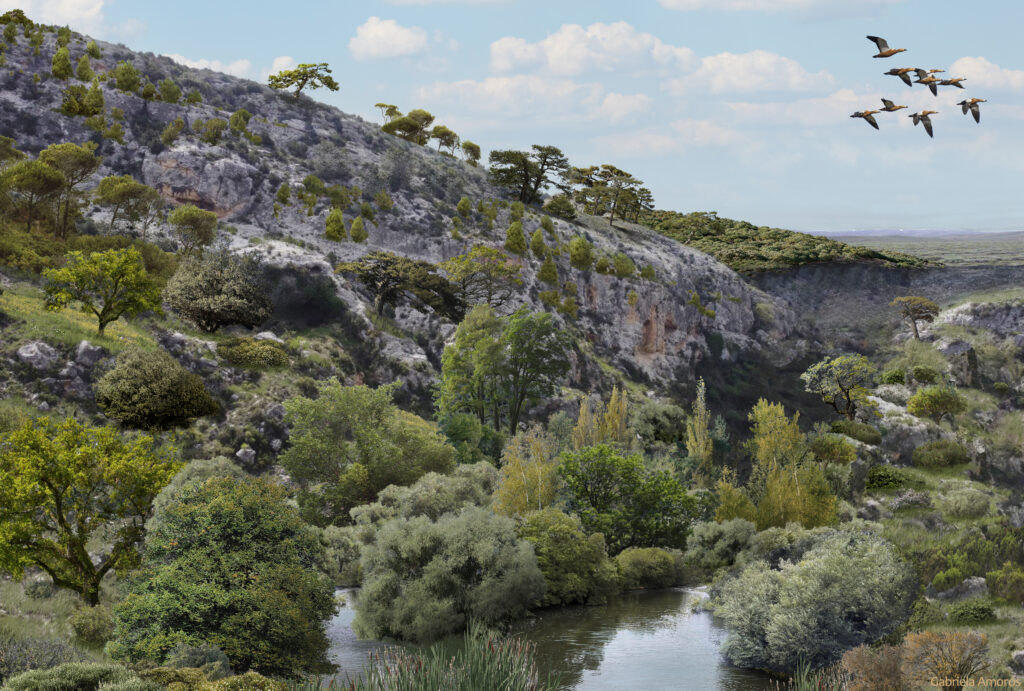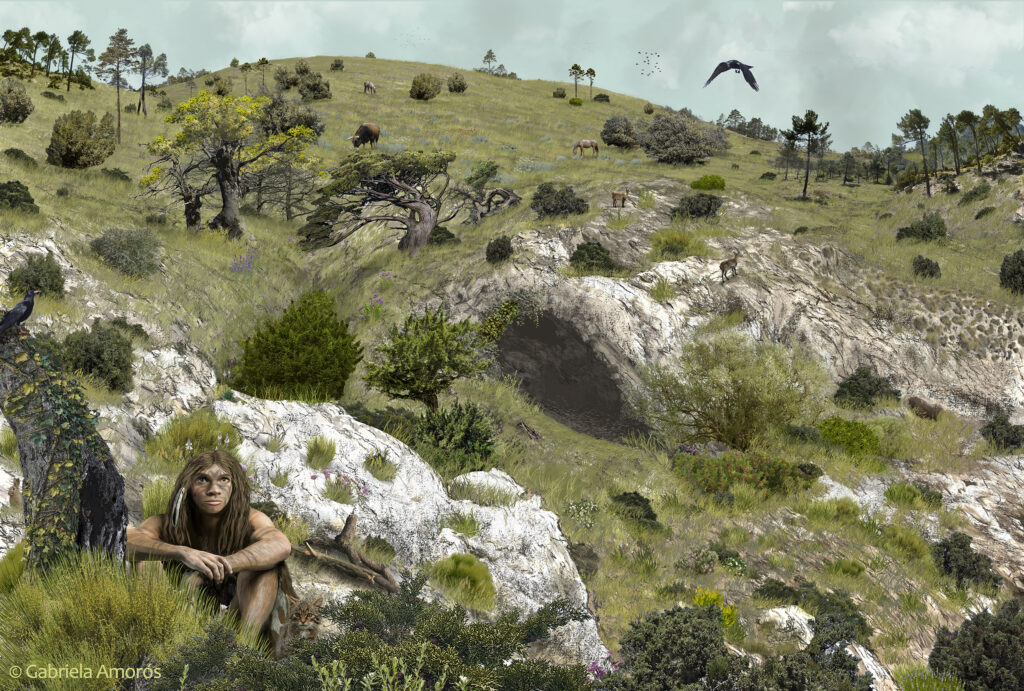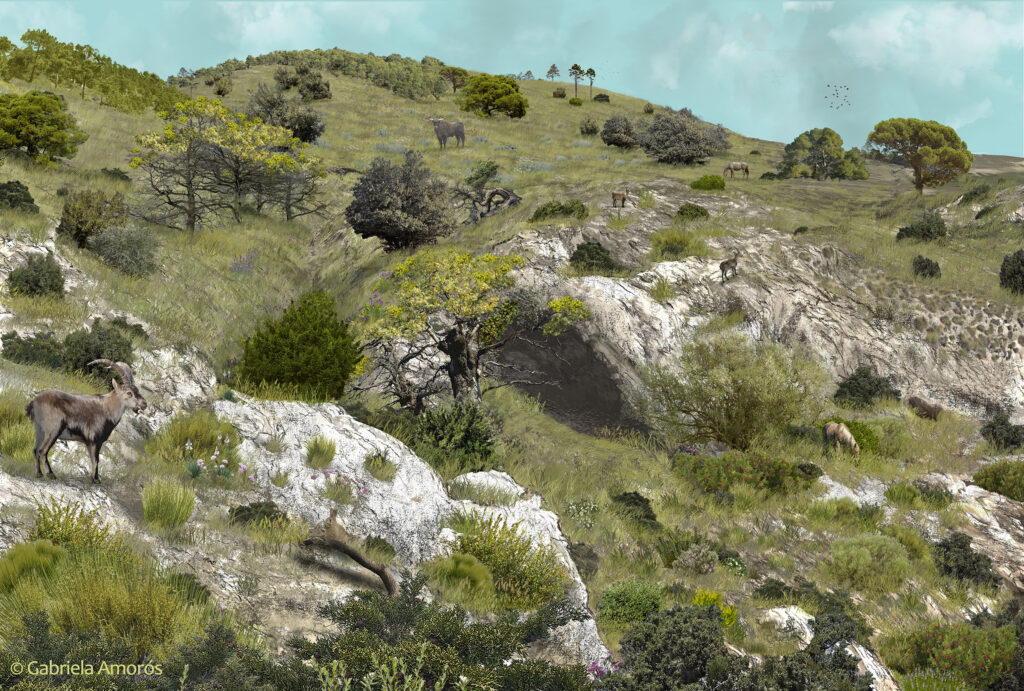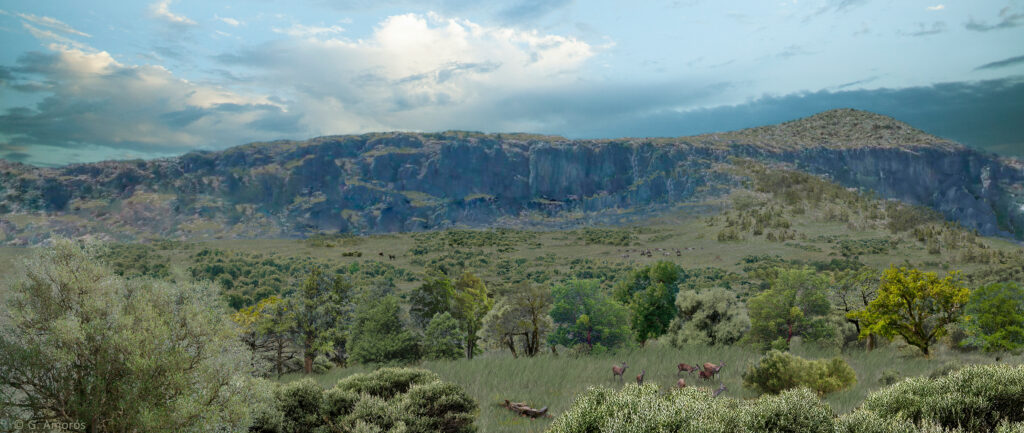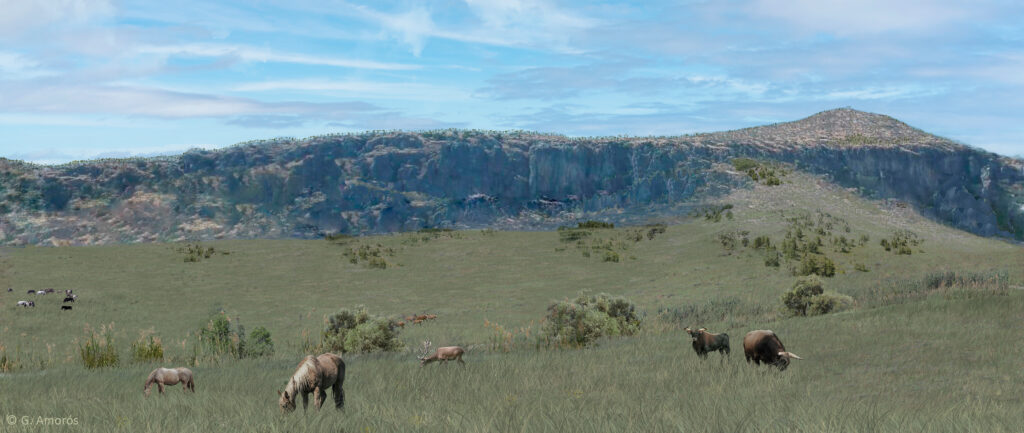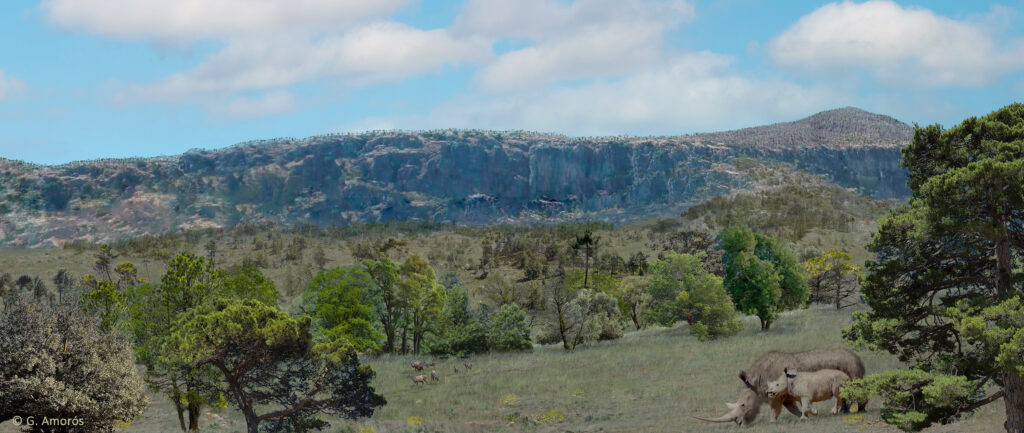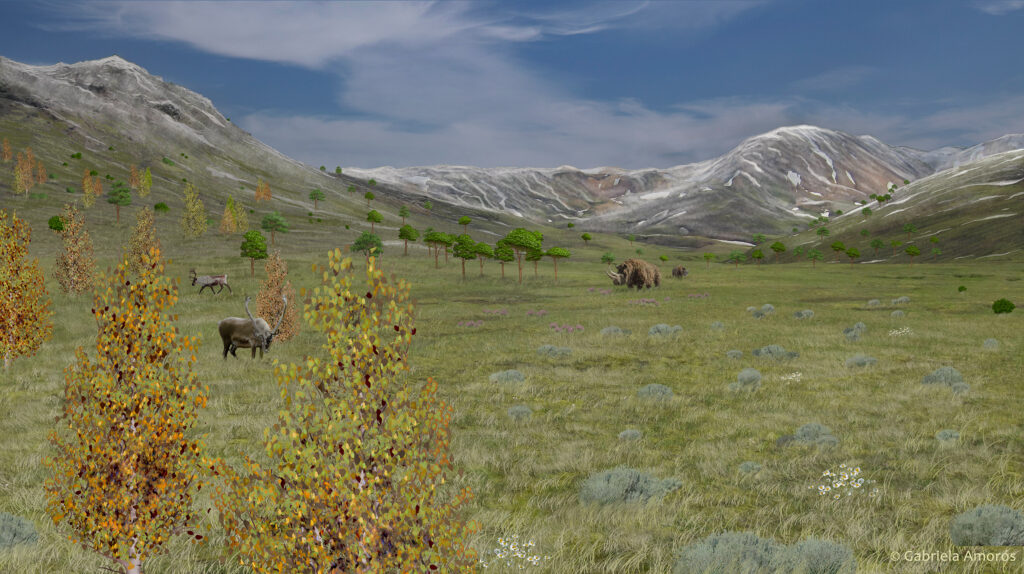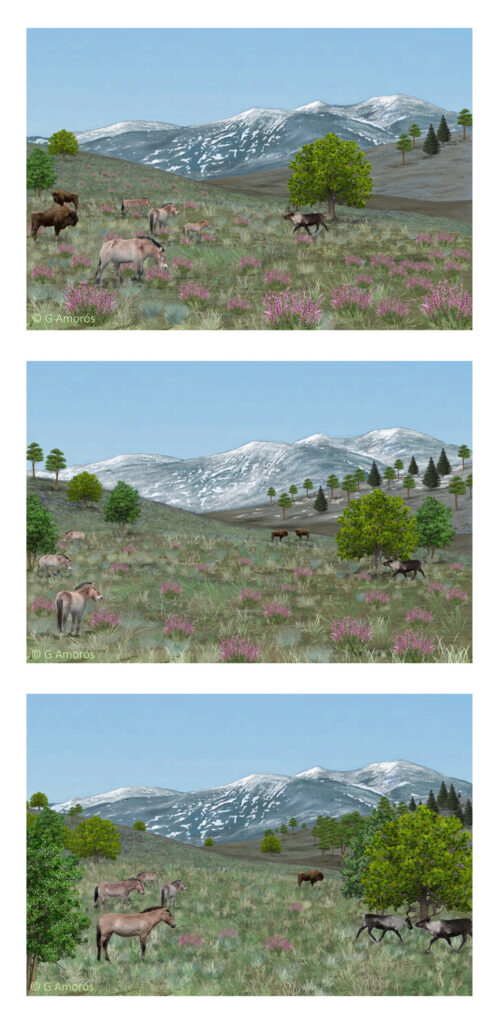
Full-glacial phase of MIS 3 at Carihuela
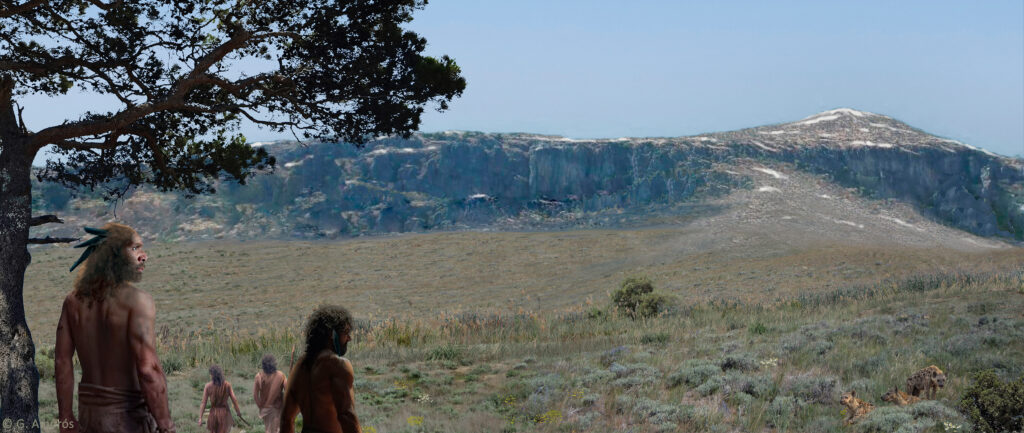
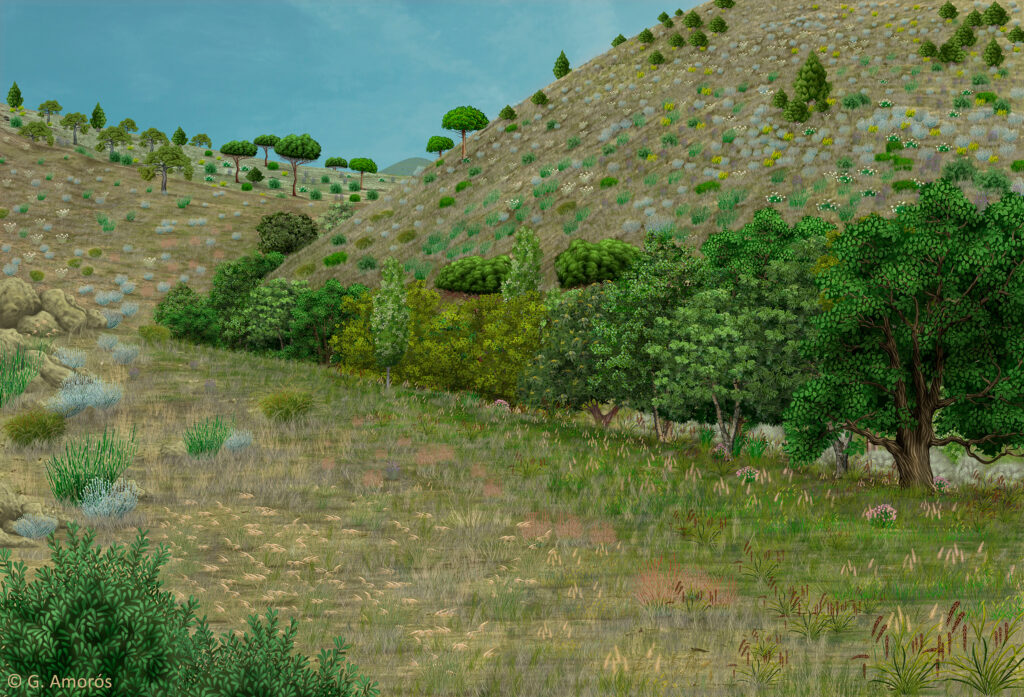
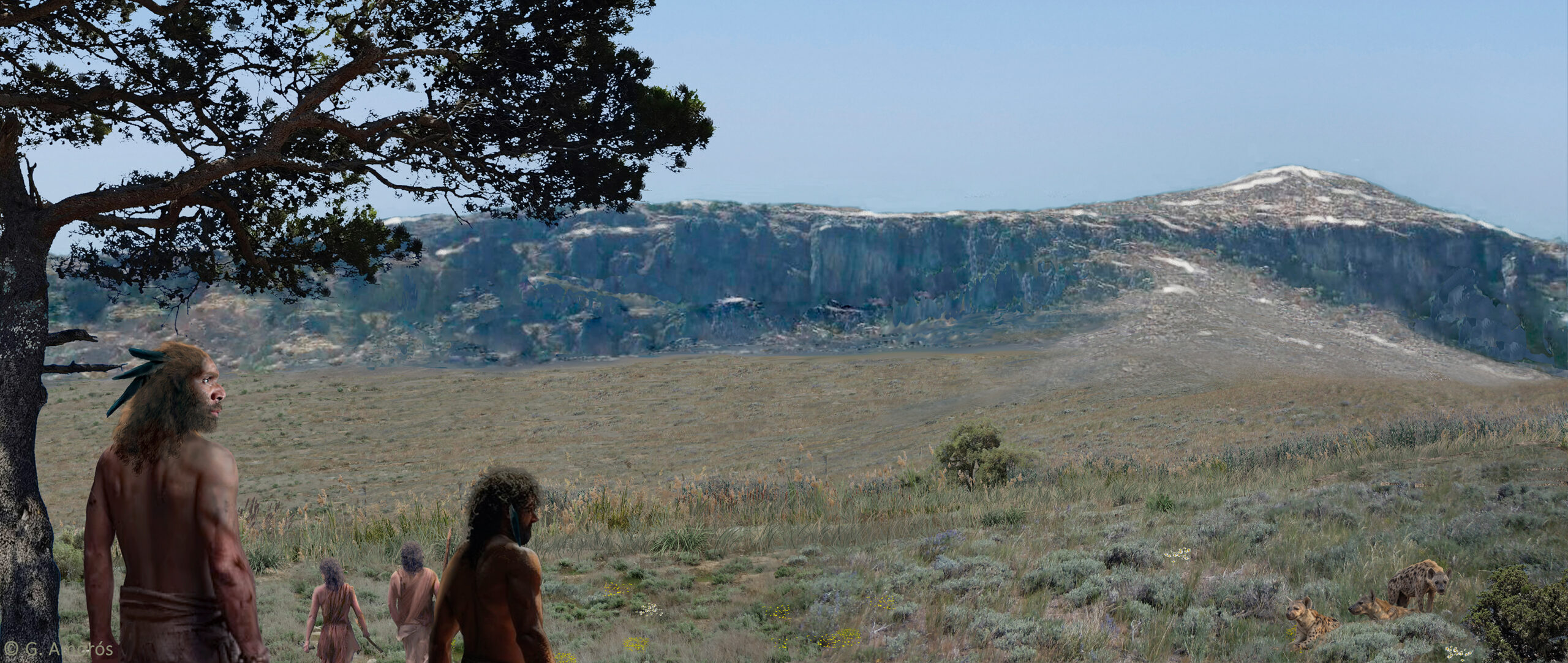
Full-glacial phase of MIS 3 at Carihuela (Unit V), with dominance of Artemisia, grasses, Ephedra, composites, and other herbaceous and small shrub species, along with scattered pines. This represents the most coldest dry phase in the sequence, with the disappearance of thermophilous taxa. Reedbeds and willows are present along the Piñar River course. A group of hyenas (Crocuta) observe a departing group of humans composed of three sapiens and one Neanderthal (left, with feathers). This is a speculative inclusion not meant to imply direct evidence from Carihuela, though competition between humans and hyenas for karstic shelter sites in the Monte del Castillo is well-documented (Carrión et al., 2019b; Ochando et al., 2020d). The co-occurrence of Neanderthals and sapiens is intended to reflect likely gene flow events (Reilly et al., 2022; Rosas et al., 2022) which in the Iberian Peninsula, are supported by the Lagar Velho child (Linscott et al., 2025). See Supplementary Information for taxonomic details and Section 4.3 for data and interpretations (Carrión, 1992; Carrión et al., 2019b). Artwork: G. and A. Amorós.
Carrión JS, Amorós G, Amorós A, Marín-Arroyo AB. Beyond the Cold Steppes: Neanderthal Landscapes and the Neglect of Flora. Quaternary Science Reviews, invited paper. Volume 371, January 2026, 109673