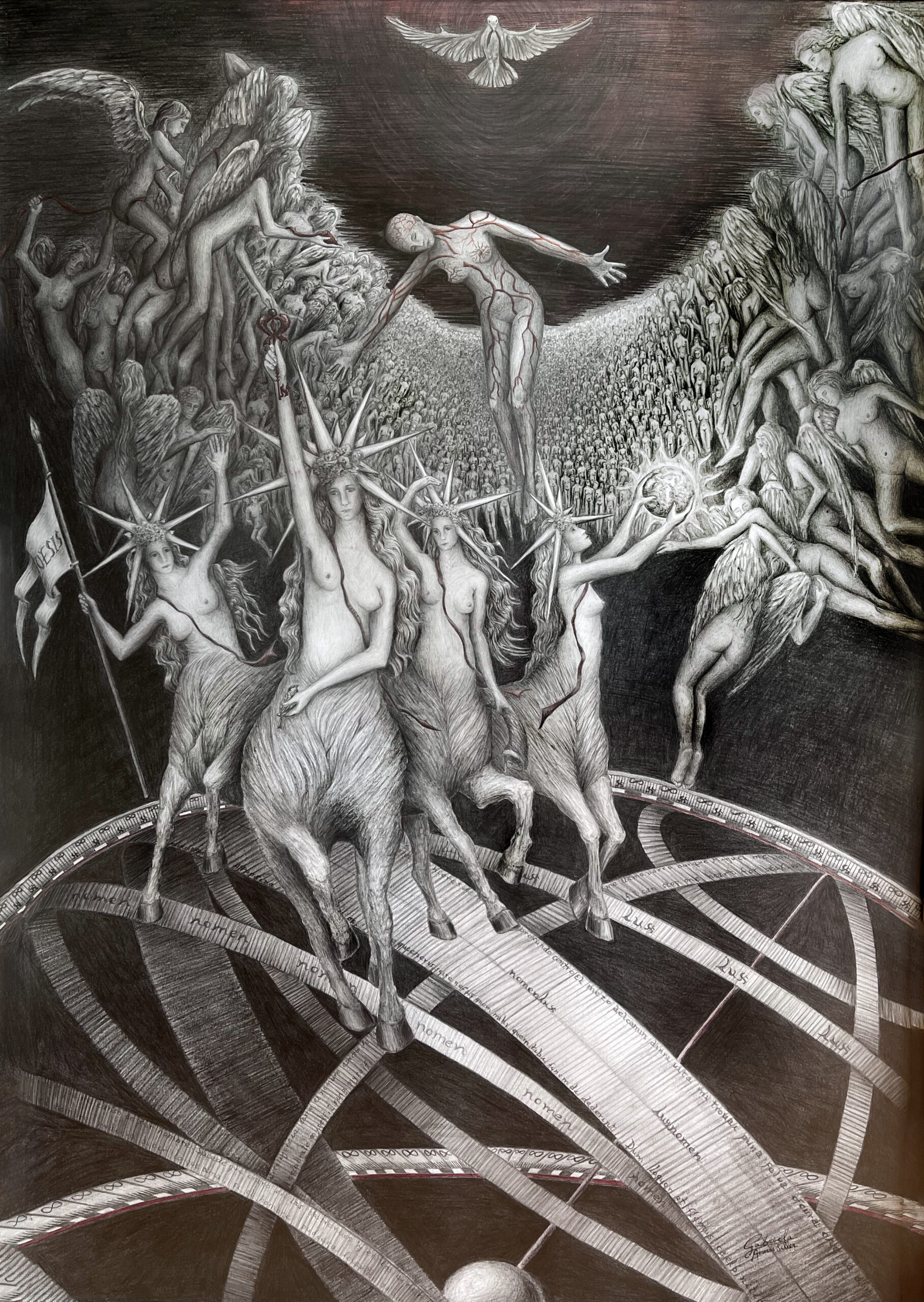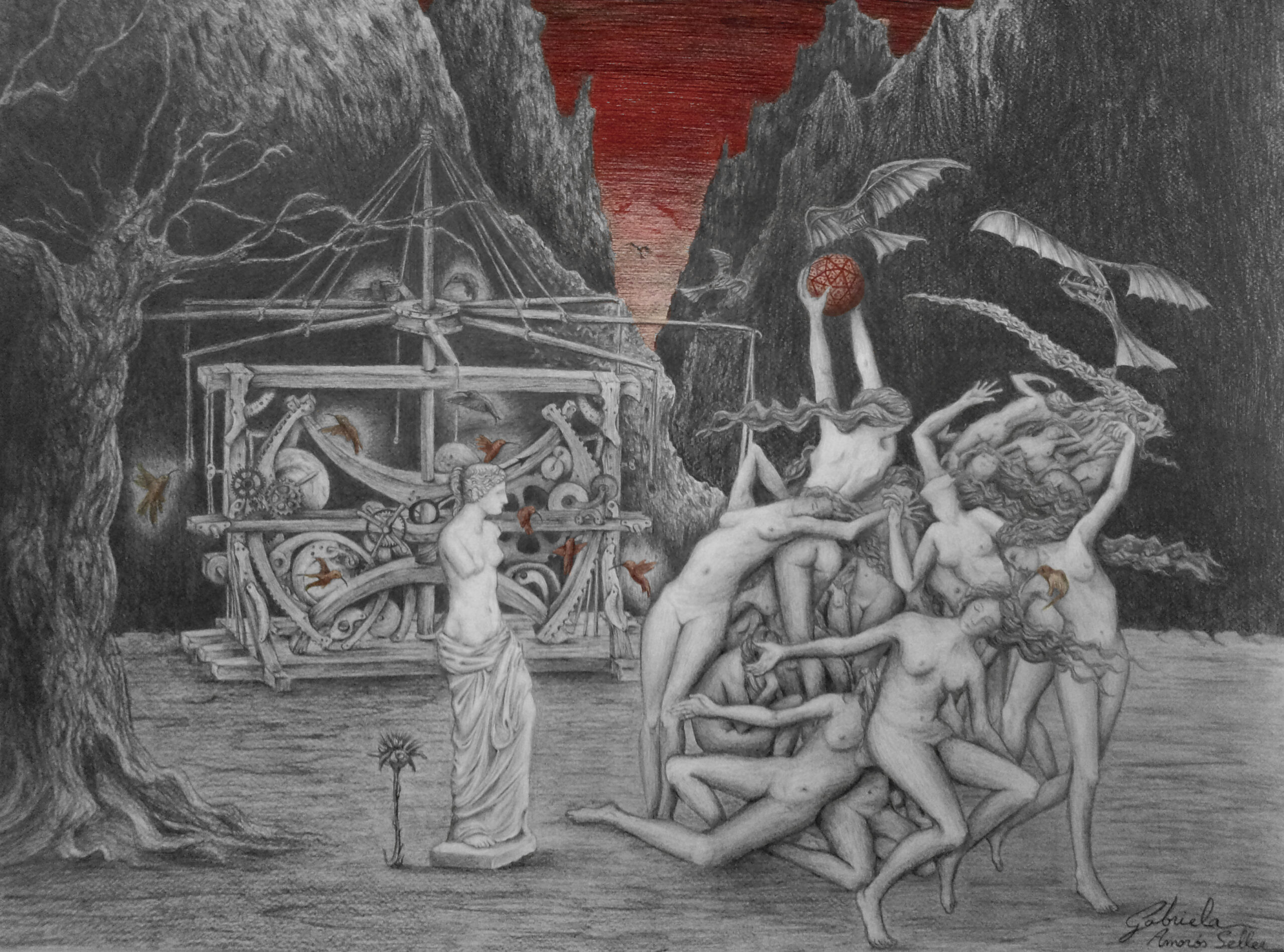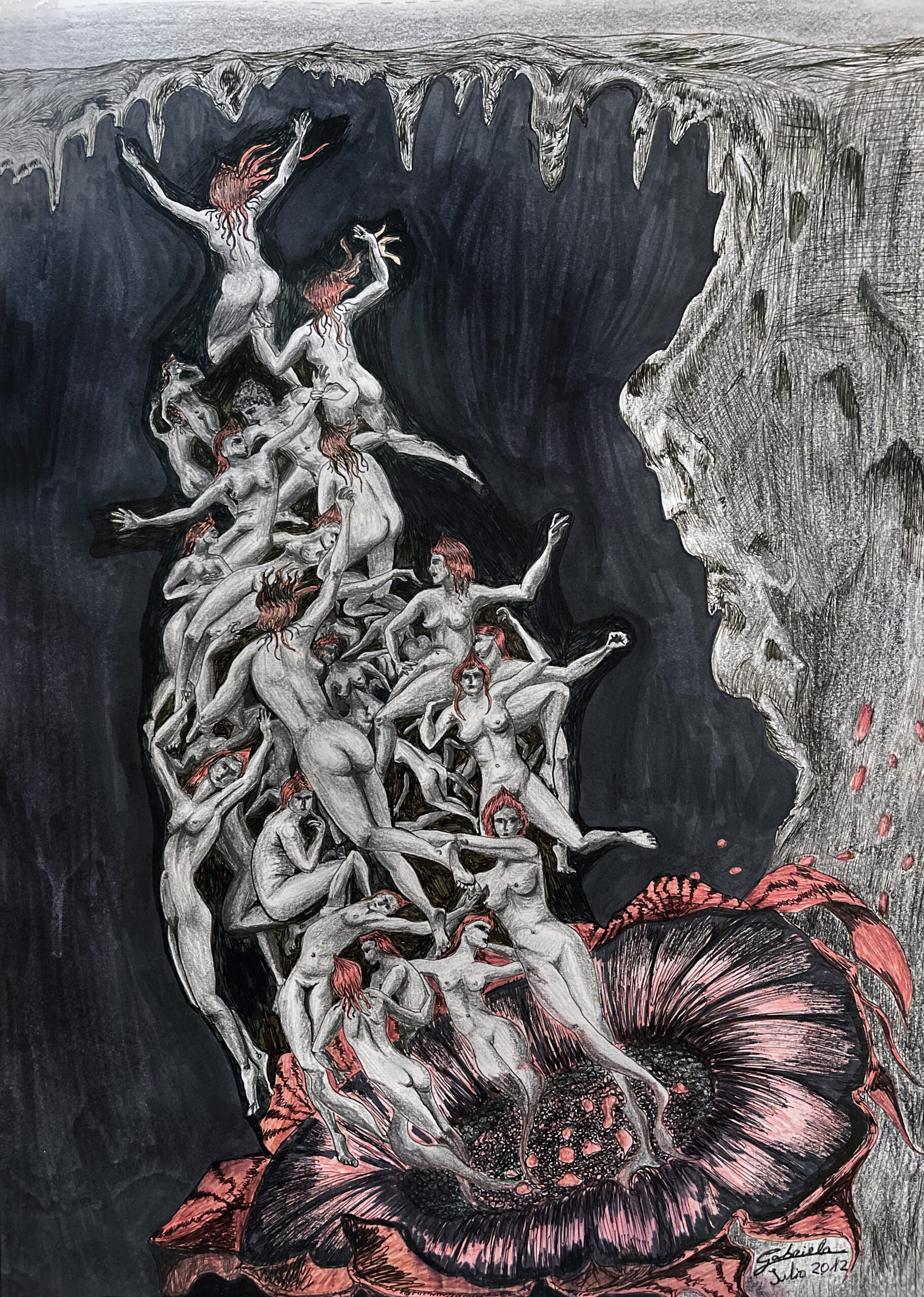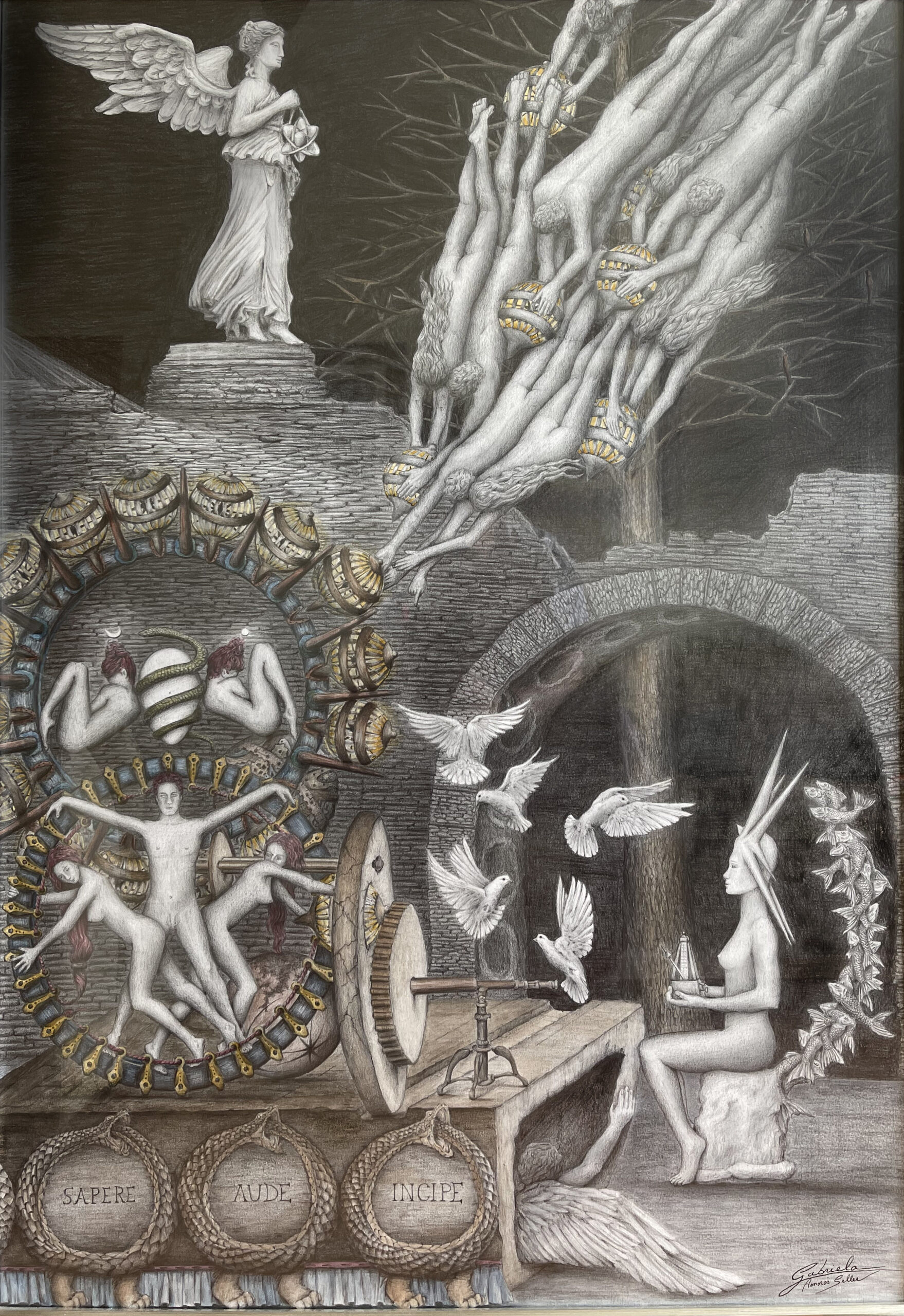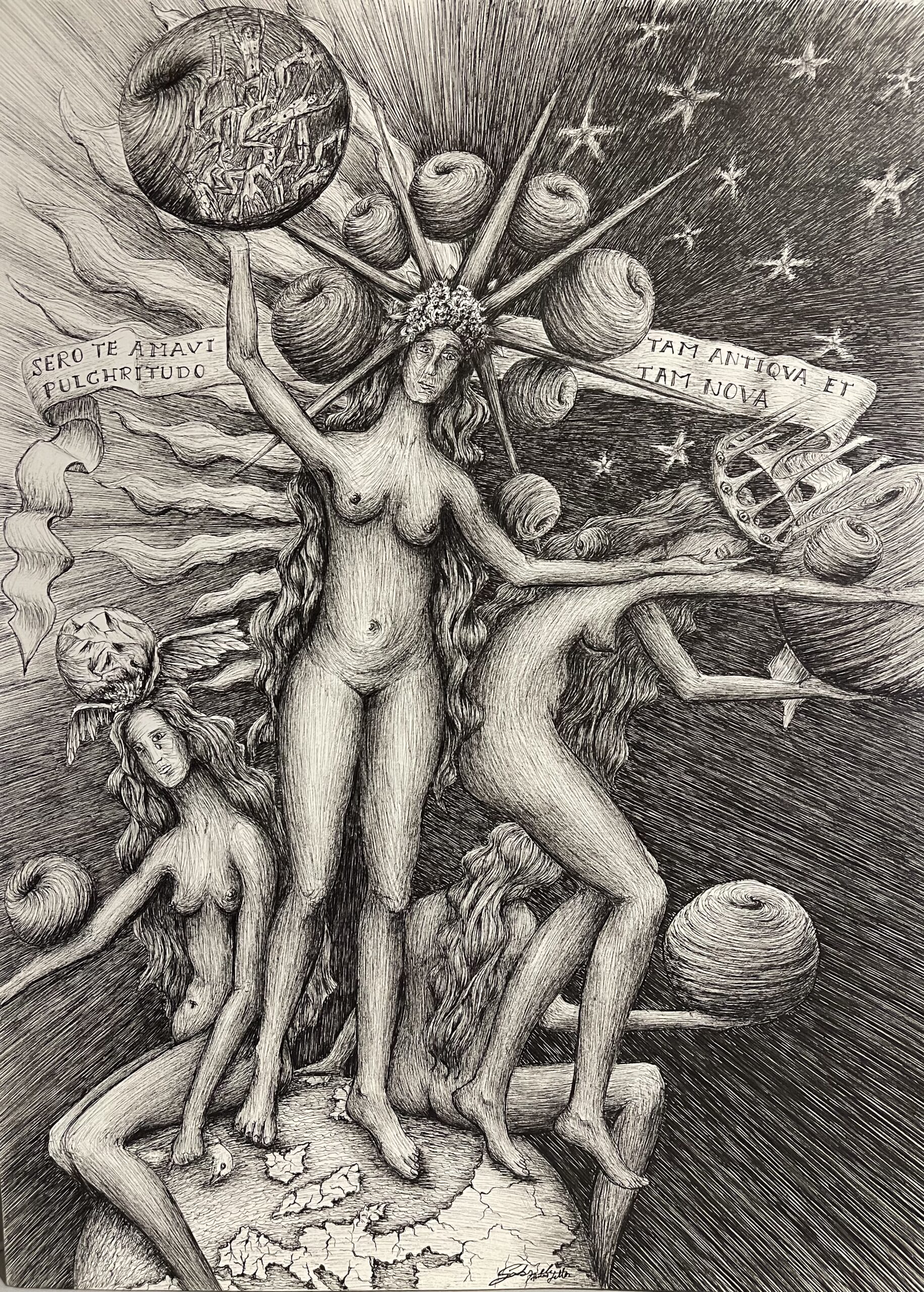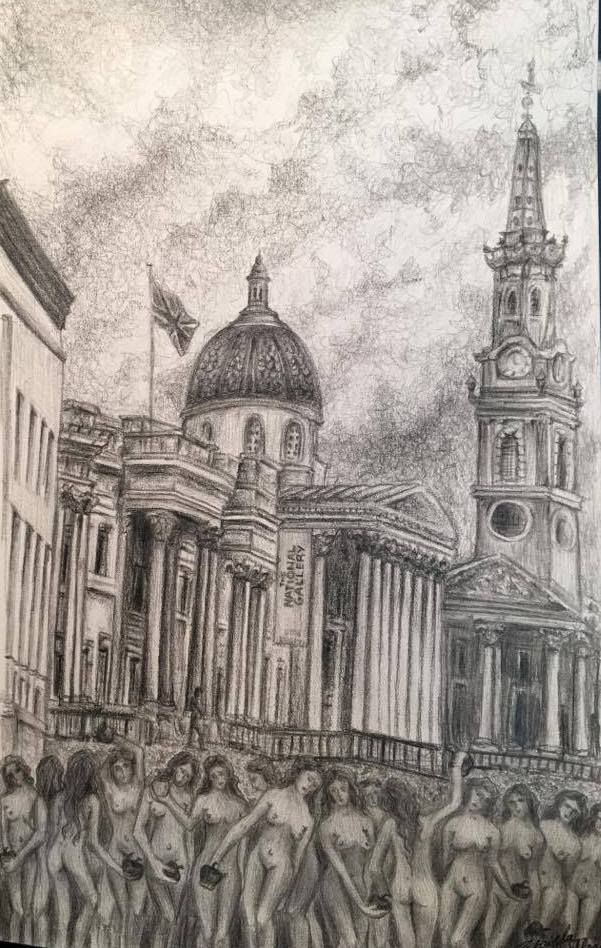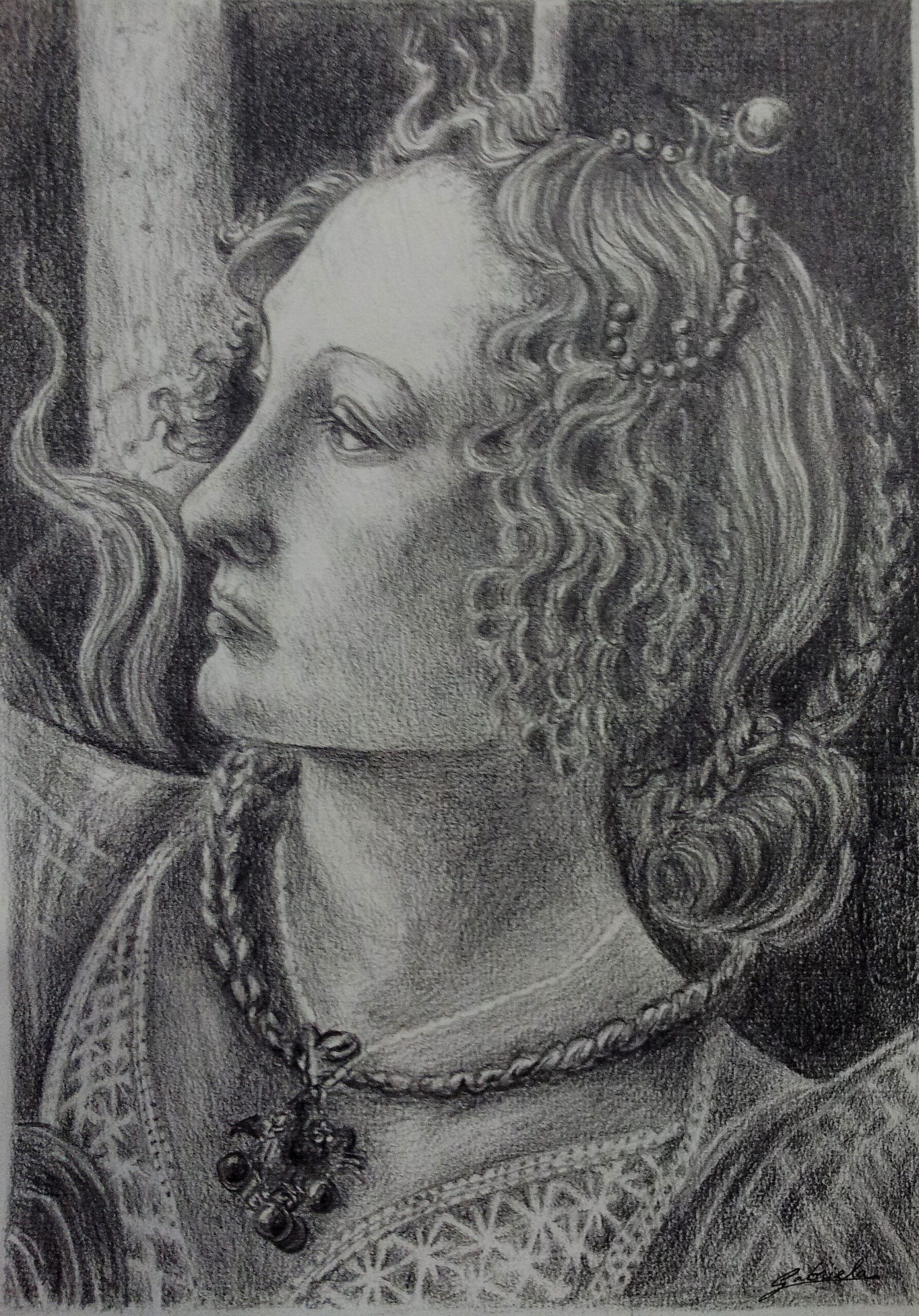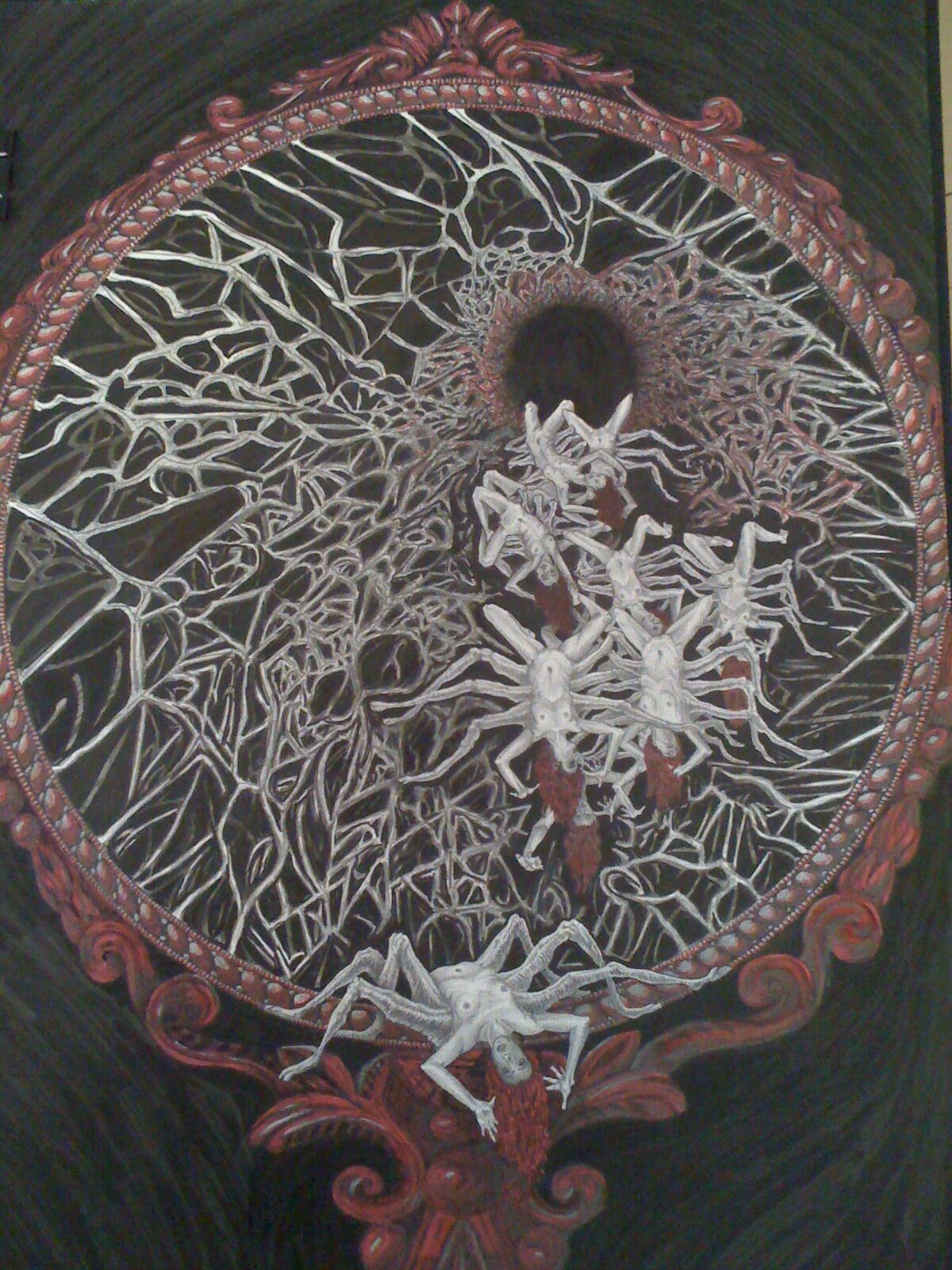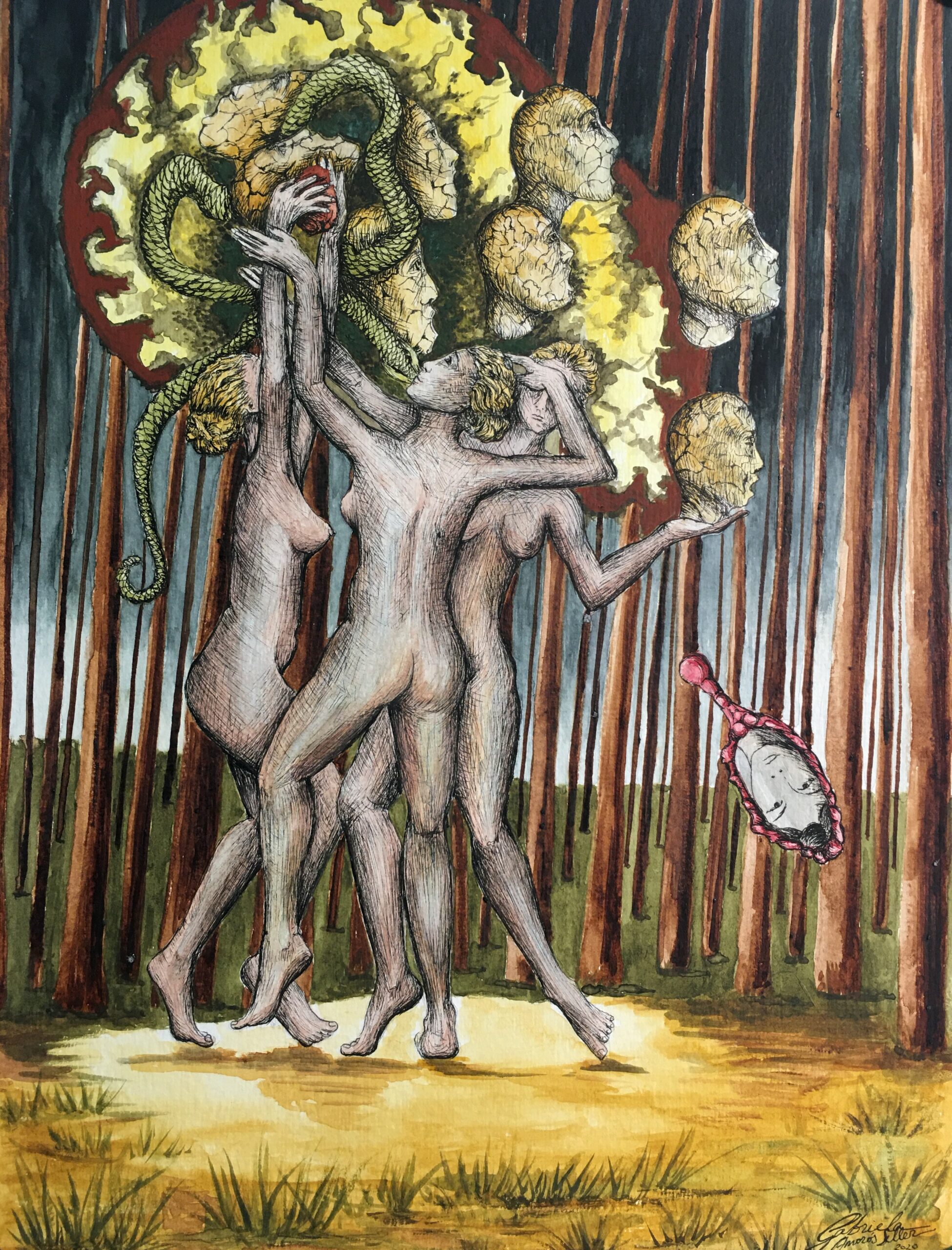
THE TABERNACLE (2022, ink and watercolor on cardboard, 30 × 42 cm)
The Three Graces
The Tabernacle offers a personal vision of the feminine, beginning with the long-standing artistic theme of the Three Graces. These minor goddesses, known as the Charites, were companions of Venus. Their names were Aglaea (Beauty), Euphrosyne (Joy), and Thalia (Abundance), and all their attributes were conceived to be desirable to men. This connects directly with the reflections of John Berger.
The Tabernacle
In Judeo-Christian tradition, the Tabernacle was a portable sanctuary built according to Yahweh’s instructions, serving as the first sacred space in this culture. It was said to house, among other things, the Ark of the Covenant, which contained the Ten Commandments.
The Sacred and the Profane
The work poses an iconographic tension between pagan religion, characterized by polytheism and classical mythology (as represented by the Three Graces), and Judeo-Christian religion, centered on one God and his sacred texts.
Berger and the feminine vision
The internal discourse of The Tabernacle is inspired by the reflections of art critic and writer John Berger:
“The social presence of a woman is different from that of a man. … The presence of a man suggests what he is capable of doing for you or to you. … The presence of a woman expresses her own attitude toward herself. … A woman’s presence is so intrinsic to her person that men tend to consider it almost a physical emanation, a kind of heat, smell, or aura. … The social presence of women has developed as a result of their ingenuity in living under tutelage within such a limited space. … A woman must continually watch herself. She is almost always accompanied by the image she has of herself. Thus she comes to consider the surveyor and the surveyed within her as two constituent but distinct elements of her identity as a woman. The surveyor within her is male; the surveyed female. Thus she turns herself into an object.”