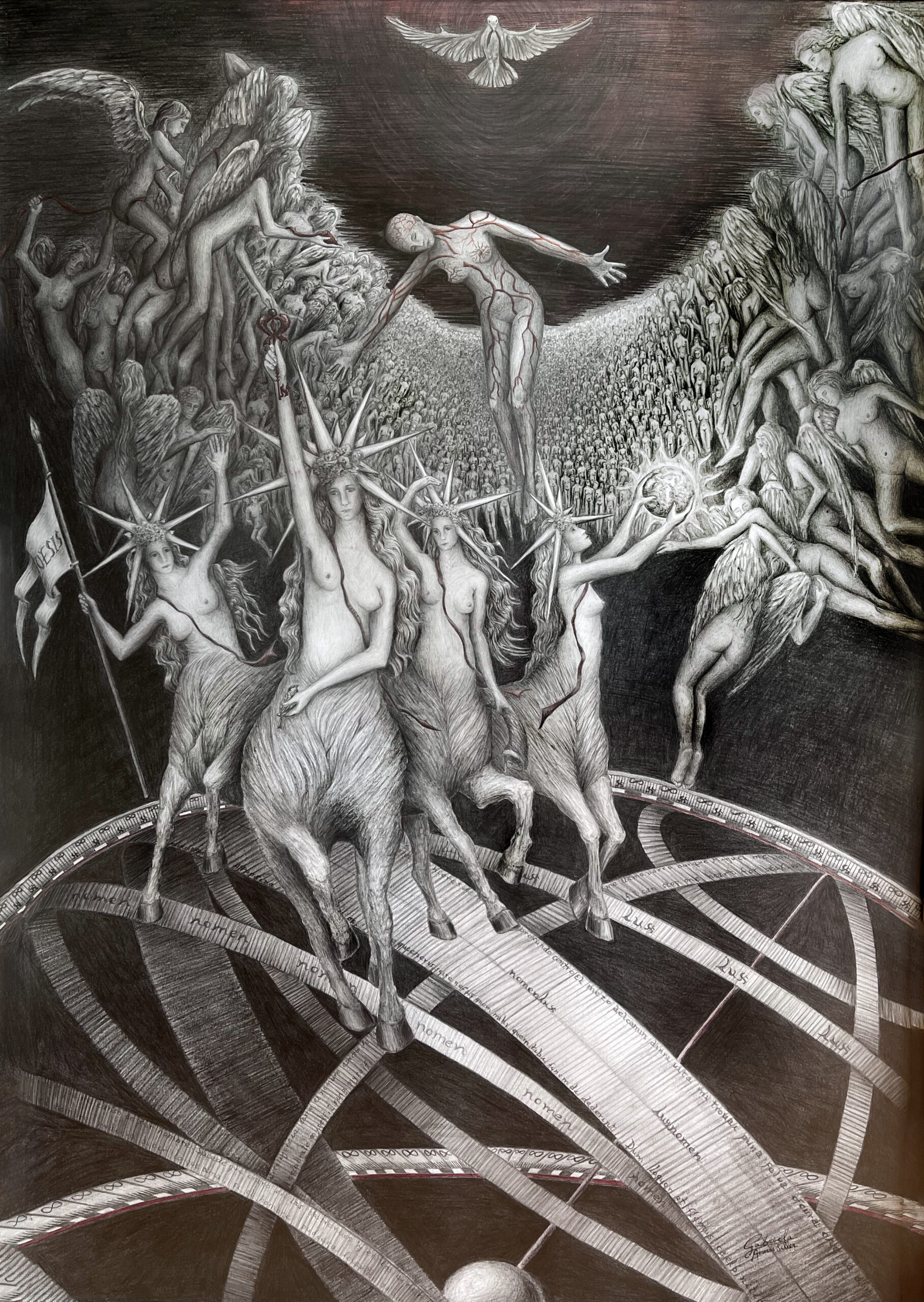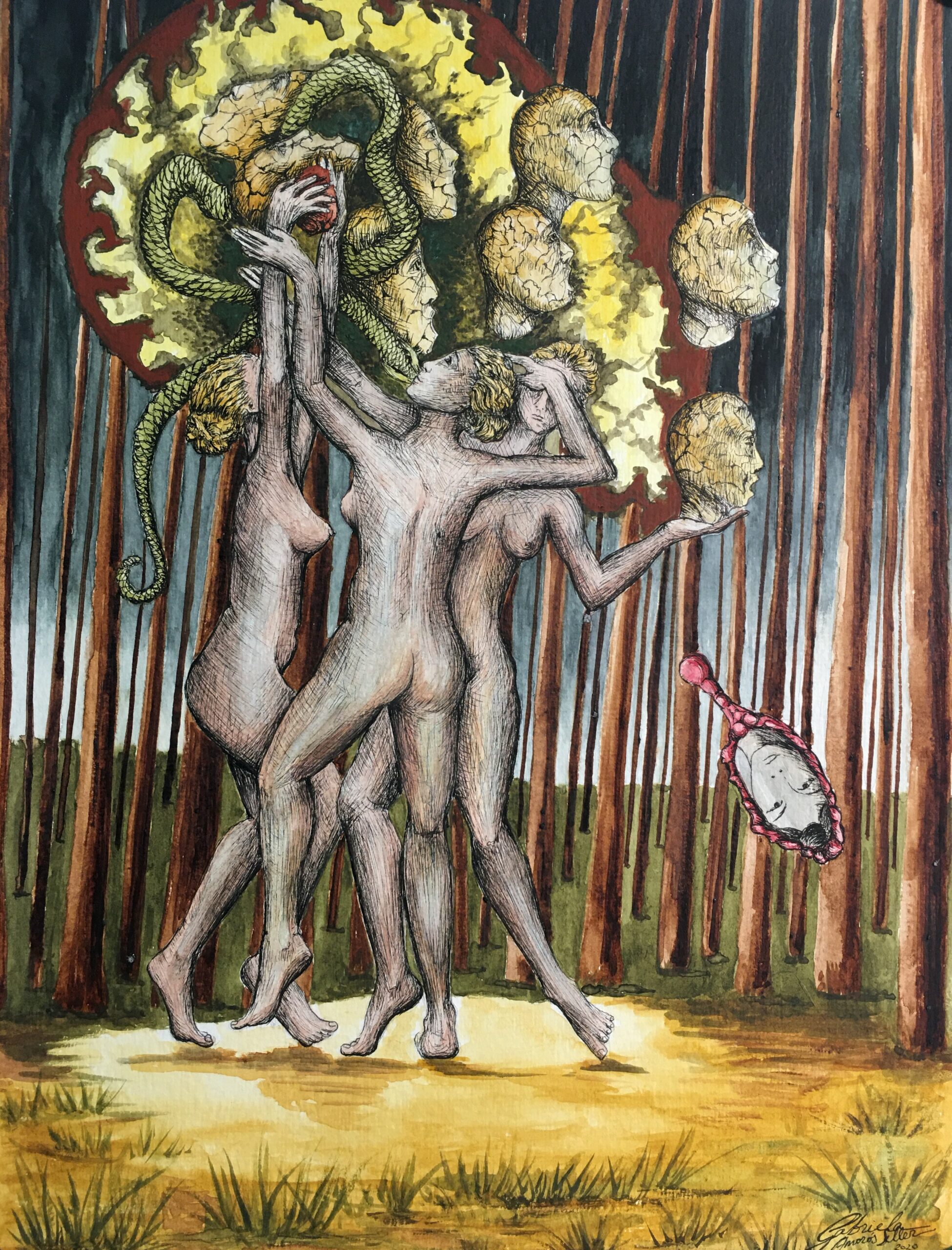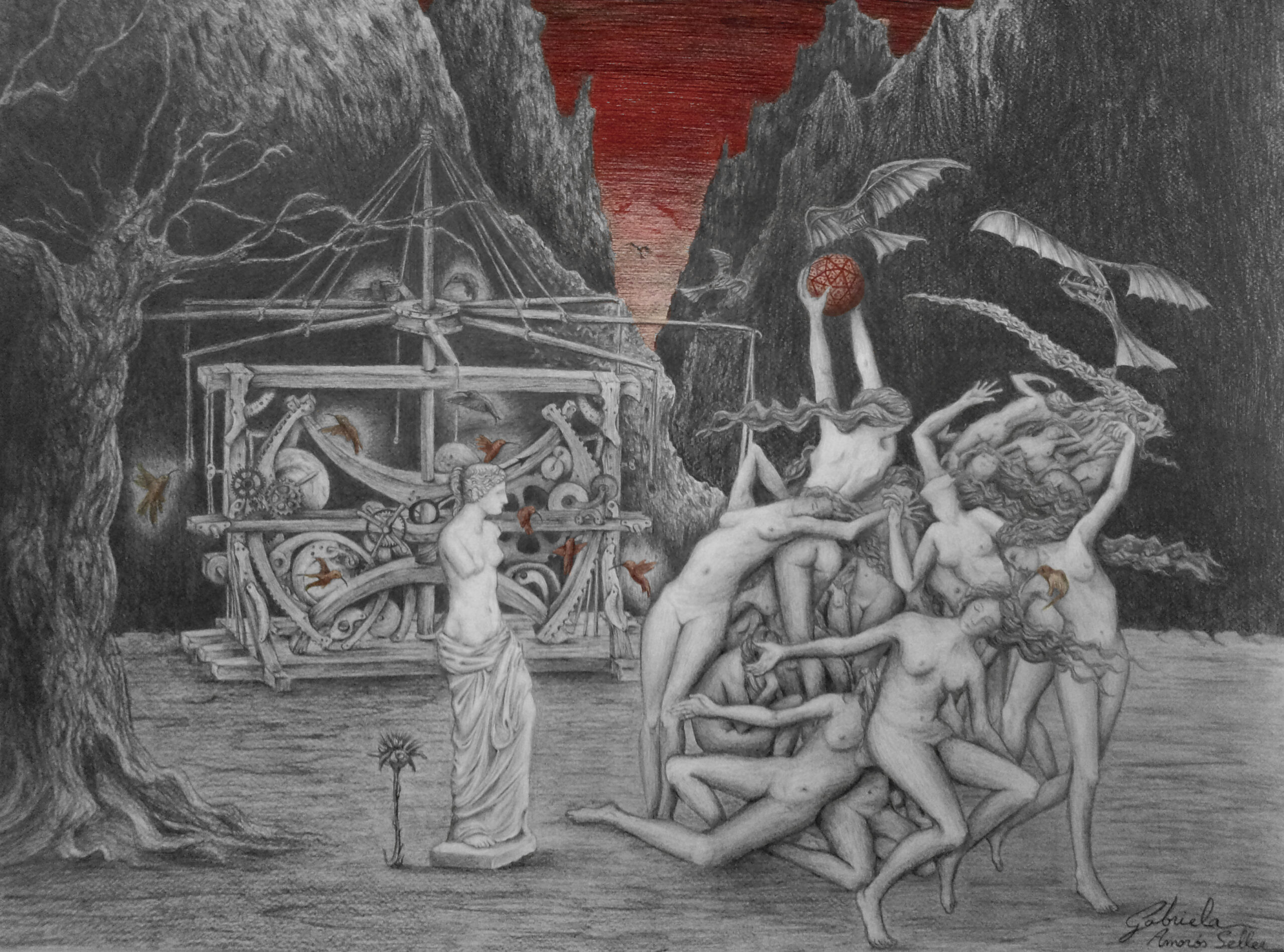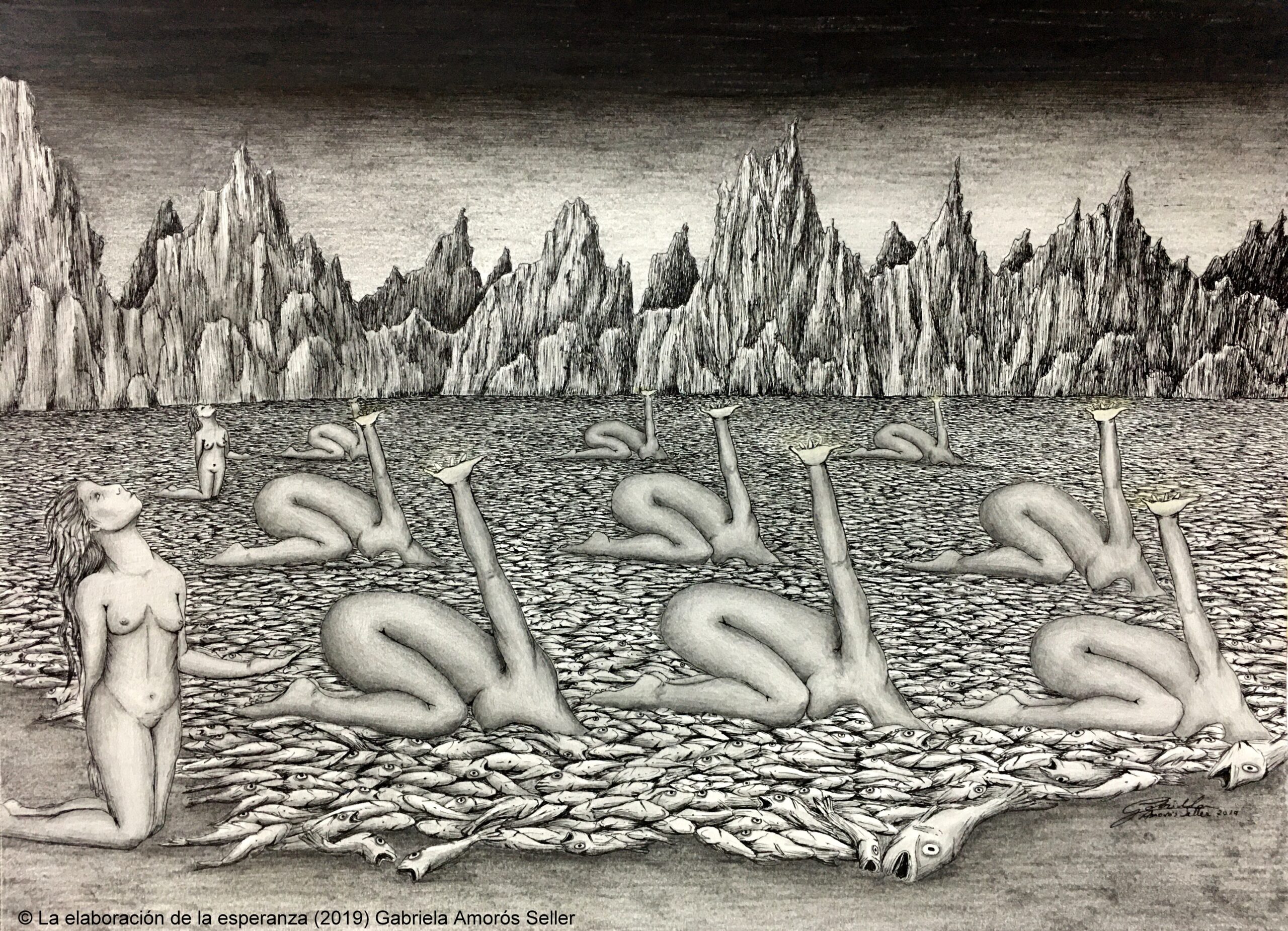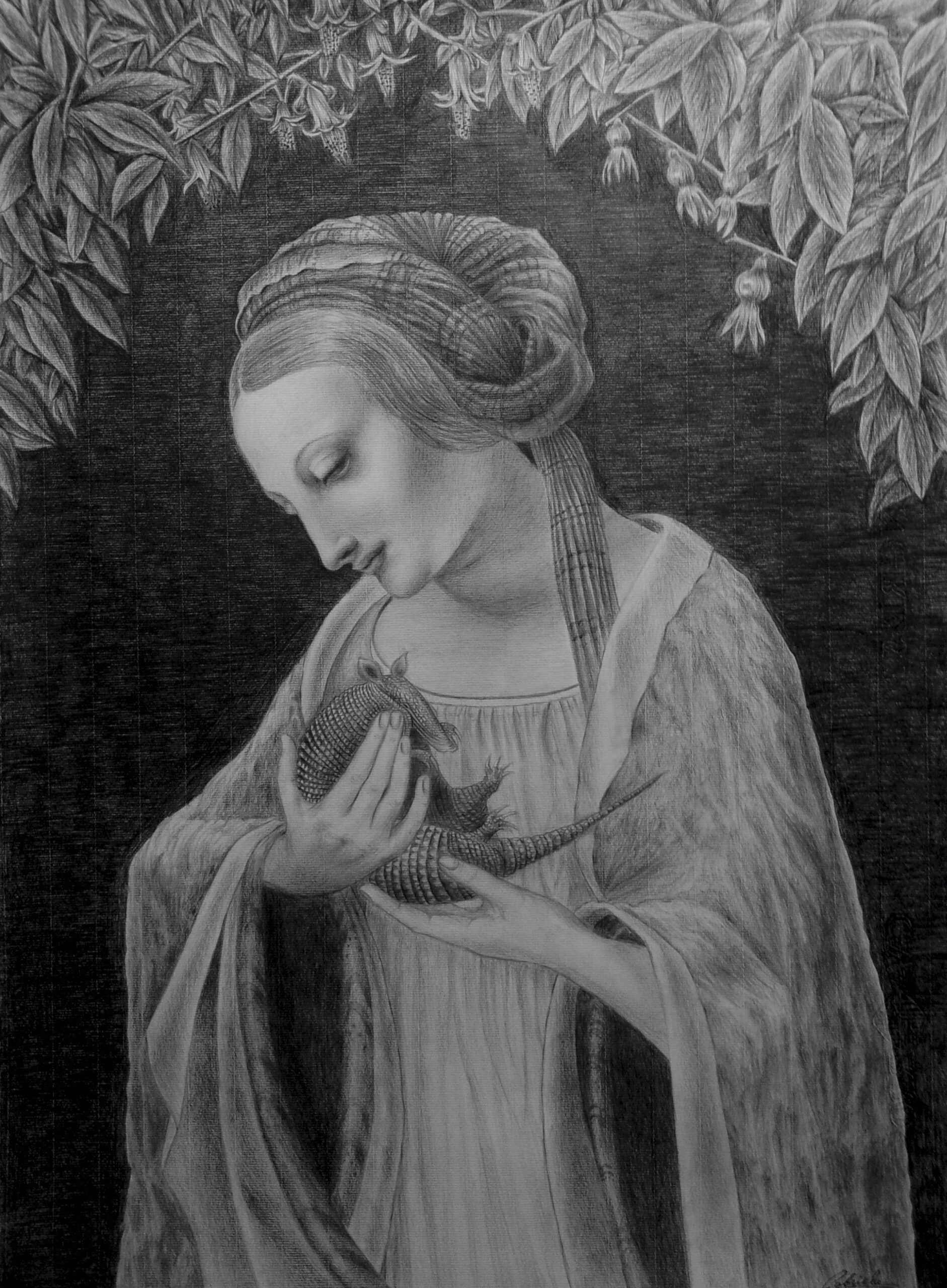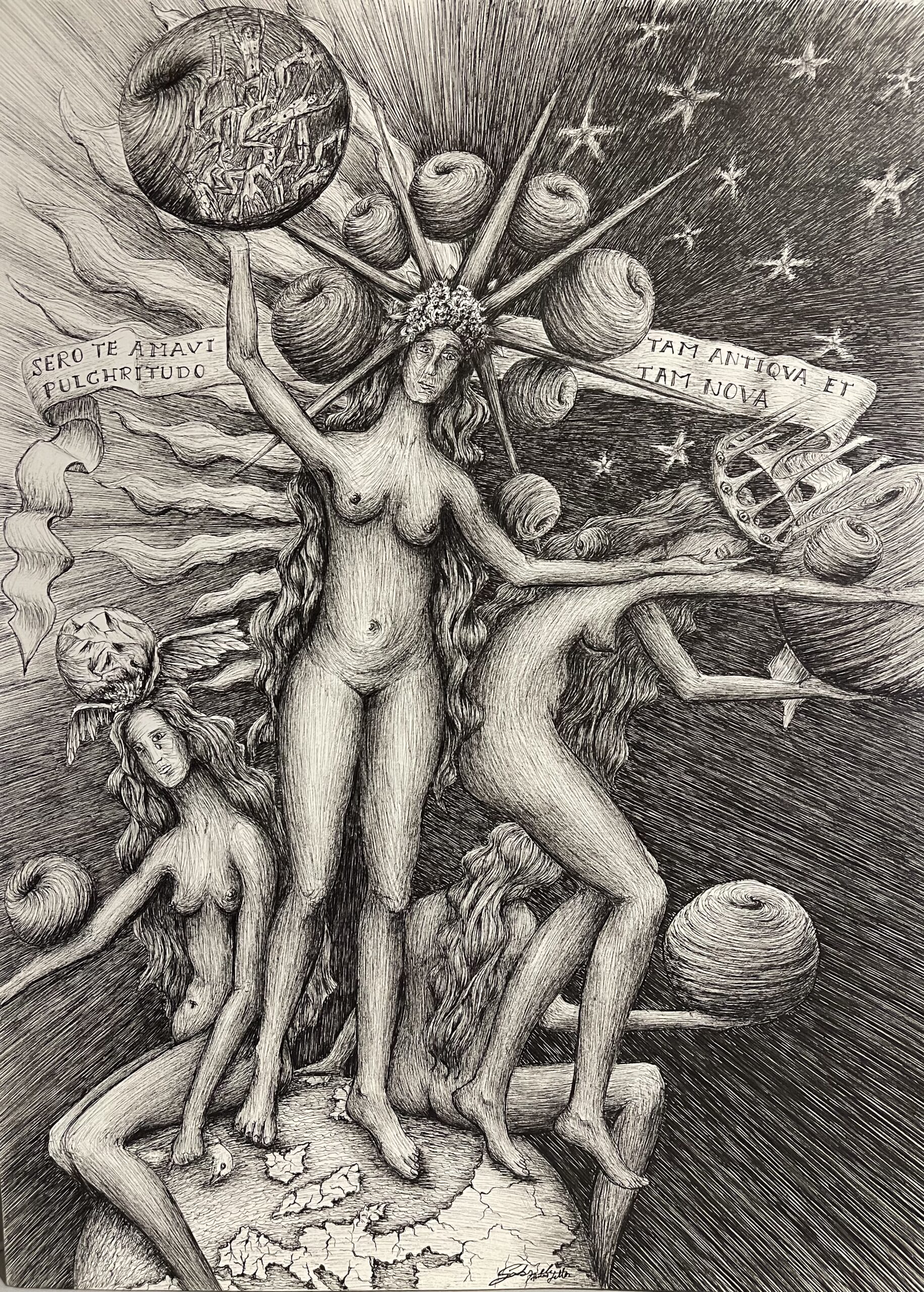
THEATRUM MUNDI (2020, ink on cardboard, 32.5 × 46 cm)
Emblematics
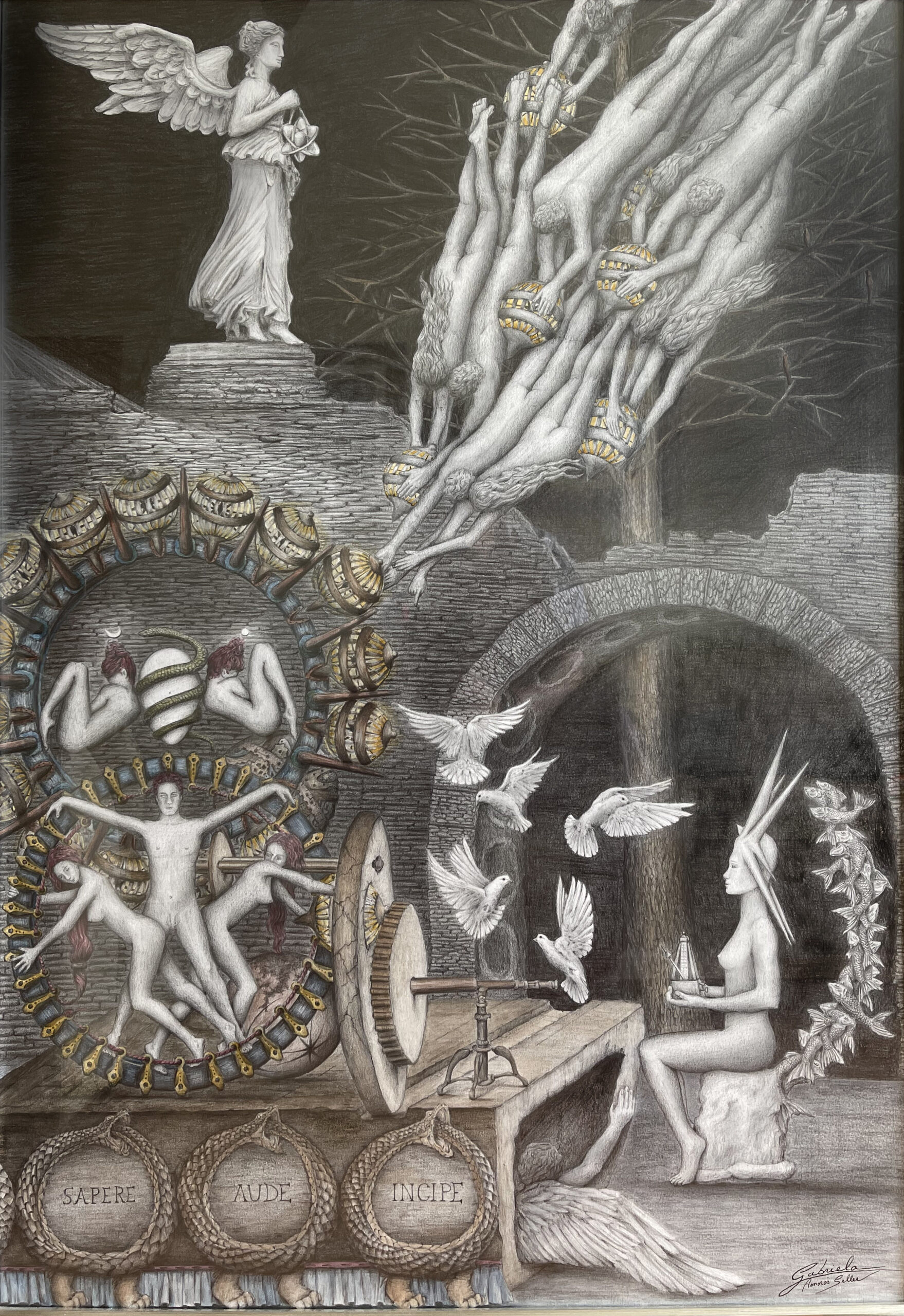
The art of emblematics arose in the 15th century: enigmatic images accompanied by a motto that provided clues to deciphering a hidden moral meaning, which was then elaborated with a verse. The motto of this work is a fragment by St. Augustine: Sero te amavi, pulchritudo tam antiqua et tam nova (“Late have I loved you, beauty so ancient and so new”).
Theatrum Mundi
Theatrum Mundi is a literary topos that explains society, the world, and existence itself as a theatrical performance. Through this metaphor, Plato suggested that humans are like marionettes, acting their roles on the stage of life.
Gaia
The central figure represents Gaia, the primordial goddess who personifies the Earth in Greek mythology. She holds a sphere shaped like a zygote, representing humanity. Gaia seeks to cast this sphere away from herself to safeguard the Earth. She is accompanied by her three daughters: Meletea, Mnemea, and Aedea.
Meletea
Meletea is the Muse of thought, of ideas and imagination, charged with forming the first sketches of creative inspiration in her mind. In the work, she is shown turning her back to the viewer.
Mnemea
Mnemea is the Muse of creation, responsible for giving concrete form to abstract ideas. In the work, she wears wings on her head and holds a dead dove in her hand while she weeps, a reminder of the harm inflicted on the planet.
Aedea
Aedea is the Muse of execution, responsible for performance and staging: reading, reciting, playing, or singing what her sister Mnemea has written. In the work, Aedea wears a crown of light, her body tense and in motion, as she casts zygotes of creation into the void.